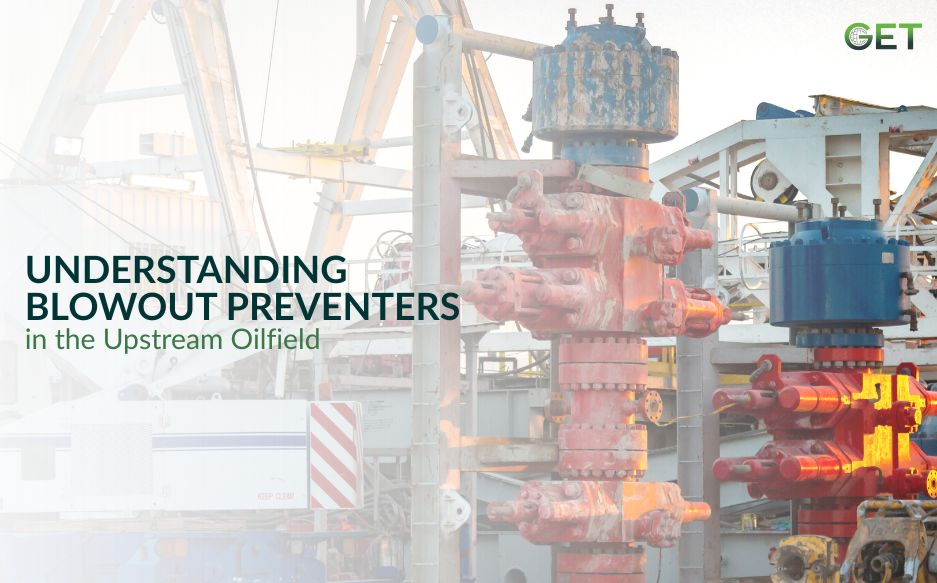
Blowout Preventers (BOPs) have served as critical safety devices in upstream oil and gas operations since 1922, when
Harry Cameron and Jim Abercrombie designed and manufactured the first models. These specialized well control
equipment prevent the uncontrolled flow of formation fluids, which can lead to dangerous blowouts, environmental
damage, and significant resource losses.
In fact, BOPs represent the last line of defense in preventing catastrophic events in the upstream oil and gas industry. With
working pressure ratings reaching up to 20,000 psi for ram BOPs, these systems must withstand extreme conditions
while protecting rig personnel, equipment, and surrounding environments. Furthermore, their importance is
highlighted by a study of 1,312 failure records from the International Association of Drilling Contractors, which
revealed that major BOP component failures often resulted from damaged elastomeric seals causing leakages. This
underscores why rigorous testing and maintenance procedures are essential throughout the oil and gas value chain,
particularly during high-risk upstream operations.
A Blowout Preventer (BOP) constitutes the secondary line of defense in well control operations, activated when primary
well control methods fail. Essentially, this specialized valve system seals, controls, and monitors oil and gas wells to
prevent the uncontrolled release of formation fluids—a dangerous situation known as a blowout
Installed at the wellhead before drilling proceeds, BOPs function as high-pressure safety valves designed to shut off the
well hole and contain underground pressures encountered during operations. These critical devices buy precious
time for drilling teams to diagnose and correct pressure problems safely
The BOP system typically comprises several crucial components working together. The main elements include
The importance of BOPs cannot be overstated. Historical incidents highlight their critical role—the 2010 Deepwater
Horizon disaster occurred partly because of BOP failure, resulting in millions of gallons of oil spilled into the Gulf of
Mexico. Additionally, failures during the 2009 Timor Sea incident and the 2005 Mumbai High North platform
accident led to significant environmental damage.
Beyond catastrophe prevention, BOPs protect personnel, equipment, and the environment while maintaining well
integrity. They allow drilling operations to proceed safely by controlling the immense pressures encountered beneath
the Earth’s surface. Consequently, regulatory bodies enforce strict rules for BOP design, operation, and
maintenance, with regular testing required to ensure these vital safety systems function properly when needed.
Blowout preventers (BOPs) exist in two primary categories: annular and ram-type, typically installed together in BOP
stacks to provide comprehensive well control capability. Annular BOPs, introduced by Granville Sloan Knox in 1946, utilize a circular, rubber packing element reinforced with steel. This flexible donut-shaped component can form a tight seal around various objects in the wellbore, including drill pipes of different diameters, irregular shapes, or even a completely empty wellbore. The key advantage of
annular BOPs lies in their versatility—they allow pipe movement while maintaining a seal, making them suitable for
stripping operations where drill strings move in or out of the wellbore under pressure.
Ram BOPs, meanwhile, employ pairs of opposing steel plungers (rams) that extend toward the wellbore’s center to
restrict flow or retract to permit it. These devices come in several specialized variants:
Pipe Rams close around specific drill pipe sizes to seal the annular space while allowing flow within the pipe
Blind Rams completely seal wells with no drill string present, using heavy steel components that converge at the
center
Shear Ramhttps: Getglobalgroup’s feature hardened steel blades that cut through drill pipe in emergencies
Blind Shear Rams (or sealing shear rams) cut pipe and seal the wellbore simultaneously
Variable Bore Rams accommodate different pipe diameters without changing ram blocks
Supporting these main components are kill lines and choke lines—high-pressure pipes connected to the BOP stack.
The kill line allows heavy drilling fluid to be pumped into the well to control a looming blowout, whereas choke lines
regulate flow rate and create backpressure to maintain pressure balance.
In offshore operations, particularly deepwater scenarios, BOPs may be configured as surface systems (SBOP) or subsea
systems. Subsea BOP stacks typically feature one or two annular preventers along with four or more ram preventers
, creating multiple barriers against potential blowouts.
The control and maintenance of blowout preventers determine their effectiveness as the final line of defense in well
control. First and foremost, the BOP control system consists of hydraulic control panels, accumulators, control valves,
and instruments that operate various components from a safe distance.
Accumulators serve as the heart of BOP control, storing nitrogen-pressurized hydraulic fluid that provides energy to
operate the preventers. The storage device typically includes compressed gas bottles, regulator valves, pumps,
hydraulic reservoir, control manifold, and control valves. Modern BOP systems feature various control methods,
including:
– Hydraulic signals sent through umbilicals
– Electrical signals transmitted via control cables
– Acoustic signals using underwater transducers
– ROV intervention via hot stab panels
– Dead man’s switch or auto-shear for fail-safe activation
For redundancy purposes, manufacturers implement either triple modular redundancy (TMR) or dual hot standby
systems. TMR utilizes three isolated parallel systems that “vote” on each command, whereas dual hot standby
employs two independent systems where the backup seamlessly assumes control if the primary fails.
Notably, maintenance procedures are critical to BOP reliability. According to industry standards, these include:
1. Visual inspections to check for damage, corrosion, or wear
2. Pressure testing at both low (200-300 psi) and high pressures following API specifications
3. Function testing of rams and annular preventers
4. Preventive maintenance to replace worn components
The recommended inspection intervals generally follow a hierarchy: daily visual checks, weekly functional testing,
monthly pressure tests, and quarterly teardown inspections. These rigorous protocols help identify common issues
such as leaking seals, hydraulic system malfunctions, stack misalignment, and mechanical failures before they
compromise well integrity.
Although comprehensive maintenance minimizes risks, troubleshooting remains essential. When problems occur,
trained personnel must quickly diagnose and address issues ranging from damaged elastomeric seals to hydraulic
system failures to prevent costly downtime or potential disasters.
Throughout the history of oil and gas operations, blowout preventers have proven themselves as indispensable safety
barriers between controlled drilling operations and potential catastrophe. Their evolution since 1922 reflects the
industry’s commitment to preventing the devastating consequences of uncontrolled well releases. Undoubtedly, the
technological advancements in BOP design—from basic mechanical systems to sophisticated stacks with redundant
controls—demonstrate how seriously the industry takes well control.
Above all, the effectiveness of these critical systems depends on rigorous testing, maintenance, and operator
competence. Failures during incidents like Deepwater Horizon, Timor Sea, and Mumbai High North platform accidents
underscore what happens when BOP systems malfunction. Additionally, these cases have driven regulatory bodies to
enforce stricter standards regarding BOP design, operation, and maintenance protocols.
Consequently, modern BOP stacks feature multiple layers of protection through combinations of annular preventers,
various ram types, and sophisticated control systems. This redundancy approach acknowledges that during high pressure, high-risk operations, equipment must perform flawlessly when called upon. Meanwhile, advanced control
methods—hydraulic, electrical, acoustic, and ROV intervention capabilities—provide operators with multiple pathways
to activate these critical safety systems.
The oil and gas industry continues refining BOP technology and maintenance procedures as exploration moves into
deeper waters and more challenging formations. Accordingly, the role of BOPs remains fundamentally unchanged
despite technological evolution: they stand as the final, decisive barrier between normal operations and potential
disaster. Therefore, the continued emphasis on proper BOP selection, installation, testing, and maintenance remains
essential for protecting lives, equipment, and environments wherever drilling operations occur.
Read Also- Well-Being at Work: Why Workforce Health Matters in Remote Operations

By Get global | October 19, 2026

By Get global | October 16, 2026

By Get global | October 12, 2026
By Get global | October 12, 2026
Saudi Arabia is traditionally considered a key country where people work in the oil and gas sector. As there is quite a lot of drilling, well intervention and production processes in this country, many engineers, technicians and specialists from the field try to find suitable positions there. However, not all […]

By Get global | October 9, 2026
Ask any person working night shifts in rigs and compressor stations what holds the industry back, and you will seldom hear anything about geology. Disconnected information, delayed decision-making, and machinery breaking down at the wrong moment – all these factors are more common causes of productivity losses in the industry. […]