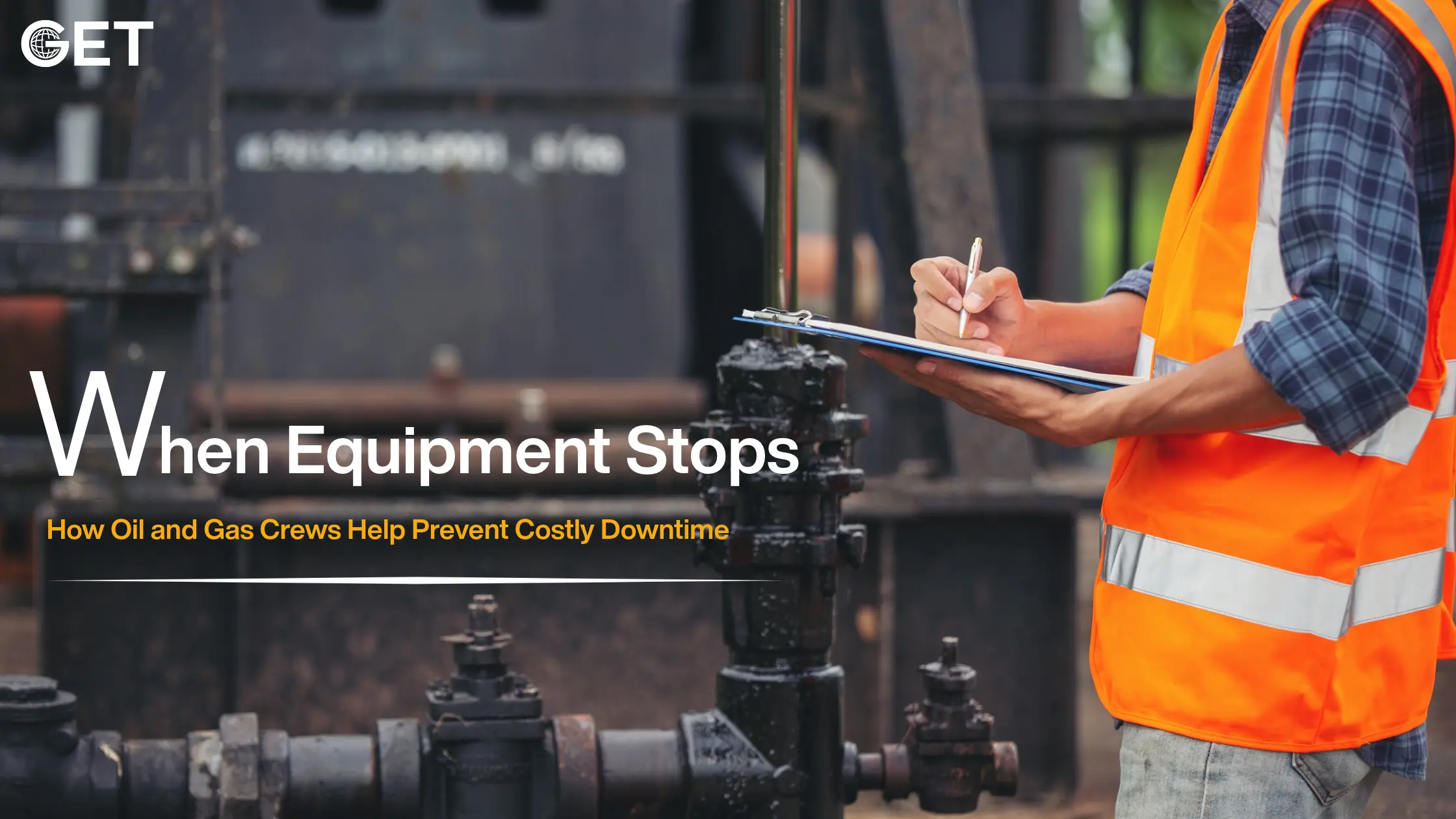
Picture this. It is 3 a.m. at a remote well site. A pump goes quiet. Then the whole line stops. Nobody speaks for a second. Everyone knows what this means: money is leaking out, every single minute.
This is the daily reality of the oil and gas industry. Machines are big, hot, and under heavy pressure all the time. When one stops, the loss is not small. Some sites lose tens of thousands of dollars per hour. That’s why upstream oil and gas companies spend so much time thinking about one thing: how to keep the equipment alive.
Here is the good news. Most downtime can be avoided. And the people who avoid it are not machines or software. They are crews. Real people with real skills, working in rough places, long hours.
Let’s talk about how they do it.
In the upstream oil and gas industry, a rig or a production unit earns money only when it runs. When it stops, the bills don’t stop. Crew wages, equipment rental, site costs, all of it keeps going. Meanwhile, nothing comes out of the ground.
There are hidden costs too. Delays can break contracts. Clients get upset. Safety risks go up when people rush to fix things in a hurry. A small fault today can turn into a big accident tomorrow.
So downtime is not just a technical problem. It is a money problem, a safety problem, and a trust problem. All three at once.
Most failures come from a few common causes:
Notice something? Almost every cause on this list connects to people and planning. Not luck. That is why skilled crews matter so much.
They watch. They listen. They check. Again and again.
Experienced field technicians can often hear a problem before any sensor shows it. A small change in sound, a little extra vibration, a strange smell. These tiny signs tell a story. A good crew member reads that story early.
Here’s what strong crews do every day:
Read Also- How Integrated Crew Services Improve Productivity and Operational Performance
It happens. Even the best sites face breakdowns. What matters is the response.
A well-trained crew moves fast, but not in panic. First, make the area safe. Second, find the root cause, not just the symptom. Third, fix it right. Fourth, write it down so it never repeats.
Speed is important, sure. But rushing is a trap. A quick fix that fails again after two days is worse than a slow fix done properly. Good crews know this difference and they stick to it.
Teamwork makes the biggest difference here. Mechanics, electricians, rig supervisors, and safety officers all talk to each other in real time. No blame game. Just solve the problem. Honestly, the crews who communicate best are the ones who recover fastest.
Technology in the field is changing quickly. Digital monitoring, automated systems, smart tools. They are great. But tools are only as good as the person holding them.
A sensor can warn you. It can’t decide what to do next. That decision still belongs to a trained human being.
And here is the real challenge for upstream oil and gas companies today. Experienced workers are retiring. New workers need training, mentoring, and hands-on time. If a company doesn’t build skills now, it will pay for it later in downtime.
This is also why the right staffing partner matters. Matching the right technician to the right site is not easy. A skilled hand on day one can prevent a failure on day thirty.
If you are thinking about an oil and gas job, or you are hiring for one, these skills matter a lot:
Certificates help, of course. But field experience is gold. An oil and gas job is not a desk job. It asks for discipline, patience, and a strong team spirit.
Companies that invest in planned maintenance often see fewer breakdowns, longer equipment life, and lower repair costs. It is not magic. It is just a habit that is done consistently.
Here are a few practical steps for any site:
None of this is complicated. But it needs commitment from top to bottom.
Equipment will always stop, sometimes. That is part of the game. But long, costly downtime? That is a choice, in many cases.
In the upstream oil and gas industry, the real hero is not the biggest machine. It is the crew that looks after it. The ones who check, listen, fix, and learn. Day after day, night after night.
So if you run operations, back your people. Train them, support them, and give them the right tools. And if you are looking to build a career, an oil and gas job on a skilled crew is a place where your work truly counts. When the machines keep running, everybody wins.
Because in oil and gas, uptime is everything.
1. What causes equipment downtime in the upstream oil and gas industry?
Equipment downtime can result from wear and tear, missed maintenance, incorrect operation, harsh weather conditions, and faulty spare parts. Regular inspections and timely repairs help reduce these risks.
2. How do oil and gas crews help prevent equipment breakdowns?
Oil and gas crews perform daily equipment checks, follow preventive maintenance schedules, monitor equipment conditions, maintain clear shift handovers, and identify early warning signs before they become major problems.
3. Why is preventive maintenance important in oil and gas operations?
Preventive maintenance helps identify potential faults early, reduce unexpected breakdowns, extend equipment life, and control repair costs. It also supports safer and more reliable operations.
4. What skills do oilfield professionals need to reduce equipment downtime?
Oilfield professionals need technical knowledge, problem-solving skills, safety awareness, attention to detail, and clear communication. Hands-on experience also helps them identify equipment issues and respond effectively.
5. How does teamwork help reduce downtime in oil and gas operations?
Teamwork enables technicians, electricians, supervisors, and safety officers to share information, identify faults, and coordinate repairs quickly. Clear communication and proper planning help restore operations safely and prevent recurring problems.
By Get global | November 10, 2026

By Get global | November 10, 2026
By Get global | November 5, 2026
By Get global | November 4, 2026
By Get global | October 29, 2026