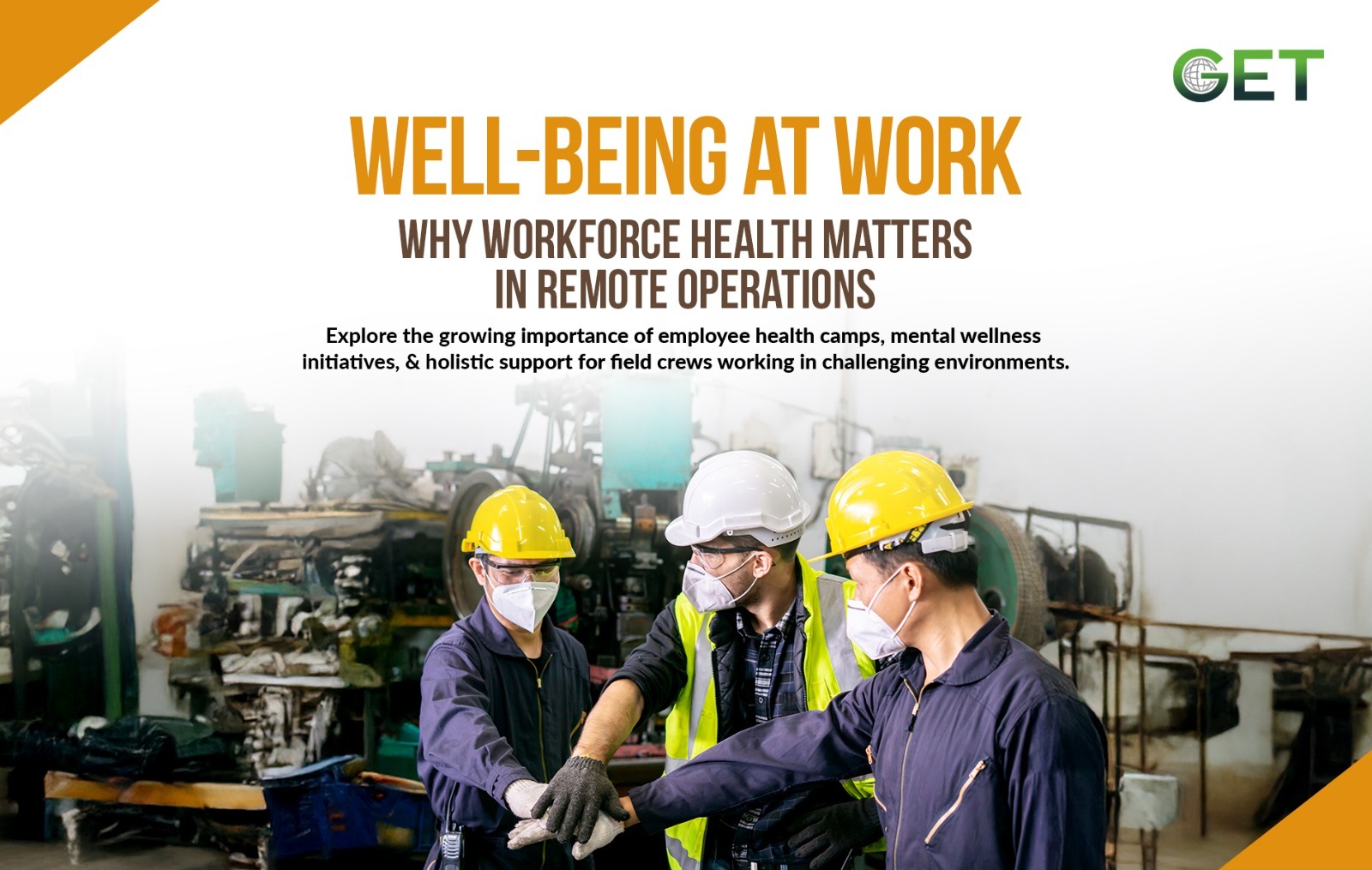
The Oil & Gas industry consistently handles remote work. From offshore drilling rigs to desert-based extraction units, the sector often functions in some of the world’s most isolated and physically demanding locations.
However, with more people working remotely due to digital transformations, we’re seeing a new kind of remote workplace: people become anxious, overwhelmed and less connected. Because of this shift toward remote work, we must ask: how do we look after the mental and physical well-being of our employees?
Precision, endurance, and resilience are what have made Oil & Gas operations successful. Even though machines are playing a greater role, valuable experience and knowledge from people continue to play a crucial part in oil and gas operations as well. However, the busy work, working in dangerous areas and extended absences from family adversely affect mental and physical well-being.
In the last few years, the health of employees, previously known as a soft metric, has been seen as a key priority. Firms that value health and wellness are more efficient and have fewer accidents, greater employee loyalty and are better known in their industry.
Explore career opportunities at organizations that prioritize well-being.
In the Oil & Gas sector, ‘working remotely’ is about both home-based jobs and staff on-site in remote locations, engineers working across different time zones and monitoring done from central control centers. Because of this, the problems of keeping workers healthy are more pronounced. Below are few challenges faced by employees working remotely in Oil & Gas sector.
Workplace health can only be promoted by considering the whole person, not just their fitness. Now let’s look at the major components of information security design.
Making sure employees are well taken care of in Oil & Gas operations done remotely is now a necessary part of doing business. The most important thing is that healthy workers have better judgment. Therefore, in risky situations, fewer accidents occur, the work is interrupted less and expenses decrease for compliance and insurance. If workers are not tired, the rate of errors usually decreases which helps companies meet safety benchmarks and prevent plant shutdowns.
Well-being efforts at work help improve employee motivation and morale. Having a good level of support encourages employees to thrive in their positions, think of new ideas, and team up well. It both helps employees work better each day and prepare the team to cope with challenging work situations.
Furthermore, taking care of workers is in line with overall Environmental, Social, and Governance (ESG) objectives. People in companies, especially those working in dangerous fields, are coming under careful watch by investors, partners and regulatory bodies. Showing a carefully designed wellness strategy helps your reputation, supports your sustainability goals, and ensures your brand is seen as a responsible and modern front-runner.
Managing operations remotely is inherent within Oil & Gas. The mindset toward employee well-being needs to change. It includes not only lowering accident rates or providing gyms, but also ensuring that people are valued everywhere within the company.
If companies adopt well-being as a key element, instead of just offering it as a benefit, they can attract and keep a committed, reliable, and hardworking workforce. Even where things seem far from civilization, progress is driven by people.
Read Also- Offshore Oil Rigs in 2025: Innovation, Challenges, and the Road Ahead
FAQ:
Workforce well-being helps reduce fatigue, improves decision-making, enhances safety, and supports consistent performance in remote and high-risk work environments.
Common challenges include fatigue, mental stress, isolation, irregular sleep patterns, harsh weather conditions, and limited access to healthcare facilities.
Organizations can provide health screenings, mental health support, balanced work schedules, nutritious meals, fitness programs, and reliable communication with family.
A healthy workforce experiences fewer injuries, lower absenteeism, higher productivity, and better teamwork, leading to safer and more efficient operations.
Leaders can foster a positive safety culture by encouraging open communication, recognizing employee efforts, monitoring fatigue, and ensuring access to health and wellness resources.
By Get global | October 19, 2026
By Get global | October 16, 2026
By Get global | October 12, 2026
By Get global | October 12, 2026
Saudi Arabia is traditionally considered a key country where people work in the oil and gas sector. As there is quite a lot of drilling, well intervention and production processes in this country, many engineers, technicians and specialists from the field try to find suitable positions there. However, not all […]
By Get global | October 9, 2026
Ask any person working night shifts in rigs and compressor stations what holds the industry back, and you will seldom hear anything about geology. Disconnected information, delayed decision-making, and machinery breaking down at the wrong moment – all these factors are more common causes of productivity losses in the industry. […]