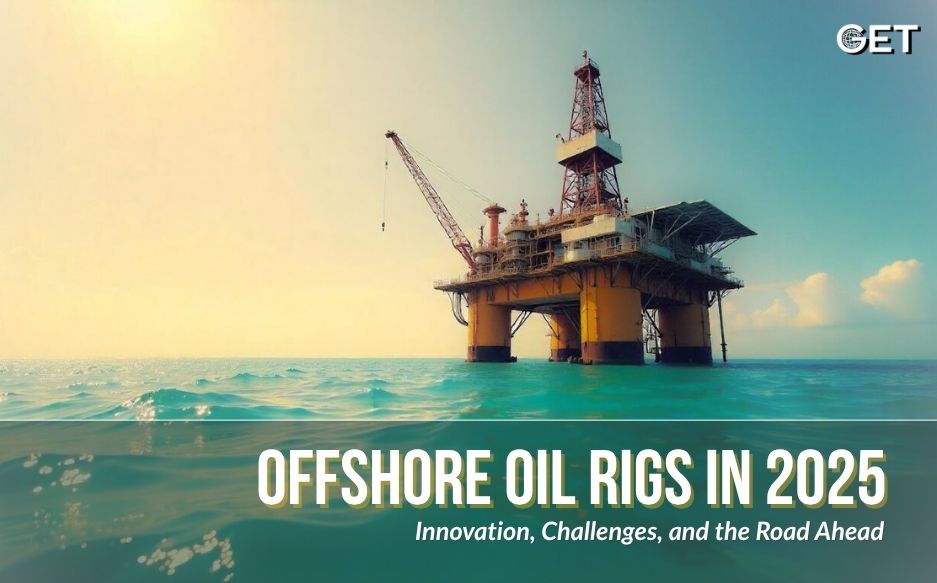
In 2025, offshore oil rigs are standin’ at a major turning point. From smart tech to climate pressure, the upstream oil and gas industry is dealin’ with a mix of fresh possibilities and real tough challenges. These giant machines that sit far out in the ocean—drilling’ into the seabed—ain’t just symbols of engineering anymore. They’re now battlegrounds where innovation, environment, and energy needs all collide.
The oil and gas industry is under pressure from different directions—people want more energy, but also want it to be cleaner and better for the environment. For companies that find and produce oil and gas, this means they have to rethink how they design, drill, use data, and make decisions.
So, what’s really changing’? And what’s staying the same?
First things first, technology is takin’ center stage like never before. Offshore oil rigs are now smarter, more efficient, and surprisingly—more connected.
Let’s break it down a bit:
This kinda stuff is game-changing for the upstream oil and gas industry. It reduces downtime, boosts safety, and saves a bunch of money in the long run. Plus, let’s be honest—nobody minds avoiding a chopper ride to the middle of nowhere every other week.
Of course, it ain’t all smooth sailing. Offshore rigs still face some serious headwinds.
One of the biggest issues is high operational cost. Setting up and maintaining offshore platforms takes millions—sometimes billions. And with fluctuatin’ oil prices, that’s a risky bet for many companies in the upstream oil and gas sector.
Here’s a few more problems that ain’t going away anytime soon:
So while rigs are gettin’ smarter, the game’s still risky—and expensive.
Now, this is where things get tricky. Offshore oil rigs and the word “sustainability” don’t exactly go hand-in-hand in most people’s minds. But times are changin’.
The oil and gas industry is slowly (but surely) tryin’ to clean up its act. Here’s how:
Sure, it’s not perfect. There’s still a long way to go before you can call offshore drilling “green.” But these baby steps matter—and they’re startin’ to add up.
More companies in the upstream oil and gas industry are now including’ sustainability as part of their long-term strategy. It ain’t just about profits anymore; it’s also about reputation and responsibility.
Digitalization is probably one of the biggest drivers of change in offshore oil rigs. Everything from data to decision-making is being reshaped by tech.
This tech-first approach is slowly becoming the standard in the upstream oil and gas space. It’s helpin’ rigs reduce downtime, save costs, and—most importantly—keep workers safer.
Read Also- Top 5 Global Renewable Energy Companies Transforming the Future of the Energy Industry
So where is all this headed? What does the future really hold for offshore oil rigs?
Honestly, a lot depends on how well the oil and gas industry adapts to a fast-changing world. But here’s what we can expect:
Additionally, investment is probably going to move toward multipurpose platforms, or rigs that can support wind turbines, oil drilling, and even the production of hydrogen.
Basically, compared to just ten years ago, the upstream oil and gas industry will be much more tech-savvy and diverse in the future.
In 2025, offshore oil rigs are more than just platforms in the ocean; they are symbols of the progress and potential future directions of the oil and gas industry.
Without a doubt, the public, regulators, and the environment are all putting pressure on the upstream oil and gas sector. However, it’s also innovating, adapting, and demonstrating that even the most resilient industries can change.
It is true; the challenges remain. However, with intelligent technology, sustainability initiatives, and strategic thinking, offshore rigs can still be significant sources of power for the world—only a cleaner, more intelligent source.
Whether you are on an offshore rig with offshore personnel, in an office planning for new offshore endeavor, or just observing the industry from the sidelines, one thing is for certain—the future road ahead is filled with surprises; best to stay tuned!
By Get global | October 16, 2026

By Get global | October 12, 2026
By Get global | October 12, 2026
Saudi Arabia is traditionally considered a key country where people work in the oil and gas sector. As there is quite a lot of drilling, well intervention and production processes in this country, many engineers, technicians and specialists from the field try to find suitable positions there. However, not all […]

By Get global | October 9, 2026
Ask any person working night shifts in rigs and compressor stations what holds the industry back, and you will seldom hear anything about geology. Disconnected information, delayed decision-making, and machinery breaking down at the wrong moment – all these factors are more common causes of productivity losses in the industry. […]
By Get global | October 5, 2026
Specialized expertise turns a hard project in the oil and gas industry into a workable one. Every oilfield has its own geology, risks, and surprises. The teams that handle them the operations on field have usually met something similar before. In the modern world, upstream oil and gas companies are […]