The Middle East is one of the key energy regions in the world. Countries such as Saudi Arabia, the UAE, Kuwait and Qatar have some of the largest oil and gas reserves in the world. The industry relied on manual processes, highly experienced personnel and large machinery to keep production going this way for decades.
That said, the energy industry is undergoing a large transformation now.
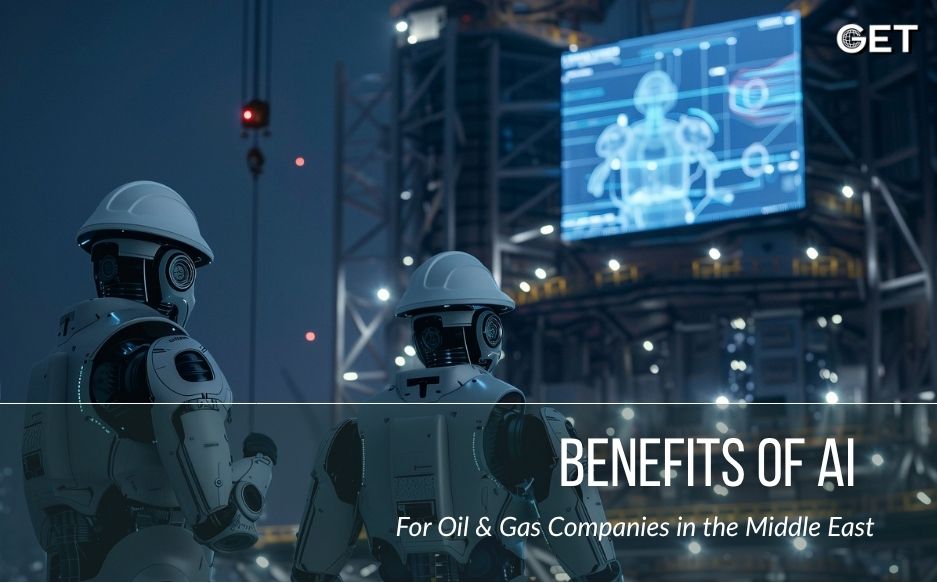
For an industry such as oil and gas, Artificial Intelligence (AI) is developing to be a forward-looking way shaping the future of these companies. No longer simply a theory discussed at tech conferences. It is being actively deployed within the regional exploration, production, maintenance and safety operations.
This blogs explain the various advantages of AI for Middle East oil gas sector.
One of the toughest problems in oil and gas is locating new reserves. Essentially, performing geological surveys, seismic tests, and writing large checks — all with no promise of success.
This process has come a long way due to tremendous improvements from AI.
Stated another way, by analyzing vast amounts of geological and seismic data using machine learning models looking for patterns that correlate to the presence of oil or gas deposits. These models process data orders of magnitude faster than human analysts, and can help to cut down on exploratory wells drilled in places with little chance of success.
This means less money spent on exploring and developing new reserves, which adds up to raising the odds of a successful outcome for Gulf-region companies still looking for their next find.
Unplanned failure of equipment is one of the most expensive issues faced by the oil and gas industry. Any unplanned failure of compressors, pumps, turbines, and other equipment can lead to an interruption of production operations for days, which may cause huge financial losses to the organization.
This problem can be addressed using predictive maintenance technology powered by artificial intelligence.
The sensors fitted into machines constantly capture data related to performance parameters like temperature, pressure, vibration, flow rate, etc. The machine learning algorithms analyze these pieces of data in real-time and can predict potential equipment failures days or weeks before they happen.
Some organizations that have been able to make use of this technology are Saudi Aramco and ADNOC.
Safety becomes a major issue that has to be taken care of in the oil and gas sector because workers face various dangers, including those posed by pressure systems, flammable gas emissions, extreme temperature ranges, and heavy machines. Accidents occurring in such industries could result in huge losses.
AI technology is applied to improve safety measures in several aspects.
Firstly, smart sensors and computer vision cameras keep watch around construction sites, warning about possible leaks, improper use of safety equipment, and entry into dangerous areas without permission from the management. The alerts are issued instantly.
Moreover, drones equipped with AI technology make regular checks on pipelines, offshore structures, and other facilities. Thus, no personnel has to visit potentially dangerous places for inspection purposes, and this reduces the risks of accidents.
Taking into consideration the fact that hundreds of thousands of people work in the oil and gas sector in this area, there is obvious importance of developing safety technologies.
Consistent and effective production from oil and gas wells is not a simple task to achieve and maintain throughout the life cycle of a reservoir. Conditions may evolve over time, resulting in the need for regular adjustments to sustain production levels.
With the help of AI technologies, real-time monitoring and optimal control of the well’s operation parameters can be achieved easily. Adjustments may be made regarding flow, injection and pressure levels, among other aspects that can increase production.
This optimization process becomes particularly relevant when dealing with large corporations running several wells, especially within countries like Saudi Arabia and the UAE, where companies might control hundreds or even thousands of wells in different locations.
There is considerable energy use required to run oil refineries, processing plants, compressors, among other infrastructure used in oil and gas production processes. Reduction of energy consumption will have economic and environmental benefits.
AI could help in analyzing how much energy is being used within the facilities and identifying situations where too much energy is used. Modifications would therefore be done by either adjusting the time the machines were to run, among other measures, for optimization of energy consumption.
It is especially true in view of increased efforts to become sustainable in the Middle East region. The UAE has been trying to reduce carbon emissions even as they continue with their hydrocarbon productions. This is also happening in Saudi Arabia.
Read Also- How to start your career in Oil & Gas company- A complete guide
Oil and gas companies deal with large amounts of data generated from wells, pipelines, refineries, and logistics operations. Making informed decisions requires that this data be processed and interpreted accurately and quickly.
AI enables more effective data analysis by pulling information from multiple sources and presenting it through integrated dashboards. Operations managers and executives can monitor performance across the entire value chain, identify issues early, and evaluate different operational scenarios before making decisions.
For major national oil companies such as Saudi Aramco, ADNOC, and QatarEnergy — which operate at an enormous scale — even marginal improvements in operational decision-making can result in substantial cost savings over time.
One of the concerns about the application of artificial intelligence is the possibility of job loss due to technological innovation. In the oil and gas industry, however, the effects of the use of artificial intelligence go beyond job displacement.
There are cases where the jobs being undertaken by employees are undergoing changes brought about by the application of artificial intelligence. Employees who used to engage in data collection activities can now devote more time to analyzing data and developing solutions to problems that arise from that process. Engineers benefit from the use of artificial intelligence because it provides information that they can utilize.
Both the Saudi Arabia’s Vision 2030 plan and the UAE’s National AI Strategy address workforce development issues.
Change has been a constant factor for the oil and gas industry in the Middle East – and AI is set to be the latest in a long line of changes.
Through improved exploration success rates, predictive maintenance, increased safety and effective decision-making, the advantages of AI for the oil and gas industry are clear and tangible. The firms in the region embracing these technologies are preparing themselves for future success in a highly complicated international energy sector environment.
AI in the oil and gas industry of the Middle East is no longer an option for the future – it is here and working now.
Read Also- How Big Data Analytics is Transforming Upstream and Downstream Oil & Gas Operations


By Get global | October 19, 2026
By Get global | October 16, 2026
By Get global | October 12, 2026
Saudi Arabia is traditionally considered a key country where people work in the oil and gas sector. As there is quite a lot of drilling, well intervention and production processes in this country, many engineers, technicians and specialists from the field try to find suitable positions there. However, not all […]

By Get global | October 9, 2026
Ask any person working night shifts in rigs and compressor stations what holds the industry back, and you will seldom hear anything about geology. Disconnected information, delayed decision-making, and machinery breaking down at the wrong moment – all these factors are more common causes of productivity losses in the industry. […]
By Get global | October 5, 2026
Specialized expertise turns a hard project in the oil and gas industry into a workable one. Every oilfield has its own geology, risks, and surprises. The teams that handle them the operations on field have usually met something similar before. In the modern world, upstream oil and gas companies are […]