An offshore rig losing production can bleed staggering sums for every hour it sits idle. On the other end of the same industry, a well-run inspection or maintenance contract just keeps collecting steady, contract-locked revenue for a decade, without ever touching a barrel of crude. Same industry. Same oil underneath it all. Two completely different games – one’s a high-stakes bet on what’s buried beneath the seabed, the other is the disciplined, unglamorous work of keeping the machine running and never letting it stop. GET Global Group connects skilled talent across upstream, midstream, downstream, and services every day, and from that seat, one thing becomes obvious fast: the real answer to “what’s most lucrative” isn’t a segment. It’s a strategy.
Before picking a lane, it helps to know the map. The industry splits, broadly, into three stages: upstream, midstream, downstream. There’s a fourth layer too, one that gets less airtime than it deserves – services.
Each stage has its own pockets of profitability. Understanding how they interact is really the first step to figuring out the most lucrative oil and gas sectors for what you’re trying to do.
Historically, this is where the big fortunes got made in this industry – and also where people have lost the most money. Being closest to the source has its perks. Companies that find and lift the oil keep a margin that nobody downstream of them, quite literally, gets to touch once transportation and refining costs start piling up.
A lot has changed here in the last ten years or so. Seismic imaging got better. Horizontal drilling matured. Recovery techniques improved to the point where deepwater projects that would’ve been laughed out of the room a decade ago are now routine business decisions, simply because it costs less to find and pull up a barrel than it used to. If you’re a reservoir engineer, a geophysicist, or someone who runs drilling operations offshore, this is exactly why your pay packet looks the way it does – upstream oil and gas opportunities have pushed compensation for specialists to some of the highest levels in the whole industry, particularly for remote and offshore postings.
Returns here move with the price cycle, sometimes wildly. A good year with high crude prices and one lucky discovery can rewrite a company’s entire balance sheet. But it cuts both ways – this is capital-heavy work, and the geological and regulatory risk doesn’t go away just because the upside looks good on paper. It’s an industry corner built for people with patience and deep technical know-how, not generalists chasing a quick win.
If upstream makes the headlines, oil and gas services are where the consistent, resilient revenue quietly gets built. This segment covers drilling contractors, well-testing firms, inspection and maintenance providers, engineering consultancies, logistics operators, and workforce and crewing specialists – basically, the companies and professionals who make exploration and production physically possible in the first place.
What makes oil and gas services so compelling as a business bet is the model itself. Many service providers work on contracts and day-rates rather than riding commodity price swings, which means steady cash flow even when crude prices dip. Maintenance, inspection, and safety compliance work doesn’t disappear during a downturn – aging infrastructure still needs upkeep, and Health, Safety, and Environment (HSE) requirements only get stricter with time, not looser. That’s a big part of why oil and gas services has become one of the fastest-growing segments for entrepreneurs and mid-sized firms, not just the supermajors.
Digital transformation is opening another layer here too. Predictive maintenance platforms, remote monitoring, IoT-enabled asset tracking, workforce management tech – all of it is reshaping how service companies operate, and it’s creating room for smaller, tech-enabled providers to chip away at share from the old guard. Crew mobility and skilled-workforce availability sit right at the center of this shift, directly touching a company’s bottom line.
For anyone trying to enter the sector, oil and gas business opportunities today look pretty different from what they did a decade back. The most attractive openings aren’t limited to owning a rig or a refinery anymore – they live in the specialised, asset-light layers that support the majors.
A few areas worth watching right now:
What’s interesting about these oil and gas business opportunities is what they don’t need – massive amounts of capital. What they need instead is expertise, which is exactly why smaller firms and independent operators can compete here, not just the industry’s biggest names. And honestly, this corner of the sector is where a lot of the real innovation is coming from these days, as newer players bring speed and technology into processes that have stayed slow and manual for decades.
Midstream and downstream rarely make headlines, but they offer something upstream simply can’t: stability. Pipeline operators and storage terminal owners typically work under long-term contracts with predictable, regulated returns – appealing if you’re an investor who wants lower volatility. Downstream refining and petrochemical operations benefit from steady global demand for fuel and plastics, even while crude prices swing around underneath them.
Of course, there’s a catch. Margins are smaller here. Refining just doesn’t pay like a lucky exploration strike does, and midstream returns, dependable as they are, will never hand you the kind of windfall upstream can during a boom year. But if consistency matters more to you than the chance at hitting it big, this is a genuinely smart, lower-risk way to get a foothold in the energy economy.
Geography matters more here than people often assume. The Middle East is still the anchor for upstream production economics, largely because lifting costs there are among the cheapest anywhere on earth. That means projects stay attractive even when global prices dip. Meanwhile, Gulf operators aren’t just sitting on that advantage – they’re pushing hard into downstream integration too, building out refining and petrochemical capacity so they capture more value per barrel at home instead of shipping crude out and letting someone else profit downstream.
South and Southeast Asia have carved out a different niche – quietly becoming go-to hubs for oil and gas services and workforce deployment. Rising energy demand across the region, paired with a deep, cost-competitive talent pool of engineers, technicians, and offshore crew, has turned it into a critical supply base for operators worldwide. This is exactly where staffing and crewing providers are seeing some of the strongest oil and gas business opportunities – matching regional talent with operators across the Gulf, Africa, and further afield.
Then there’s North America’s shale patch, which plays by its own rules entirely. Drilling has gotten so much more efficient that break-even costs have dropped considerably, but producers there are still at the mercy of price swings in a way other regions aren’t. So, volatility stays high – and so does the opportunity, for those who can stomach it. The point of all this: what counts as the most lucrative oil and gas sectors shifts depending on where you’re standing. Cost structures, local regulation, how mature the infrastructure already is – all of it decides where the money actually pools.
Let’s not pretend risk isn’t part of this picture, because it is. Upstream projects carry geological uncertainty and long payback windows, and a sudden price crash can wipe out years of projected returns almost overnight. Services fare a bit better on this front – they’re not directly tied to commodity prices – but they’re not immune either. When operators tighten their capital spending, service contracts feel it soon after.
Then there’s regulation, which has only gotten heavier. HSE standards keep getting stricter across nearly every producing region, and ESG reporting has stopped being a nice-to-have — these days it’s tied to financing terms, insurance costs, and sometimes whether you even get considered for a contract with a major operator. Companies that build compliance into their strategy, instead of treating it as paperwork, tend to come out ahead: they’re the ones landing better access to capital and the partnerships that go with it.
Which is worth keeping in mind when you’re sizing up oil and gas business opportunities. Advisory, monitoring, and compliance work isn’t growing because it’s trendy right now – it’s growing because regulators and investors are both pushing the industry in that direction, and that pressure isn’t letting up anytime soon.
Truthfully? It comes down to what you’re chasing.
If you can handle risk and you want the biggest possible upside, upstream still wins – deepwater and frontier basins in particular reward technically specialised professionals and operators with deep pockets. If steady, recurring income with less commodity exposure sounds more like your speed, oil and gas services is probably the safer, smarter bet these days, and digital transformation plus tightening HSE rules are only growing the amount of work available there. For entrepreneurs or smaller companies trying to get a foothold, workforce solutions, inspection, compliance, and logistics offer a real, scalable way in – you don’t need billion-dollar infrastructure to compete there. And if you’d rather have dependable over dramatic, midstream and downstream will still get you a seat at the table, even if nobody’s writing headlines about it.
There isn’t really one universal winner here. What matters more is matching the segment to your own appetite for risk, what you’re actually good at, and how much capital you can bring. The people and companies doing best right now tend to be the ones whose strengths line up with where money is genuinely flowing – and lately, that’s specialised services, workforce solutions, and the harder end of upstream work.
None of these lucrative oil and gas sectors function without skilled people, full stop. Whether it’s a reservoir engineer evaluating a fresh offshore discovery or a certified inspector keeping an aging pipeline compliant, profitability in this industry ultimately comes down to workforce quality and availability. Staffing, crewing, and workforce management providers add outsized value right here – closing the gap between operators who need specialised skills and professionals looking for their next opportunity, often across borders and time zones.
As the industry keeps digitising and diversifying, demand for professionals who combine technical expertise with adaptability – across upstream, midstream, downstream, and services – is only going to grow. Companies that invest in workforce development, safety training, and efficient crew deployment will be the ones best positioned to capture value across every one of these segments.
If you’re weighing where to focus, it helps to ask a few practical questions instead of just chasing the label “most lucrative.” How much capital and risk tolerance do you have? Are you after a role or business you can scale independently, or would you rather ride the coattails of a larger operator’s balance sheet? Do you want exposure to commodity price cycles, or something that performs steadily regardless of where crude happens to be trading this quarter?
Professionals with deep technical training – geoscience, subsea engineering, drilling – will usually find upstream oil and gas opportunities pay the most for their specialisation, particularly in offshore and remote postings where demand for expertise keeps outstripping supply. People with backgrounds in operations, compliance, logistics, or workforce management tend to find more accessible, scalable entry points within oil and gas services, where relationships, reliability, and execution count for more than access to massive capital. And for entrepreneurs sizing up oil and gas business opportunities from the outside, the smartest starting point is usually a niche within services or compliance – small, focused operations can still compete effectively against much bigger incumbents there.
The Bottom Line
There isn’t one universally “most lucrative” corner of oil and gas. There’s the segment that’s most lucrative for you, based on your appetite for risk, your expertise, and the capital you’re able to bring to the table. Upstream still offers the biggest swings for the technically specialised and well-capitalised. Oil and gas services have quietly turned into one of the most resilient and fastest-growing spaces for businesses and professionals alike. And the broader landscape of oil and gas business opportunities keeps expanding as the industry modernises, decarbonises, and digitises around all of it. Understanding these dynamics is really the first step toward making a genuinely profitable decision – whether that’s for a career or a business.
Read Also- How to Choose a Reliable Upstream Oil & Gas Crew Service Partner
Frequently Asked Questions
There’s no single answer here — upstream exploration and production typically offers the highest potential returns during strong price cycles, while oil and gas services delivers more consistent, resilient revenue regardless of how crude prices swing.
Generally, yes. Services often run on contracts and day-rates rather than direct commodity exposure, so providers in maintenance, inspection, and compliance tend to see steadier cash flow even during downturns.
Workforce and crewing solutions, equipment inspection and certification, ESG and environmental compliance services, digital monitoring platforms, and logistics support are among the more accessible entry points for smaller firms and entrepreneurs.
Upstream work involves heavy capital investment and geological uncertainty, but a successful discovery or an efficient extraction operation can generate returns that outpace nearly every other segment in the industry.
Technologies like predictive maintenance, remote monitoring, and IoT-enabled asset tracking are cutting downtime and operating costs, making both upstream operations and oil and gas services more efficient — and, in turn, more profitable.
Downstream refining and petrochemical operations offer steady, demand-driven returns, though margins tend to run narrower than upstream. It’s a solid choice for anyone prioritising stability over high-risk, high-reward potential.

By Get global | October 5, 2026
Specialized expertise turns a hard project in the oil and gas industry into a workable one. Every oilfield has its own geology, risks, and surprises. The teams that handle them the operations on field have usually met something similar before. In the modern world, upstream oil and gas companies are […]
By Get global | September 30, 2026

By Get global | September 28, 2026
By Get global | September 28, 2026
By Get global | September 28, 2026
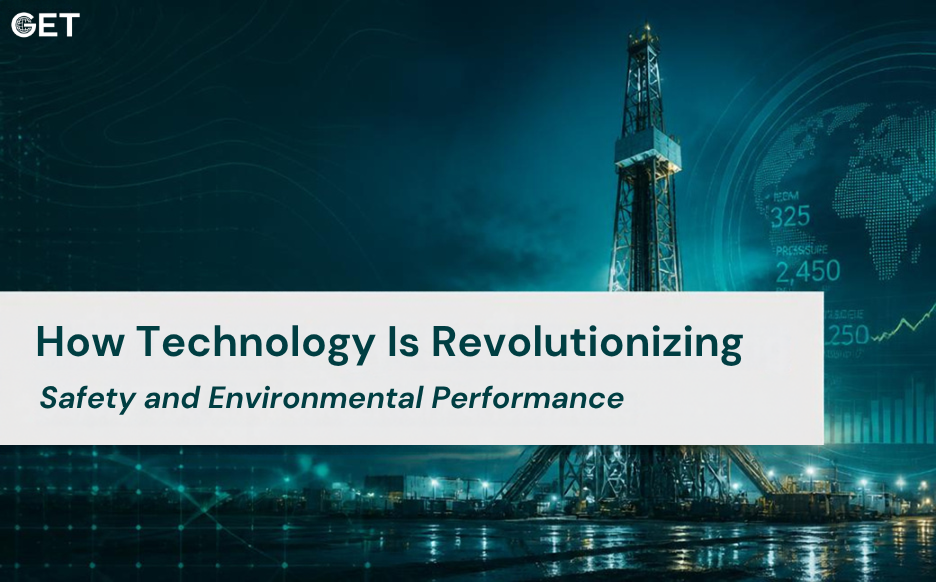
Technology has touched every corner of modern oil and gas operations—from upstream exploration and drilling to midstream pipelines, downstream facilities, maintenance, and performance monitoring. One area where digital transformation delivers exceptional value is HSE (Health, Safety and Environment), a core priority for GET Global Group and the wider energy industry. […]