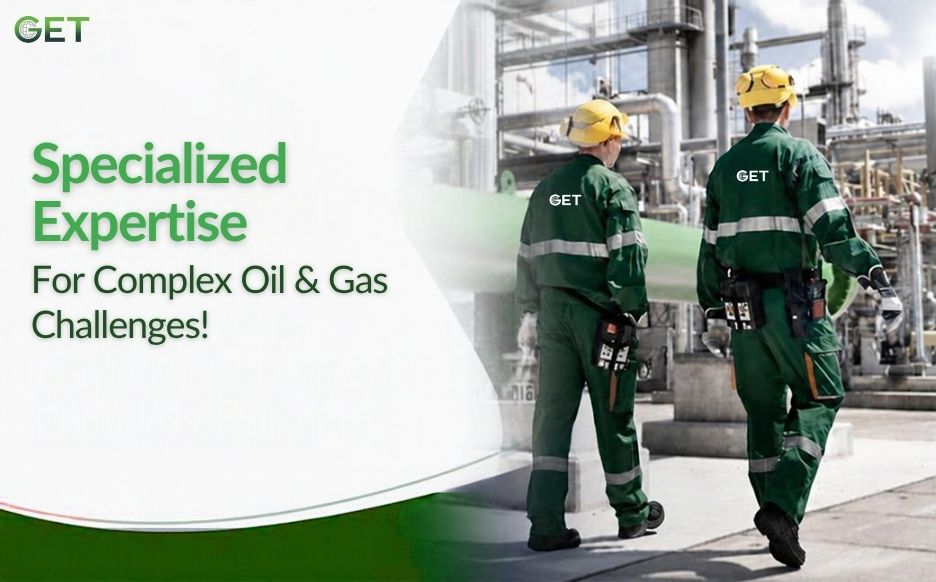
Specialized expertise turns a hard project in the oil and gas industry into a workable one. Every oilfield has its own geology, risks, and surprises. The teams that handle them the operations on field have usually met something similar before.
In the modern world, upstream oil and gas companies are working with older assets, tighter regulation, and a thinner pool of experienced people. Many are turning to dedicated upstream oil and gas services and customized oil and gas solutions to fill the gaps.
Different people in an upstream project have different complexities. Geoscientists are arguing over a seismic volume. A drilling engineer is trying to fit a well path between two faults. Someone in HSE is writing a safety case, and procurement is chasing a shipment stuck at a border. Meanwhile the operators who’ll run the asset for the next thirty years are wondering what everyone else is up to. They all speak slightly different technical languages, and every decision one of them makes lands on another’s desk.
That’s why the oil and gas industry is so hard to run on general knowledge. Something that looks sensible from where you sit can cause trouble two departments away. Take a well that’s cheap and quick to drill, with nobody checking how corrosive the produced fluid will be. The drilling team hits its numbers and goes home happy. Three years on, production is paying for it in repairs and lost barrels.
And that’s before the usual pile-on. Prices swing. Environmental rules tighten. The infrastructure keeps ageing, and experienced people are retiring faster than anyone can train their replacements. Upstream oil and gas companies have to deal with all of it at once, and there’s no fix to it, not even working longer hours. Having someone around who has seen these problems before does. That’s what good oil and gas solutions come down to: the right knowledge in front of the right problem, early.
Specialized Expertise means different to different people in the Oil and Gas Industry. Some people point to qualifications, others to years served. In practice it comes down to a few things that don’t show up on a CV.
Depth is the first. Someone who has spent a decade on well integrity or flow assurance sees trouble in a data set long before anyone else does.
Then there’s what they’ve lived through. A stuck string on a night shift. A hydrate plug in a cold flowline. A cement job that looked fine on paper and failed the pressure test a week later. People who’ve been through that stop trusting tidy assumptions, and they usually know which ones fail first.
The last piece is awareness of the neighbours. A decision made in drilling lands on the production team’s desk years later. Specialists tend to think about that before they commit.
You can usually tell within a minute of watching them work. Production on a well falls. A generalist checks the pump. A specialist asks whether pressure, water cut and sand moved together, because if they did, the pump isn’t the problem.
Specialized knowledge pays off most on the hardest jobs. Routine work in the oil and gas industry runs fine without it. High-pressure wells, sour gas, offshore tiebacks, and mature fields with decades of history are different, because a missed detail their costs weeks and a lot of money. That is why many operators bring in upstream oil and gas services for exactly those jobs, instead of stretching their own teams.
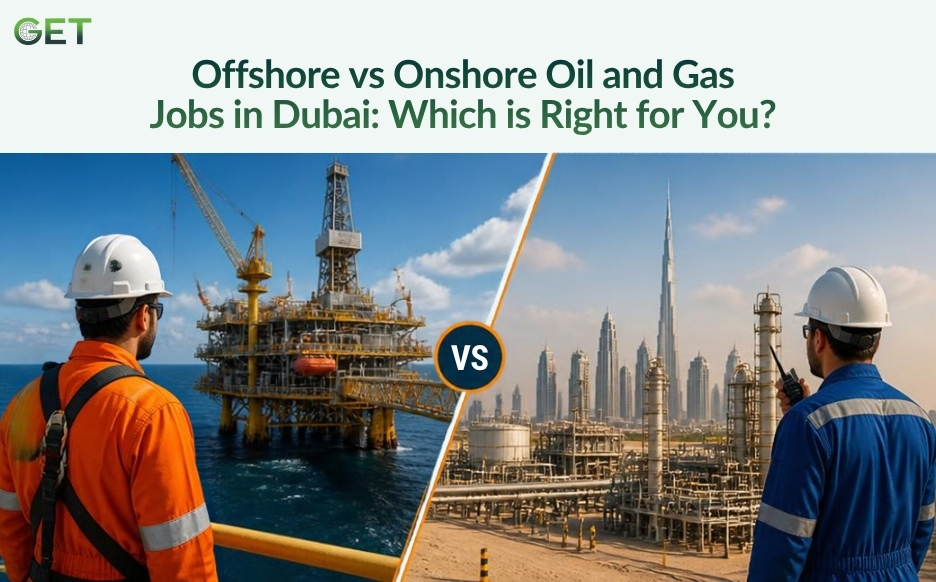
Read Also- Offshore vs Onshore Oil and Gas Jobs in Dubai: Which is Right for You?
Nobody can see a reservoir. You build a picture from seismic, logs, cores and whatever production history you’ve got, then spend a fortune on your best guess. Gaps? Guaranteed.
Good geoscientists know where the gaps hide. Logs lie in patchy rock. Seismic gets shaky at certain depths. They’ll also tell you how unsure they are, which is rarer than you’d think. The better oil and gas solutions start from a realistic range rather than one hopeful number, and a plan built on a range copes better when the field pushes back.
Most of the money goes here, and so does most of the risk in the oil and gas industry. The gap between pore pressure and fracture pressure can be a hair’s width. Some shale swells. Some just falls into the hole. Stuck pipe, lost circulation, a cement job that never bonded: any of them can quietly eat several days, and the rig keeps costing money the whole time.
Experienced drilling engineers have worked most of this out before the rig is on location. Once the bit is turning, an experienced crew keeps an eye on torque, drag and returns, and acts on a small change well before it becomes a problem. It’s the reason upstream oil and gas services like directional drilling support, mud engineering and well testing are a business at all. A crew that does this every week sees things a twice-a-year team won’t.
Once a well is flowing, the job changes. Now the goal is to keep it that way. Corrosion, erosion, scale, wax and hydrates do their damage on the inside of the pipe, out of sight. And plenty of upstream oil and gas companies are running equipment well past its design life.
Integrity engineers don’t treat every line the same. They ask what a failure would cost, put the inspection effort there, and decide case by case whether to repair or replace. Flow assurance people get involved earlier. They model how fluid cools and lose pressure on its way up, then sort out insulation and chemical injection before anything blocks. Fewer surprise shutdowns follow, which is where most operators lose money. Practical oil and gas solutions in this area start with knowing which lines matter.
Safety in the oil and gas industry isn’t a department. It shapes every decision on site. You’ve got high pressure, flammable fluids, heavy lifts, remote locations and weather that won’t wait for your schedule. One bad day can hurt people, and the land can take years to recover.
A good HSE specialist does far more than fill in checklists. They run hazard studies, follow up on near misses, and work on the culture until even the newest hand on the crew will say, “this doesn’t look right.” They keep operators current as rules change too, which is why more upstream oil and gas services now include HSE audits. Crews trust the people who are straight with them, and that trust takes years to build.
Modern assets throw off a constant stream of readings: pressure, temperature, vibration, flow. Most of it is never looked at. Turning numbers into decisions needs someone who knows the data and knows the machine producing it.
A reliability engineer who has seen how compressors usually fail can set up monitoring that catches the earliest warning. A data person with a production background can build a model that flags a growing restriction weeks before output falls. The useful oil and gas solutions here combine both skills, and the better upstream oil and gas services in reliability do exactly that. Without that mix, a dashboard just produces alarms that tired people learn to ignore.
A rig waiting for a part earns nothing, and the delay spreads to everything behind it. Equipment in the oil and gas industry often travels halfway round the world, so people who understand vendor checks, lead times and customs rules are worth more than the org chart suggests. They also spot when a cheap option will cost far more over the life of the kit. For upstream oil and gas companies, a solid supply chain team often decides whether a project lands on schedule.
Maybe the quietest challenge, and the biggest. Plenty of experienced engineers and technicians are close to retirement and replacing them takes years. The oil and gas industry also loses graduates to sectors that look more appealing. Upstream oil and gas companies feel it most on remote assets.
Specialists help in two ways. First, they cover gaps on live projects right away. Then they hand over what they know by working beside younger colleagues. Good upstream oil and gas services build that handover into the contract, because a provider worth hiring leaves your team stronger than they found it.
So what do clients actually get? Mostly time. And mistakes they never have to make.
Speed comes first. A specialist notices the pressure that drifts, the vibration that sounds slightly wrong, the reading that doesn’t fit. They know where to dig, so a search that would eat an afternoon takes minutes.
Then repeat failures. A lot of the costliest breakdowns happen the same way in field after field, and anyone who has seen one can often head it off. Good oil and gas solutions are lessons someone else already paid for.
Planning matters too. A material chosen on day one, a better well path, an inspection method matched to the type of damage. Each costs little before construction and a lot after. For upstream oil and gas companies, early calls like these often decide whether a project keeps its budget. Safety’s the same: a specialist can walk a layout and spot the hazard everyone else stopped noticing months ago.
One example. Several wells in a field keep producing sand. The usual reflex is to choke them back and hope. A sand control specialist goes after the cause instead. They read the completion design, the rate history and the rock strength, and recommend a fix aimed squarely at it. Output recovers, equipment stops wearing out, and the team finally knows why. Anyone can patch a leak. Picking the right patch is the skill, and you’ll see that across the oil and gas industry.
Specialists rarely turn up alone. Most reach operators through service companies, and the range of upstream oil and gas services is wide.
For example, three groups are working on the oilfield. One on the well: directional drilling, mud engineering, cementing, well testing, intervention. Another looks after the asset after first oil, through inspection, corrosion management, flow assurance studies and reliability work. The third wraps around the operation: HSE advice, regulatory support, procurement, logistics and technical staffing.
Why buy instead of build? Because the work is specialised, occasional or risky enough that carrying it full time makes no sense. A company drilling a few wells a year can’t keep a directional crew busy. An old field with an integrity problem needs an inspector for a few weeks, not a permanent hire. Upstream oil and gas services let operators buy depth when they need it and skip the overhead when they don’t.
Providers vary. Good ones bring people with real field time, clear safety practices and honest reporting. Weak ones lead with slides and a logo. The best oil and gas solutions tend to come from partners who were vetted properly, not whoever quoted lowest.
Hardly any operator can afford every specialist full time. Some skills are daily needs, like reservoir engineering and operations. Others show up for a few weeks, like a specialised well test or a deep integrity review.
It only works if knowledge flows both ways. A partner who hands over a report and leaves has solved today’s problem and created tomorrow’s dependency. One who writes down the reasoning and trains your people leaves something that lasts. The oil and gas industry could use a lot more of that.
Don’t rush it. Ask a few blunt questions and you’ll learn more than any brochure can tell you.
Who did the work? Ask for examples of similar jobs, then ask who was actually on them. Those are the people you’ll get, never mind the logo on the proposal.
Check how they handle safety, and where they’ve worked. In the oil and gas industry, a company’s safety habits tell you most of what you need to know. Region counts as well. Working in UAE isn’t the same as working in Saudi Arabia or Guyana, and a team that already knows the local rules will avoid delays you wouldn’t see coming.
Listen to how they answer. Real specialists say “I’m not sure yet” when they aren’t. A provider with a neat answer for everything deserves a second look. Ask about handover too, because the best providers of upstream oil and gas services expect to leave you less dependent than they found you.
Last, settle how success gets measured before anybody mobilises. Downtime, milestones, people trained, whatever suits the job. Put it in writing. That’s the difference between practical oil and gas solutions and a good slide deck, and upstream oil and gas companies that hold firm on it usually get more out of each contract.
GET Global Group works on the operational side of oil and gas. From supplying technical know-how and the people who run and maintain assets to professionals, it is working for businesses across the oil and gas industry in the UAE, KSA, Guyana and more locations. The dedication is towards achieving what upstream oil and gas companies want on a project: real experience, a safety-first outlook and the toughness to cope with demanding sites.
Building a team, or short of specialists for upstream oil and gas services on one project? GET Global Group can help you find the right people without a cold start. It’s a quick way to close a skills gap with targeted oil and gas solutions.
The oil and gas industry isn’t getting any simpler. Reservoirs are deeper, assets are older, rules keep tightening, and the energy transition keeps adding questions to the pile. Specialized expertise has stopped being a perk. It’s how big, tangled problems get cut down to size.
The operators that do well tend to share a habit. They match the problem to the person, get that person in early, and make sure the knowledge stays when the project wraps. Do that often enough and one person’s skill becomes dependable oil and gas solutions that outlast any single job.
If you run an operator, work for a service provider or are starting out in upstream oil and gas, the point is the same. Depth matters and passing it on matters as much. Strong upstream oil and gas services grow from that idea, and the best upstream oil and gas companies already work this way.
Need specialist support for your upstream projects? Contact GET Global Group.
FAQs
What is specialized expertise in the oil and gas industry?
Deep knowledge of one discipline, such as reservoir engineering, drilling, asset integrity or HSE, built up through field work. Specialists also see how their area affects everything around it, which keeps the hardest jobs in the oil and gas industry on track.
Why do upstream oil and gas companies rely on specialist partners?
Carrying every specialist on payroll isn’t realistic. Partners handle short, demanding work like a complex well or an integrity review, and the in-house team keeps the long-term knowledge of the asset. For upstream oil and gas companies, that means lower fixed costs and a wider range of skills.
Which upstream oil and gas services need specialist expertise?
Directional drilling support, mud engineering, well testing, corrosion and integrity management, flow assurance and HSE advisory. Each one involves high-risk calls where experience counts, so operators buy these upstream oil and gas services instead of building everything themselves.
How do oil and gas solutions reduce downtime and cost?
Good oil and gas solutions put specialists on the problem early. They find causes faster, plan for known risks and reuse lessons from earlier failures, so you get fewer shutdowns, fewer repeat mistakes and better use of capital.
How can upstream oil and gas companies choose the right partner?
Check field experience, safety record, regional knowledge and how the provider will pass skills to your team. Ask who will do the work and agree measurable outcomes before it starts. A reliable provider of upstream oil and gas services won’t mind any of that.
By Get global | October 19, 2026

By Get global | October 16, 2026
By Get global | October 12, 2026

By Get global | October 9, 2026
Ask any person working night shifts in rigs and compressor stations what holds the industry back, and you will seldom hear anything about geology. Disconnected information, delayed decision-making, and machinery breaking down at the wrong moment – all these factors are more common causes of productivity losses in the industry. […]
By Get global | September 30, 2026