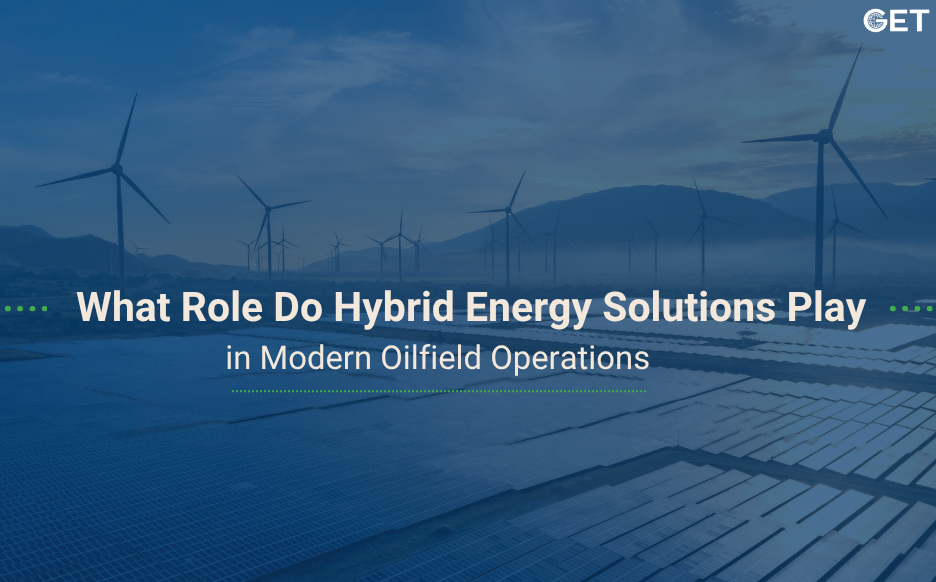
The Oilfield Is Changing — From the Inside Out
For most of its history, the oilfield ran on fossil fuels. Diesel generators powered remote locations. Gas turbines drove compressors. Flaring burned off associated gas that could not be captured economically. The upstream oil and gas industry was, by its nature, a significant consumer of the very resource it produced.
That model is under pressure — not from outside the industry, but from within it. Operators across the oil and gas sector are discovering that hybrid energy solutions do not just reduce emissions. They cut costs, improve operational reliability, and extend the productive life of assets that would otherwise face increasing power-related constraints.
The conversation has shifted. Hybrid energy in the oilfield is no longer a sustainability exercise. It is an operational strategy.
The term hybrid energy can mean different things in different sectors. In modern oilfield operations, it typically refers to the integration of two or more power sources — usually a combination of renewables and conventional generation — to create a more reliable, more efficient, and lower-emission power supply for field operations.
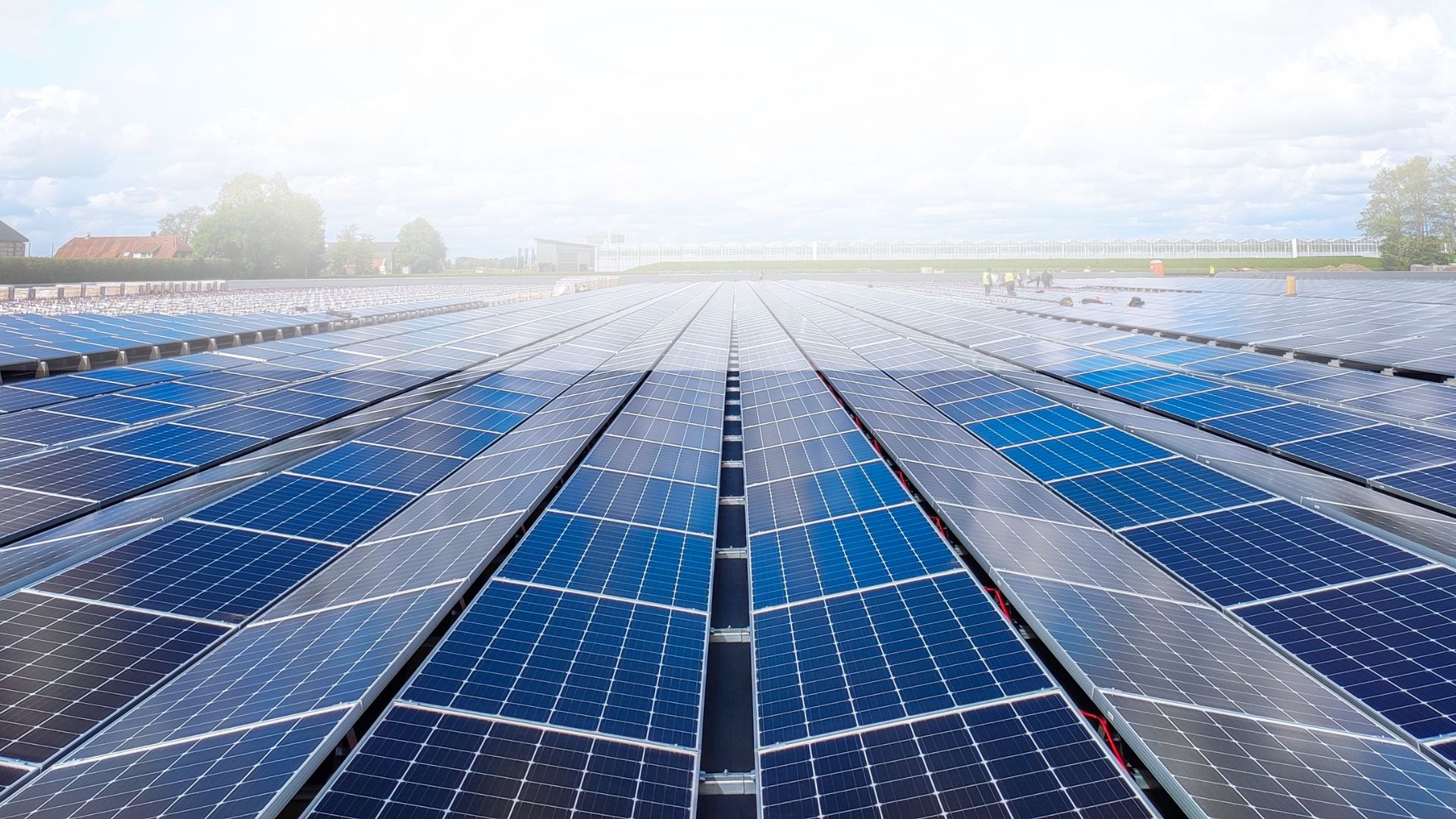
In practice, this looks different depending on the asset. For a remote onshore oil field in the Middle East, hybrid might mean solar PV combined with battery energy storage systems (BESS) and a backup diesel generator — reducing fuel consumption by 40–60% while maintaining the reliability that critical operations demand. For an offshore oil rig, it might mean waste heat recovery from gas turbines feeding into an electrical grid that also draws from wind or wave energy where available.
The upstream midstream and downstream oil and gas value chain is seeing hybrid solutions deployed at multiple points — from the wellhead all the way through to processing facilities. Gas and oil companies that once viewed renewable integration as a downstream concern are now actively piloting hybrid configurations in their upstream operations.
In the UAE, where national energy strategy is explicitly tied to both production growth and decarbonization targets, oil and gas companies in UAE are under particular pressure to demonstrate that increased output and reduced emissions can coexist. Hybrid energy is one of the most practical tools available to make that case.
The business case for hybrid energy in oilfield operations has strengthened significantly over the past five years — driven by three converging factors.
Cost of power generation is changing. Solar PV costs have fallen dramatically. Battery storage is following a similar trajectory. For remote upstream operations where diesel logistics are expensive and complex, the economics of hybrid generation have crossed into clearly positive territory. When you factor in fuel costs, logistics overhead, and the maintenance burden of running diesel generators at partial load — which is inherently inefficient — hybrid configurations often deliver lower total cost of power within the first few years of operation.
Reliability demands are rising. As oilfield operations become more technology-intensive — with digital monitoring systems, automation platforms, and real-time data transmission becoming standard — the power quality requirements of the equipment running those systems are increasing. BESS components of hybrid systems can provide the clean, stable power that sensitive electronics require, reducing equipment failures and extending operational lifespans.
Emissions accountability is tightening. The biggest oil and gas companies — national oil companies and majors alike — are setting operational emissions targets that flow down through their supply chains and service contracts. Upstream oil and gas services companies that can demonstrate lower-emission operations are increasingly preferred over those that cannot. This creates commercial pressure to adopt hybrid energy that sits alongside the environmental rationale.
Here is where the conversation around hybrid energy in oilfield operations gets interesting from a workforce perspective — and where GET Global Group sits squarely in the picture.
Hybrid energy systems are more complex to operate and maintain than conventional single-source power generation. A diesel generator requires one skill set. A hybrid system combining solar, BESS, and backup generation requires a broader technical foundation — understanding of power electronics, battery management systems, control system integration, and the interaction between variable renewable generation and load demand.
The upstream oil and gas industry is already facing a well-documented skills gap. As hybrid energy systems become more common in oil fields, that gap extends into a new technical domain. Oil and gas companies that deploy hybrid infrastructure without adequately training the workforce responsible for operating and maintaining it will not realise the efficiency benefits they are investing for.
This is where oil and gas technical training becomes directly relevant to the hybrid energy conversation. GET Learning, GET Global Group’s upstream-focused LMS platform, supports the continuous development of crew competencies across evolving technical disciplines. As new technologies enter the oilfield, the training infrastructure to support them needs to keep pace. A crew member who understands how a BESS interacts with variable renewable generation is not just a safer operator — they are a more valuable one.
Oil and gas training companies that are already building hybrid energy competencies into their curricula are ahead of an industry need that will only grow.
The most successful hybrid energy deployments in upstream oil and gas operations share a few characteristics that are worth understanding before committing to a configuration.
They are designed around the actual load profile of the operation. Hybrid systems that are sized to a generic template rather than the specific demand pattern of the asset consistently underperform. The combination of drilling loads, camp power, processing equipment, and instrumentation creates a unique demand signature at every location — and the hybrid configuration needs to match it.
They are integrated with the asset’s maintenance and operational planning cycle. A BESS that requires specialist servicing every six months in a location where logistics are constrained will create more downtime than the diesel it replaced if that maintenance is not properly planned.
They are supported by crew who understand them. This comes back to the workforce dimension. The technology only performs as well as the people managing it.
For oil and gas companies in KSA, where Vision 2030 is driving both upstream expansion and clean energy investment simultaneously, and for operators in emerging markets like Guyana where new field developments can be designed with hybrid infrastructure from the start rather than retrofitted, the opportunity to get this right from the beginning is significant.
GET Global Group supports upstream operators at the intersection of workforce deployment, technical expertise, and Procurement and Supply Chain Management – the three operational pillars that determine whether hybrid energy investments in oil fields actually deliver their intended returns.
Our Supply Chain Management solution ensures that hybrid energy equipment is sourced to the correct specification for the operating environment. Our Competency Management System ensures that the crew operating it are verified, not assumed, to be capable of doing so. And GET Learning ensures that as the technical requirements of the oilfield evolve, GET’s crews are developing alongside them.
The energy transition in the upstream oil and gas industry is not a single event. It is a continuous process of adaptation — and the operators and service providers who manage that adaptation most effectively will define what the modern oilfield looks like.
Read Also- From Reservoir to Market: Why Reliable Oilfield Services Matter for Every Barrel Produced
Frequently Asked Questions
What is a hybrid energy system in oilfield operations?
A hybrid energy system combines two or more power sources — typically a renewable source such as solar, wind, or wave energy alongside conventional generation and battery storage — to power oilfield operations more efficiently and with lower emissions than single-source conventional generation alone.
Why are upstream oil and gas companies adopting hybrid energy now?
Three main drivers: falling costs of solar and battery storage, rising power quality requirements from increasingly digital oilfield systems, and growing emissions accountability from national oil companies and major operators flowing down through service contracts.
Does hybrid energy work in remote oilfield locations?
Yes — in fact, remote locations often present the strongest economic case for hybrid energy, because the cost and logistics burden of diesel supply in remote oil fields are significant. Solar-BESS-diesel hybrid configurations are already operational in remote upstream locations across the Middle East and Africa.
What skills do oilfield crews need to operate hybrid energy systems?
Hybrid systems require broader technical competencies than conventional generation — including understanding of power electronics, battery management, control systems, and the interaction between variable renewable generation and operational load demand. Structured oil and gas technical training is essential to develop and maintain these competencies.
How does GET Global Group support hybrid energy operations?
Through integrated upstream oil and gas services — verified crew deployment via our Competency Management System, technical training through GET Learning, and procurement support through our Supply Chain Management solution — GET ensures operators have the people, skills, and equipment to run hybrid energy systems effectively.
Will hybrid energy replace conventional power generation in oil fields entirely?
Not in the near term. The nature of upstream oil and gas operations — particularly the high, variable power demands of drilling — means conventional backup generation will remain part of the picture for the foreseeable future. The trajectory is toward hybrid configurations that progressively reduce dependence on conventional generation as technology and operational experience mature.

By Get global | October 19, 2026
By Get global | October 16, 2026

By Get global | October 12, 2026
By Get global | October 12, 2026
Saudi Arabia is traditionally considered a key country where people work in the oil and gas sector. As there is quite a lot of drilling, well intervention and production processes in this country, many engineers, technicians and specialists from the field try to find suitable positions there. However, not all […]

By Get global | October 9, 2026
Ask any person working night shifts in rigs and compressor stations what holds the industry back, and you will seldom hear anything about geology. Disconnected information, delayed decision-making, and machinery breaking down at the wrong moment – all these factors are more common causes of productivity losses in the industry. […]