A career guide for oil and gas aspirants
If you were to ask anyone who has worked in drilling rigs for some time now, how did they land that first job? The answer will probably be: “It is not because I submitted my application online.” Instead, it may be something like: “I had the necessary certificates, and someone saw them.”
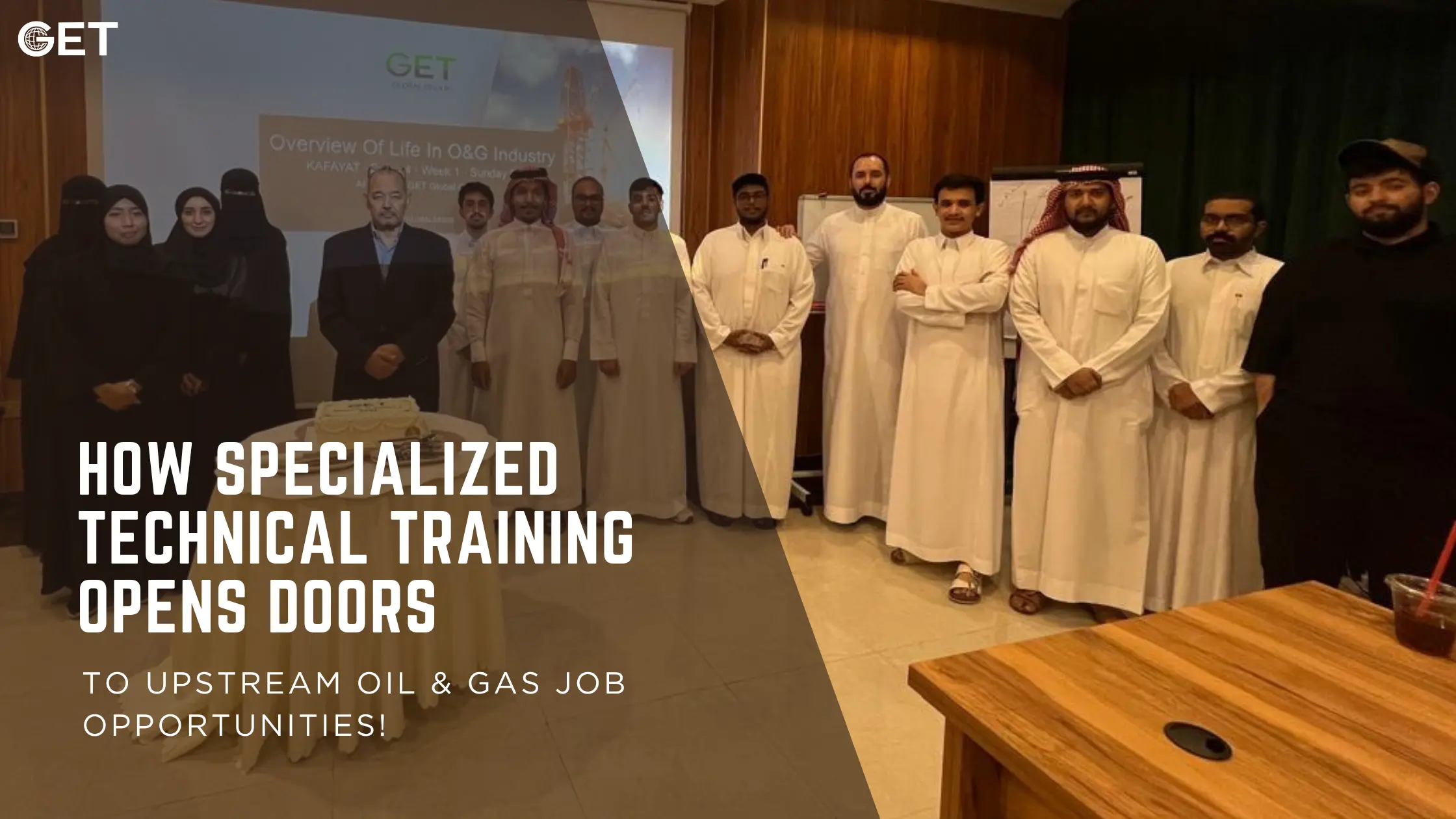
Exploration, drilling and production of crude oil, collectively known as upstream oil and gas industry, require accuracy, security and integrity. Hiring raw novices and training them is not an option for the employers. What they need is someone with prior experience or someone who can understand the lingo. This is the role that technical training plays.
The upstream sector is the beginning of the energy value chain. This is where the resources of crude oil and natural gas are found and brought out of the ground by drilling. Compared with downstream refinement and retailing, upstream exploration entails much more risk: high pressure, distant areas, heavy machinery, and no room for compromise.
For this reason, when recruiting, operators, drilling service firms, and oil field services companies put applicants through tough scrutiny. A college degree is useful, but a college degree does not prove that you can work around a wellhead. Professional training will.
There is another factor in play here – numerical. Quite a significant portion of the experienced personnel are going into retirement, while new projects in the Middle East, Africa, Southeast Asia, and North Sea continue their requirements of skilled people. They need individuals who are ready to perform right away, and this is why professional applicants are cheaper.
It isn’t a generic course on energy. Good oil and gas training programs are built around what actually happens in the field. Depending on the track, you might study:
The best programs mix classroom theory with workshop practice and simulator time. You learn why a procedure exists, then you do it until it feels automatic.
Some credentials carry real weight because operators around the world recognize them. If you’re mapping out a career in upstream oil and gas, these are worth knowing:
None of these guarantees a job. What they do is get your CV through the first filter, and in a competitive market that’s half the fight.
Read Also- Why NEBOSH and IWCF Certifications Matter in the Oil & Gas Industry
People often assume the only way in is as a roughneck, which is a physically demanding job but far from the only door. Once you have the right foundation, the options widen considerably:
On the rig floor: roustabout, floorman, derrickman, driller, assistant driller, toolpusher.
Technical and engineering support: mud logger, drilling fluids engineer, MWD/LWD operator, wireline technician, well testing operator, petroleum engineering technician.
Production and maintenance: production operator, control room operator, mechanical fitter, instrument technician, electrician.
Quality and safety: HSE advisor, NDT inspector, QA/QC inspector, rigging and lifting supervisor.
Offshore and subsea: platform operator, ROV technician, subsea inspection specialist.
The pay reflects the specialization. Skilled technicians and supervisors in oilfield services frequently earn well above local averages, especially on rotational contracts with allowances. Over time, trained workers also move upward faster, from technician to supervisor to operations manager, because they’ve built competence step by step instead of learning through mistakes.
Read Also- How to Evaluate a Technical Training Provider for Upstream Oil & Gas
Here’s something many job seekers miss. Hiring managers don’t just ask “Do you know this?” They ask “Can you do this under pressure?”
A candidate who has actually practiced a well-control drill, rigged a load or carried out a gas test in a realistic setting answers that question differently. Their confidence shows up in interviews and, more importantly, in the first week on site.
Practical exposure also teaches things textbooks skip: how crews communicate over noise, how a good handover works, why housekeeping matters on a rig. These habits are what supervisors remember when deciding who gets called back for the next project.
It is exactly this gap that GET Global Group addresses. Instead of providing training separately, GET Global Group provides technical education aligned with the needs of the oil and gas industry, allowing the learner to acquire the skills that the employer requires. For those who are new to the industry and even for those who are moving into this industry from related fields, such guidance can save them precious months of trial and error.
When trying to make comparisons, it is important to pose a few direct questions to any provider, GET Global Group included. Are the courses accredited? Do the trainers have field experience? Is there practical workshop training? And what is provided after the training is completed? The answers can speak volumes.
Before you spend money or time, run through this short checklist:
Upstream oil and gas isn’t an easy industry to enter, but it’s far from closed. The people who succeed usually aren’t the ones with the flashiest résumé. They’re the ones who prepared properly, picked up certifications that matter and showed up ready to learn on the job.
Specialized technical training turns interest into capability, and capability is what employers pay for. Whether you’re a fresh graduate, a diploma holder or a tradesperson looking for a better contract, investing in the right training could be the most practical career decision you make this year. With reputable partners such as GET Global Group supporting that journey, the path from classroom to rig site becomes a lot clearer.
Read Also – How Innovation and Growth Are Driving the Global Energy Sector in 2026
No. Engineering roles do require degrees, but many technical, operational and safety positions are open to diploma holders and skilled tradespeople who hold the right certifications.
For most entry-level offshore or field roles, a basic safety induction, H2S awareness and a recognized HSE qualification like IOSH or NEBOSH are sensible starting points. After that, specialize based on your target job.
It varies widely. Short safety courses run from a few days to a week, while trade-focused programs such as welding or NDT can take several weeks to months.
Yes, for now and the foreseeable future. Global demand for oil and gas remains significant, and many upstream skills, such as drilling, subsea work and well integrity, also transfer to geothermal, carbon capture and offshore wind.
It’s possible but competitive. Freshers with offshore safety certificates, good fitness and relevant technical training have a much better chance than those without.
GET Global Group offers industry-focused training and career guidance for oil and gas aspirants. Check their current course list and accreditation details directly to find what fits your goals.

By Get global | November 16, 2026
Dubai is famous for its skyline, its shopping and its world-class airlines, but there is another side to the city that deserves more attention. Energy professionals from around the globe have made it their base, and for good reason. An oil and gas career in Dubai offers the international exposure […]
By Get global | November 12, 2026
By Get global | November 10, 2026
By Get global | November 10, 2026
By Get global | November 5, 2026