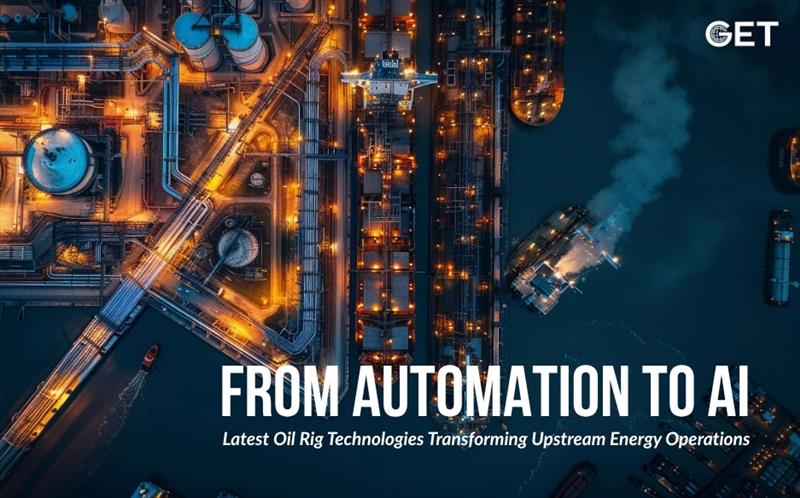
The upstream oil and gas business often conjures images of vast platforms, roaring drills, and crews battling the elements. What is less obvious to the outsider is how deeply technology has become woven into that fabric — not just innovations stuck onto rigs, but full-scale transformations that are reshaping how wells are found, drilled, produced and maintained. At GET Global Group we’re excited about how this evolution is happening in real time. Let’s walk through the shift from traditional automation to artificial intelligence (AI) in upstream operations, explore key use-cases, and discuss what operators must keep in mind as the pace of change accelerates.
Initially, tech advances on upstream rigs focused on automation — mechanical, electrical and control-systems upgrades that reduced manual labour, improved reliability and standardized operations. Think robotic pipe-handling units, remotely operated valves and real-time monitoring dashboards. These helped bring rig-floor activities into a more controlled, predictable zone.
But automation alone was not enough. Operators found that while machines could repeat tasks, they still lacked the ability to think in the sense of interpreting complex upstream data, predicting unexpected events or adapting in real-time to changing subsurface conditions. That’s where AI steps in. The world of upstream oil and gas is now being reshaped by technologies that can ingest huge volumes of sensor and seismic data, learn patterns from past wells, optimise drilling or production strategies and drive decisions that were once only possible with large expert teams and long lead times.
A recent industry piece notes that AI is emerging as a “central innovation engine”, with digital twins, edge computing and real-time analytics joining forces to make upstream operations smarter and more resilient.
Conventionally, seismic surveys took a long time to process and interpret by a professional. Today, the AI-based seismic interpretation allows geoscientists to cut cycle times and reveal more in less time. As an example, one article reveals that AI-based seismic interpretation enabled one of the major operators to discover hundreds of millions of barrels of new resources.
In well construction the gains are especially vivid: machine learning algorithms are now monitoring downhole sensors (e.g., weight on bit, torque, mud flow), adjusting parameters automatically, and steering the bit with higher accuracy. One service-company write-up described how their “LOGIX™ automation and remote operations” platform improved drilling performance by analysing real-time data and making adjustments without manual intervention. Halliburton The result: faster drilling, fewer non-productive hours and better well placement.
A major cost driver on rigs is equipment downtime or failure. AI brings the ability to monitor equipment behaviour, detect subtle anomalies, forecast failures and schedule maintenance proactively. The shift from “react and repair” to “predict and prevent” is already taking hold in upstream operations globally.
Production efficiency and reservoir recovery become the concern after a well has commenced flowing. AI and digital twins (digital replicas of wells/fields) can help operators to simulate and manipulate the injection rate, track the reservoir, optimize the lift systems and recover more. The digital twin would turn into an operational live what-if lab in the upstream.
Beyond just efficiency, upstream operators face pressures to reduce emissions, enhance safety and meet stricter regulatory standards. AI and automation play a role here too — from unmanned inspections (via drones/ROVs) to smart leak-detection systems and autonomous shutdown protocols. One detailed study from PwC highlighted how “agentic AI” (autonomous AI agents) can intervene faster than humans, enhancing safety culture and environmental outcomes.
Read Also- Life on an Oil Rig: A Typical Day in the Life of a Drilling Engineer
Of course, moving from promise to practice isn’t trivial. A few key hurdles need attention:
To GET Global Group and our upstream energy clients the message is obvious: We are at a pivot point, not just in automating manual processes, but in using smart systems that can feel, make decisions in reaction and change accordingly. Even the rigs of today are significantly different compared to what they were even five years ago. However, no less significant is the change of mindset: to perceive rigs not as a fixed machine, but as a part of a digital ecosystem, which can engage in constant learning, optimisation and performance enhancement.
Those companies that are planning the shift, that is, they are investing heavily in data and digital foundations, aligning the organisation to the change and being open to new ways of value creation, will be most likely to succeed. Unless they do, they will be left behind not only in cost or efficiency but also in strategic relevance in a changing energy environment.
This is not only about technology at GET Global Group. It has to do with people, process, culture and purpose. We are also thrilled to collaborate with upstream operators that are willing to turn the page – to automation to AI-driven rigs, smarter wells and more resilient energy production.
By Get global | October 12, 2026
By Get global | October 12, 2026
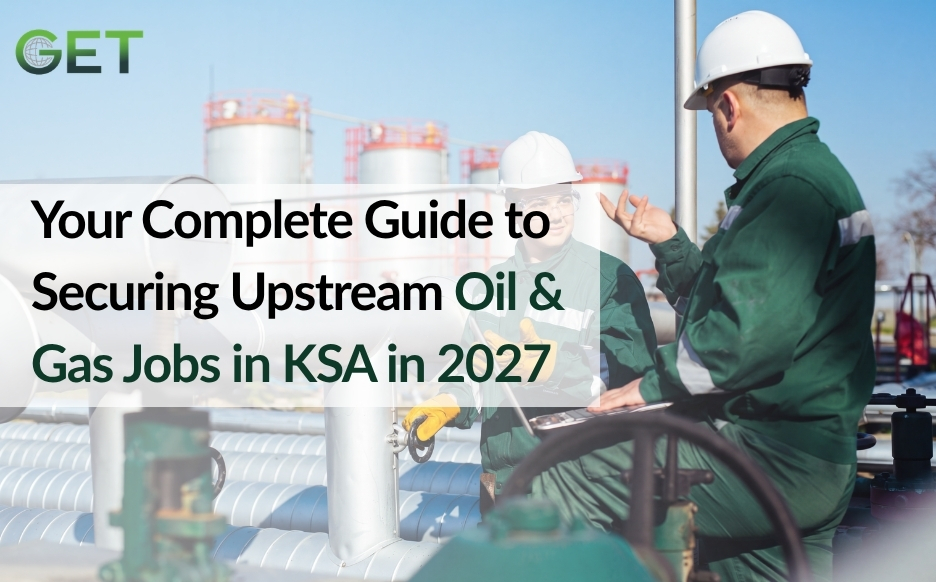
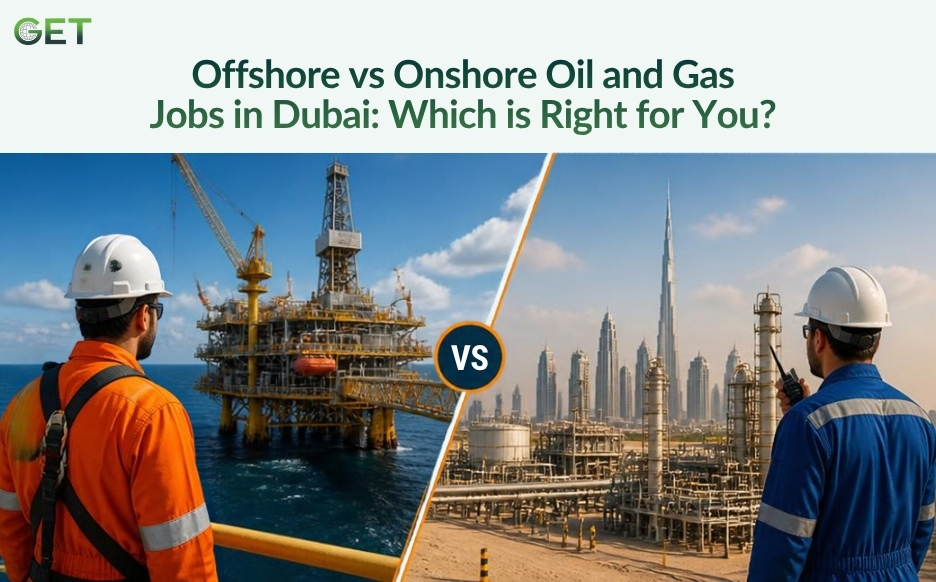
Saudi Arabia is traditionally considered a key country where people work in the oil and gas sector. As there is quite a lot of drilling, well intervention and production processes in this country, many engineers, technicians and specialists from the field try to find suitable positions there. However, not all […]
By Get global | October 9, 2026
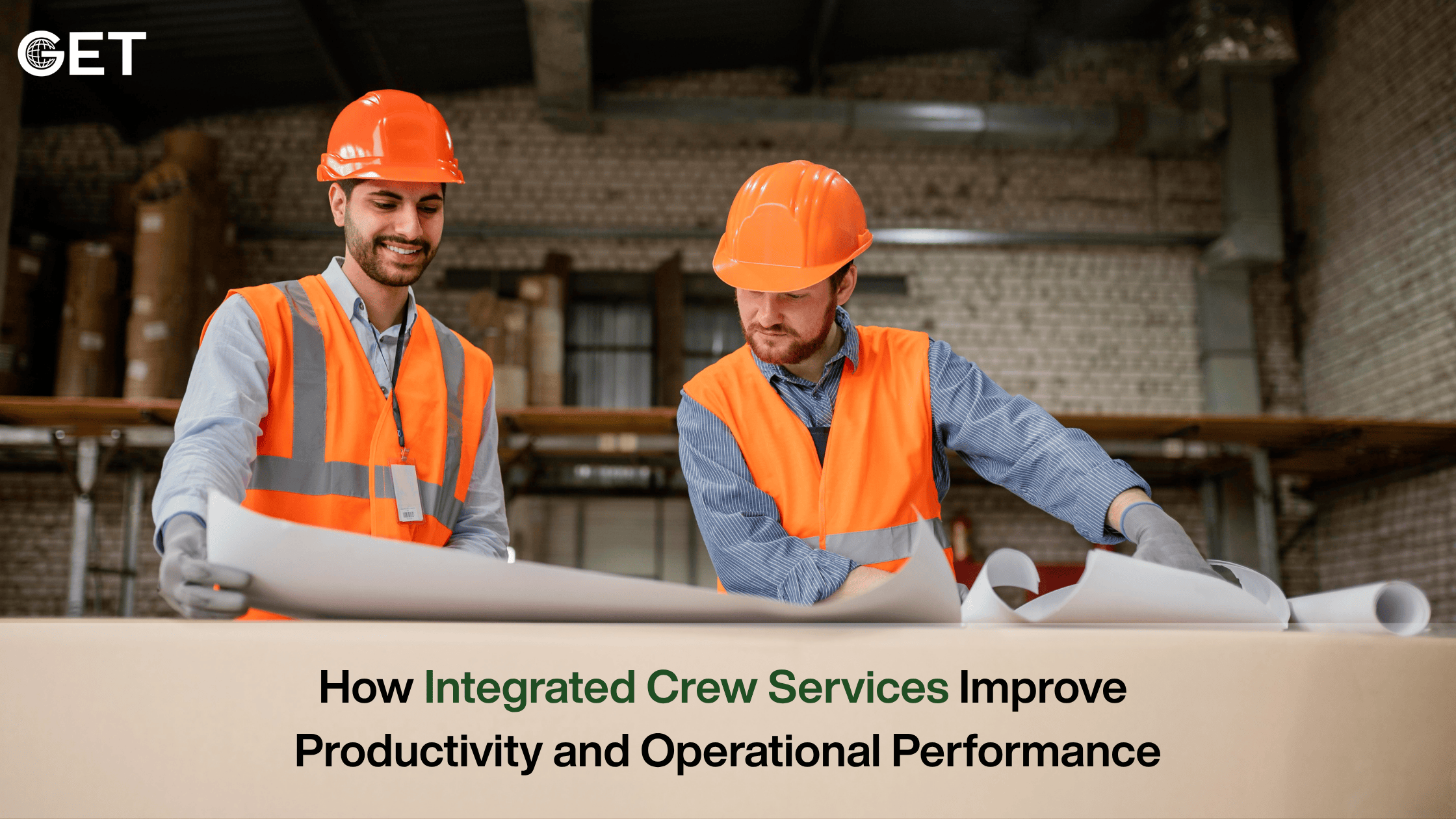
Ask any person working night shifts in rigs and compressor stations what holds the industry back, and you will seldom hear anything about geology. Disconnected information, delayed decision-making, and machinery breaking down at the wrong moment – all these factors are more common causes of productivity losses in the industry. […]
By Get global | October 5, 2026
Specialized expertise turns a hard project in the oil and gas industry into a workable one. Every oilfield has its own geology, risks, and surprises. The teams that handle them the operations on field have usually met something similar before. In the modern world, upstream oil and gas companies are […]
By Get global | September 30, 2026