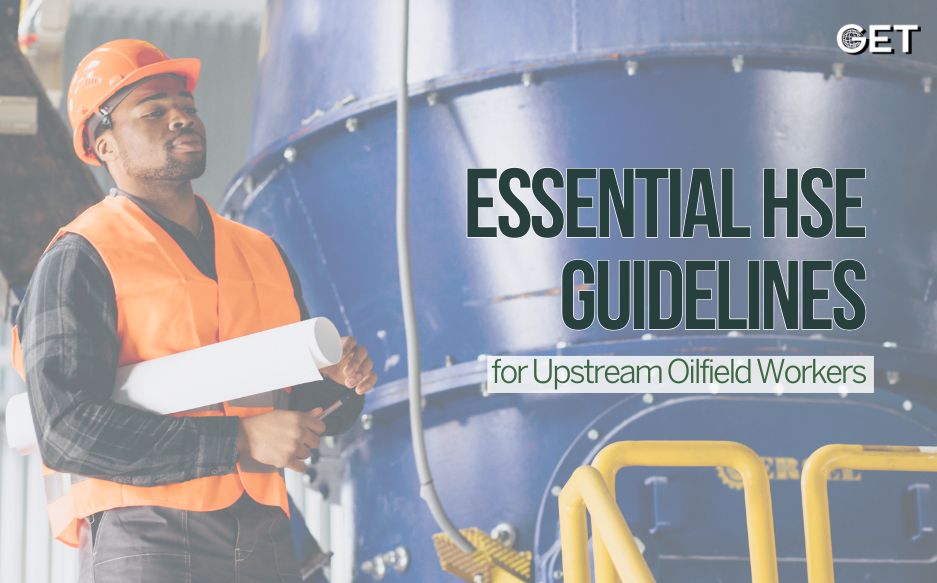
Working in upstream oil and gas operations is inherently risky. Drilling, rigging, and other operations require draconian attention to HSE (Health, Safety, Environment) guidelines. Proper adherence to these codes enhances not only the safety of personnel but also operational smoothness and environmental sustainability.
At GET Global, we have experienced working on a variety of upstream operations, always ensuring that our teams are trained to the highest safety standards. We developed a concise, practical guide from our experience toward imposingly responsible HSE measures that every oilfield worker must observe.
Every oilfield is a unique location. A worker must learn from the outset exactly what hazards a site poses. They include but are not limited to:
It’s about spending time analyzing your work environment and knowing what can go wrong. This is the first step to avoidance of mishaps.
Personal protective equipment (PPE) is your first protective barrier. It may seem obvious, but incorrect use or inconsistent application of PPE is a very common cause of injuries.
The usual PPE includes:
At GET Global Group, the importance of safety and the correct use of PPE are explained in an orientation for all crew members, and its enforcement is strict.
Permit-to-work systems make sure high-risk jobs get done in a safe manner. Be it welding, working at height, or entering confined spaces, never start a job without an approved permit.
PTWs are there to control hazards; they say:
Not following these systems can result in a serious incident. So, obey the PTW every time.
Many oilfield incidents occur through miscommunication or a lack of awareness. Simple behaviors like confirming instructions, communicating safety steps by repeating them, and asking questions if anything is unclear really help. Radios, hand signals, and shift handovers all serve communication well. Should there be something wrong with an operation or activity, please speak up; safety is everyone’s agenda.
At GET Global Group, workers are encouraged to observe the “Stop Work Authority” rule whereby any individual has the power to stop work if he or she witnesses an unsafe act. There will be no retribution for making that call.
Toolbox talks are safety meetings held at the beginning of a shift, during which the following things are done:
Regular drills (fire, emergency evacuations, etc.) serve to make sure you maintain your calmness and handle yourself correctly when the real emergency arrives. Please do not treat them lightly. Your life and the lives of others could depend on it.
Are you aware of:
Ask right away if you don’t. Emergency situations don’t wait, and inaction during a crisis can be fatal. Every crew member needs to be conversant with the sites’ well-defined emergency response plans.
Protecting the environment is just as important to HSE as protecting people. The work involves handling chemicals correctly, preventing spills, and properly disposing of waste. Remind yourself to:
qw• Adhere to the site’s waste disposal policies.
Environmental training is incorporated into the induction process for all crew members by GET Global Group. Making sure oilfield operations have as little of an impact on the environment as possible is our aim.
Unknown risks associated with upstream oilfield work include fatigue and ill health. The body suffers from long shifts, difficult working conditions, and physical labor. Fatigue increases the likelihood of errors by impairing focus and reaction time. Getting enough sleep before work, drinking plenty of water, taking quick breaks when necessary, eating well-balanced meals, and reporting any symptoms of fatigue or illness are all ways to stay alert. In order to prevent burnout, Global Group encourages crew rotation, rest regulations, and mental health check-ins.
Read Also- Empowering the Energy Frontline: Building a Resilient Crew Workforce in the oil and gas sector
A “near miss” is an event that nearly resulted in injury. By reporting these, future accidents can be avoided. If you notice: Don’t overlook the following: a loose railing; a leak; worn-out safety equipment; and slippery stairs. Report it. Everyone has a role to play in making the workplace safer. Near-miss reporting is a crucial safety KPI at GET Global Group. We think that by taking lessons from minor problems, major catastrophes can be avoided.
You don’t learn HSE once and then forget it. New hazards appear, safety regulations are updated, and technology advances. Certifications, practical training, and regular refresher courses are crucial.
GET Global Group’s in-house training platform, GET Learning, provides ongoing HSE courses tailored for upstream workers. Whether you’re a new hire or a seasoned driller, there’s always more to learn.
Safety in the upstream oil and gas sector isn’t just about rules—it’s about mindset. It’s about looking out for yourself and your team every single day.
At GET Global Group, we do more than just manage operations. We train, deploy, and support oilfield crews, always putting safety first. Through our field services and training programs, we
are dedicated to improving health, safety, and environmental standards in the energy industry. Remember: A safe oilfield is a productive oilfield. Let’s all do our part.
Want to Know more Visit info@getglobalgroup.com to see how GET Global Group can help support your upstream workforce with safety-focused training and deployment solutions.

By Get global | October 27, 2026
By Get global | October 26, 2026
Oil and Gas industry have always been in an environment that is capital intensive and where operational efficiency, safety, and cost management take precedence. But there have been instances where supply chain management within energy sector had issues like poor communication, disjointed tracking, lengthy vendor onboarding process, and reactive procurement […]
By Get global | October 19, 2026
By Get global | October 16, 2026
By Get global | October 12, 2026