The upstream oil and gas industry has always evolved with the times, but in 2025, the pace of change is faster than ever. From digital transformation to local workforce development, companies are rethinking how they explore and produce energy. At GET Global Group, we’ve seen these changes unfold firsthand, especially as we continue to support upstream operations across the region with smarter training, integrated crew services, and energy solutions.
If you’re looking to stay ahead in the upstream sector this year, here are the top trends to keep your eyes on.
Digital tools have moved from being “nice to have” to absolutely essential. In 2025, upstream companies are heavily investing in automation, AI, real-time data analytics, and IoT-enabled equipment. These technologies improve decision-making, reduce downtime, and help companies do more with fewer resources.
For example, predictive maintenance powered by AI can alert operators before a piece of equipment fails. Similarly, digital twins allow engineers to simulate operations before making real-world changes.
At GET Global Group, we’ve integrated digital tools not only in field operations but also in our GET Learning LMS platform—ensuring that crew members stay up-to-date with the latest skills and safety protocols through digital-first training.
One of the biggest game-changers in 2025 is the push toward local workforce development, especially in regions like the Middle East. Governments and major oil companies are prioritizing nationalization—hiring and developing local talent rather than relying on foreign manpower.
This shift isn’t just about policy; it’s also about cost and sustainability. Local crew can reduce expenses related to visas, accommodation, and travel. Plus, when trained properly, they deliver high performance and long-term stability.
Through programs like Kafayat, GET Global Group has been at the forefront of this transformation—training and deploying Saudi nationals into upstream oilfield roles through structured, field-ready programs.
Even in the upstream segment, sustainability is not just a buzzword. More oil and gas companies are setting carbon reduction targets, exploring green drilling techniques, and investing in cleaner technologies.
Operators are using low-emission rigs, reducing flaring, and improving fuel efficiency across operations. ESG (Environmental, Social, Governance) reporting is becoming a key part of how companies attract investors and maintain their license to operate.
At GET Global Group, we’ve supported our clients’ sustainability goals through our On Demand Energy Solution (ODES)—a solar-powered system that reduces emissions on-site while also cutting energy costs.
As the technology landscape changes, so must the workforce. Traditional skills alone are no longer enough. Crew members need to learn how to work with digital dashboards, remote monitoring systems, and automation tools.
Companies that invest in regular upskilling and reskilling see a clear ROI—not just in productivity, but also in safety and staff retention.
Our GET Learning platform has become a critical tool in this journey, helping upstream companies train their workforce in real-time with easy-to-follow courses, assessments, and hands-on learning modules. Whether it’s HSE compliance or digital rig operations, we make sure crews are job-ready from day one.
Traditional contracting models are becoming outdated. Oil and gas companies are now looking for integrated service providers who can offer everything—from crew deployment and training to compliance and operational support—under one roof.
This shift saves time, reduces hidden costs, and improves efficiency across the project lifecycle.
At GET Global Group, we’ve built a transparent, all-inclusive model that provides exactly this. Instead of dealing with multiple vendors, clients get a single partner handling everything: crew sourcing, training, onboarding, visas, HSE support, and more. It’s a game-changer for companies aiming for speed and reliability.
More companies are realizing that data is one of their most valuable assets. In 2025, upstream firms are using data not just to track operations but to forecast trends, manage risks, and optimize every step of exploration and production.
Whether it’s subsurface modelling or supply chain logistics, having the right data at the right time leads to better results.
At GET Global Group, data also powers our internal operations—from tracking training effectiveness to optimizing crew deployment. It’s how we maintain consistency and ensure continuous improvement.
With the rise of connected devices and satellite connectivity, companies now monitor remote oilfields in real-time. This reduces the need for large teams on-site and allows quick responses in case of anomalies.
Smart surveillance through drones, remote cameras, and automated sensors is now a standard part of upstream operations. It’s safer, faster, and more cost-efficient.
We’ve helped clients adopt these systems as part of our support services, ensuring field operations are continuously observed without putting lives at risk.
The upstream oil and gas industry in 2025 is being reshaped by technology, sustainability, workforce transformation, and the need for smarter partnerships. It’s no longer enough to just pump oil—you have to do it efficiently, cleanly, and with the right people on board.
At GET Global Group, we understand the pressure upstream companies face. That’s why we offer end-to-end solutions that blend technology, training, and manpower support—making your operations not only compliant but future-ready.
Read Also- 5 Essential Tips to Start Your Career in Oil and Gas Industry
By Get global | October 16, 2026
By Get global | October 12, 2026
By Get global | October 5, 2026
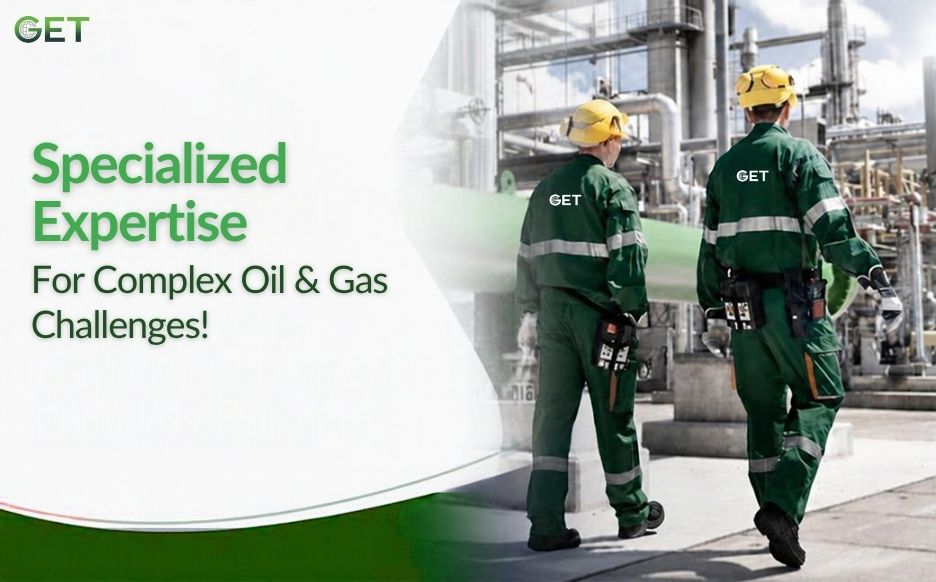
Specialized expertise turns a hard project in the oil and gas industry into a workable one. Every oilfield has its own geology, risks, and surprises. The teams that handle them the operations on field have usually met something similar before. In the modern world, upstream oil and gas companies are […]
By Get global | September 30, 2026
By Get global | September 28, 2026