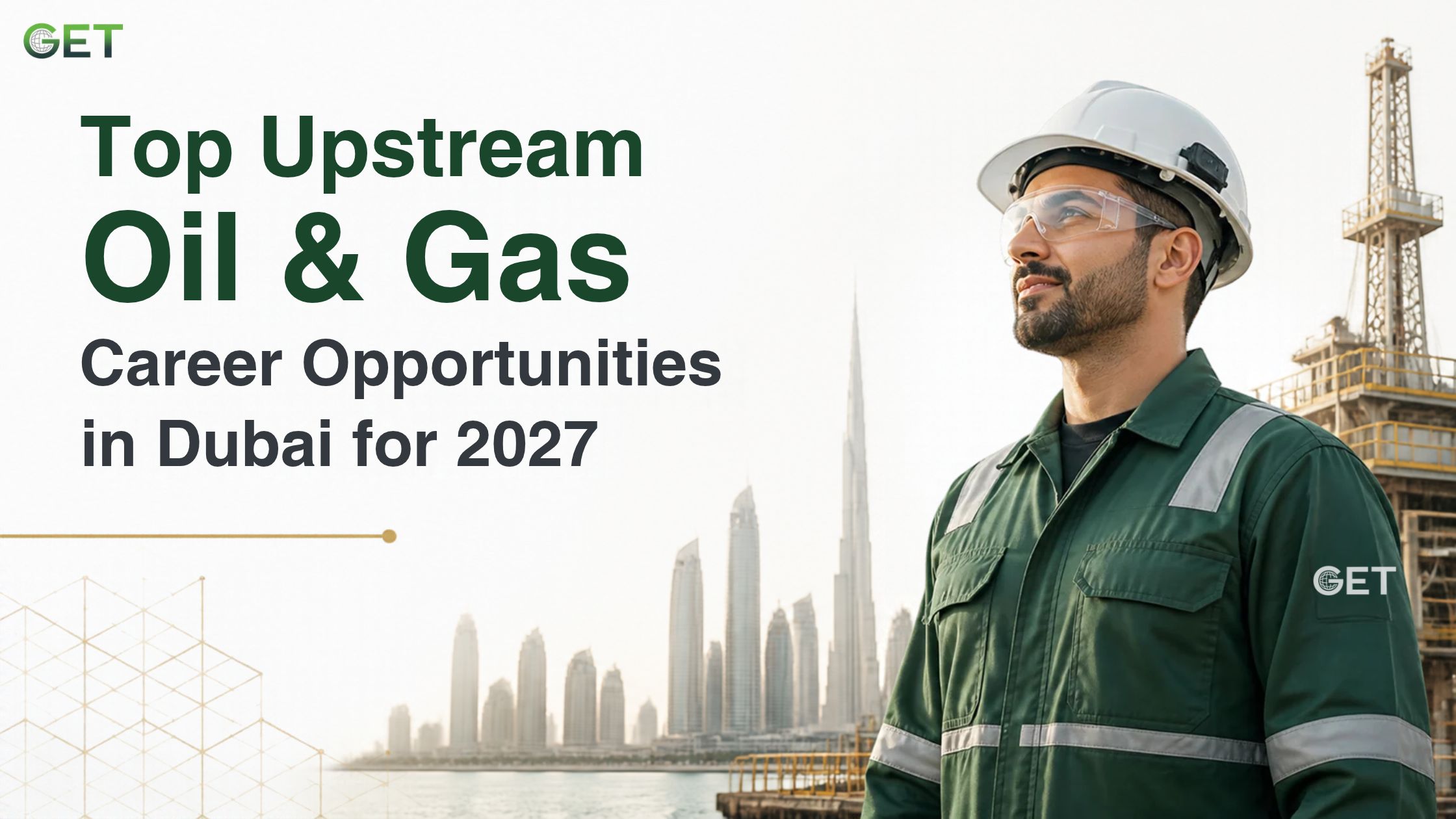
Dubai is famous for its skyline, its shopping and its world-class airlines, but there is another side to the city that deserves more attention. Energy professionals from around the globe have made it their base, and for good reason. An oil and gas career in Dubai offers the international exposure of a major business hub while keeping you close to the technical heart of the industry.
Thinking which upstream oil and gas job can be found around the emirate as 2027 approaches, which upstream oil and gas companies deserve a place on your shortlist, what they look for in candidates, and how to catch a recruiter’s attention? One helpful point to know before you begin: most of the UAE’s oil is produced in Abu Dhabi, while Dubai is where much of the business, engineering and hiring activity takes place. Understanding that split will help you choose the right location and the right employer from the start.
Upstream is the exploration and production end of the business. Find the oil, drill the well, bring it up. Abu Dhabi sits on most of the country’s reserves, and the national oil company has talked about a production capacity of 5 million barrels a day by 2027. Dubai’s own fields are small. Really small, compared with the neighbour down the road.
So why does Dubai matter at all? Because oil doesn’t move itself. Contracts get drafted, platforms get designed, equipment gets shipped, product gets traded and people get hired, and a huge share of that happens in Dubai offices. Walk through Business Bay or near Jebel Ali on a weekday and you’ll see how many energy firms have moved in. Many openings at upstream oil and gas companies begin life in those offices.
When someone says they want an oil and gas career in Dubai, the first question that comes up in the mind is which version they mean. Some picture a job with an operator based in the city. Some want a regional office role supporting fields across the Gulf, Africa or Asia. Others want a rotational post that is officially Dubai-based while the actual work happens on a platform hour away by helicopter. All of these are fine. They feel nothing alike, though, so choose before you start sending CVs.
Hiring here is quick, too. Free zones, fast visas, busy airports and a deep pool of expat talent let upstream oil and gas companies assemble an international team in months rather than years. That’s why an upstream oil and gas job keeps getting advertised even when the market looks shaky. For anyone chasing an oil and gas career in Dubai, that speed matters more than the headline production numbers.
Firms merge, rebrand and restructure, and a list would be out of date before you finished reading it. Categories last longer, and how a company hires says a lot about what it’s like to work there.
The national oil company and its subsidiaries are headquartered in Abu Dhabi, but their drilling, offshore, onshore and gas arms recruit from all over. Plenty of candidates live in Dubai and either relocate or commute. Among upstream oil and gas companies in the country, this group is easily the biggest. Large targets and heavy spending on AI tools keep it hiring for subsurface, drilling, operations and digital work.
A few operators run assets straight from Dubai. Some hold fields overseas, others manage offshore assets closer to home. Vacancies are rare. Those who land one usually get real responsibility early, and mature offshore fields teach things a brand-new project never will.
International partners come next. Global majors and large independents hold stakes in Abu Dhabi concessions. The core technical teams mostly sit in Abu Dhabi, with some commercial, planning and support staff in Dubai. Expect tough standards on English, reporting and safety.
Oilfield service companies are the usual doorway into a first upstream oil and gas job. They hire field engineers by the hundred and train them properly. Years one and two can be physically rough. You learn quickly, though.
Engineering and project contractors handle field development and facilities design. Their vacancies lean towards process, subsea, structural and project controls. Prefer an office to weeks offshore? Start with them.
All these upstream oil and gas companies draw from the same pool of people, which helps if your skills are solid. Check each careers page yourself. Hiring plans change faster than any blog can keep up with.
Titles vary between employers, but nearly every upstream oil and gas job falls into one of a few families.
Geologists, geophysicists and paraphysicists read seismic and well data to decide where wells should go. Gulf carbonates are awkward rock, so people who understand them are prized. Machine learning has crept in as well, which gives an edge to any geoscientist who can talk to a data scientist. Improved a reservoir model at your last job? Put it first on your CV.
Reservoir engineers predict how a field will behave over the years, while production engineers keep the wells flowing. Operators want more out of older fields, so enhanced recovery and water management are handy skills. A lot of the work is office-based, which suits anyone building an oil and gas career in Dubai who wants a fairly normal home life.
Drilling engineers, completion specialists and well-site supervisors stay busy as programs grow. Complex and extended-reach wells are a plus. A supervisor with proper well control tickets and a clean safety record can negotiate harder than they’d expect.
Operators, maintenance engineers, instrument and electrical technicians and process engineers keep the plant safe and running. Rotations are often 14 days on and 14 off, or 28 and 28. Some people love that rhythm. Others burn out inside a year. Talk to someone who does it before you accept an offer.
Safety never goes out of fashion. Corrosion engineers, inspectors and HSE advisors with recognised certificates are always wanted, and good ones get promoted quickly because nobody wants incidents.
This is the fastest-moving corner of the industry. Digital twins, predictive maintenance, remote operations and analytics all need people. A modern oil and gas career in Dubai can include people who never see a rig. If you come from software, the barrier may be lower than you think.
Commercial and project roles. Contracts, procurement, cost control and planning support every project, and since Dubai is a business hub there are plenty of them. An engineering degree plus commercial sense is a rare mix, and employers know it.
Fresh graduates should aim at service companies and the graduate schemes run by upstream oil and gas companies. An entry-level upstream oil and gas job normally starts with training, often partly in the field. Expect an operations role before any desk job. Those field months are what make your later office roles believable.
Mid-career engineers, say five to ten years in, are the sweet spot for an oil and gas career in Dubai. You’re productive from week one and cheaper than a senior hire. Switching employers at this stage often brings the biggest jump in responsibility and pay.
Senior people tend to be hired through networks and specialist recruiters rather than adverts. Regional offices at upstream oil and gas companies often prefer candidates who already know the Gulf, so time spent in the region counts for a lot.
Career switchers from downstream, power, marine or construction can cross over too, mainly into projects, HSE, maintenance and supply chain. An upstream oil and gas job means new jargon and a stricter safety culture, but your core skills usually transfer.
Pay varies enormously. Check recent salary surveys from recruitment firms before you negotiate. What doesn’t change is that the UAE has no personal income tax, and packages often include housing or an allowance, medical cover, annual flights and sometimes school fees. Those extras can outweigh the base salary.
National upstream oil and gas companies and big operators tend to offer steadier packages. Service firms may add field bonuses. Contractors sometimes pay higher day rates but give you less security. Comparing an upstream oil and gas job against another offer? Look at the whole package, the rotation and the contract length. And if you’re planning an oil and gas career in Dubai for the long haul, ask about end-of-service benefits and visa sponsorship, since the terms differ more than people expect.
Technical depth gets you shortlisted. But hiring managers for any upstream oil and gas job also watch how you communicate. Teams are international, and a misunderstanding offshore costs real money. Certificates open doors for an oil and gas career in Dubai, yet they guarantee nothing.
Software: subsurface modelling packages, reservoir simulators, well analysis tools and Python
Safety: NEBOSH, IOSH, H2S awareness and BOSIET
Well control: IWCF or IADC WellCAP
Professional: PMP, chartered engineer status and SPE membership
Soft skills matter more than people admit. Clear writing and calm judgement under pressure often separate promoted engineers from stuck ones. Many upstream oil and gas companies say plainly that a poor attitude to safety ends the interview right there. Bring real examples, not slogans.
The brochure version never matches the real one, so here’s a rough picture. A reservoir engineer in a Dubai office might spend Monday updating a simulation model, Tuesday in a review meeting with partners, and the rest of the week chasing data somebody forgot to send. Desk work, mostly, with the odd late call when time zones collide.
A drilling supervisor’s week looks nothing like that. Long days, a phone that never stops, and a plan that changes when the rock does something unexpected. Then two weeks off back in the city, which many people say makes the grind worthwhile.
A typical upstream oil and gas job sits somewhere between those two pictures. That’s the quiet truth about an oil and gas career in Dubai: the job title tells you less than the rotation, the team and the asset do. Ask about all three in the interview.
Candidates tend to treat interviews as exams. They’re also your chance to check the employer. A few questions are worth asking.
What’s the rotation, and does it ever change at short notice? How long does a typical contract run, and what happens at the end? Who covers visa, medical and flights? How does the team handle a near miss? That last one tells you more about the culture than any brochure.
Be careful with salary questions early on. Wait until they’ve shown real interest, then ask about the whole package rather than a single figure.
Read Also- Understanding the Rig: Top Interview Questions for Oil and Gas Professionals
Recruiters scan fast, so lead with numbers such as wells delivered, cost saved and downtime cut. Tailor it each time, because tracking systems filter by keywords. A CV aimed at an oil and gas career in Dubai should also state your visa status, notice period and languages clearly.
Many Gulf recruiters search there first. Follow upstream oil and gas companies you like, comment with something useful, and keep messages to hiring managers short. A note that mentions a real project beats a generic request every time.
Energy agencies in the Gulf handle a big share of mid-level and senior hiring. Register with a few and be honest about what you want.
The large energy exhibitions held in the UAE each year put decision-makers in one place. Even following the news from them shows where hiring is heading.
Expect technical interviews, case problems and sometimes psychometric tests. For a competitive upstream oil and gas job, practise explaining your past projects in plain words to a colleague from another department.
Sort your documents early
Attested degrees, medical tests and police certificates can delay a start date by weeks.
The biggest one is treating an oil and gas career in Dubai as a single market. It isn’t. A service company, a national operator and a contractor hire differently, pay differently and want different things from you.
The second is ignoring smaller upstream oil and gas companies because the famous names get all the attention. Smaller firms often give you more responsibility sooner.
The third is sending the same CV for every upstream oil and gas job. Recruiters can tell in seconds, and it usually ends the conversation.
The fourth is skipping the safety conversation. If you can’t describe a time you stopped work because something felt wrong, you’re not ready for the interview.
Summer heat is real. Offshore work is demanding. Housing and schooling in Dubai cost a lot. Oil prices still drive hiring cycles, and upstream oil and gas companies are usually the first to cut budgets when prices drop. The energy transition is also moving investment around.
Treat an oil and gas career in Dubai as a way to build skills that travel with you, including carbon capture, hydrogen and emissions reduction, where national and international players are spending money. Competition is heavy, too. A well-advertised upstream oil and gas job can pull hundreds of applicants. Targeted applications beat mass ones.
Capacity expansion, gas development, digital work and lower emissions per barrel all need people. Emiratisation will also shape hiring at many upstream oil and gas companies, especially the national ones.
That doesn’t shut out expats. It means the strongest candidates’ pair technical skill with adaptability and a willingness to mentor. An oil and gas career in Dubai rewards that mix. Any upstream oil and gas job that opens in the next few years will probably ask for more digital skill and more emissions awareness than the same role did five years ago.
Dubai may not be where most of the barrels come out of the ground, but it’s where a lot of the deals, technology and talent meet. If you want an upstream oil and gas job with international reach, it deserves a serious look. Research the upstream oil and gas companies that match your discipline, sharpen your certificates and apply with focus. Nobody hands out an oil and gas career in Dubai, but for prepared candidates, 2027 looks like a good year to try.
Read Also- How Integrated Crew Services Improve Productivity and Operational Performance
FAQs:
For many people, yes. Dubai offers regional offices, service companies, no personal income tax and a strong international network. An oil and gas career in Dubai works best if you accept that most physical production is in Abu Dhabi and plan around it.
The national oil company and its subsidiaries, Dubai-based operators, international partners with Abu Dhabi stakes, oilfield service firms and engineering contractors. Confirm current openings on each careers page.
Most technical roles need an engineering or geoscience degree. Safety certificates such as NEBOSH or BOSIET and well control credentials add value, and software skills help for any upstream oil and gas job in subsurface or drilling.
It depends on discipline, experience and employer, so check recent salary surveys first. Packages often add housing, medical cover and flights. Compare the full package across upstream oil and gas companies, not just the base salary.
Yes, though competition is strong. Graduate programs and service companies are the usual route, and an entry-level upstream oil and gas job often begins with field training. Internships and a clean LinkedIn profile improve your chances.
By Get global | November 12, 2026
By Get global | November 10, 2026
By Get global | November 10, 2026
By Get global | November 5, 2026
By Get global | November 4, 2026