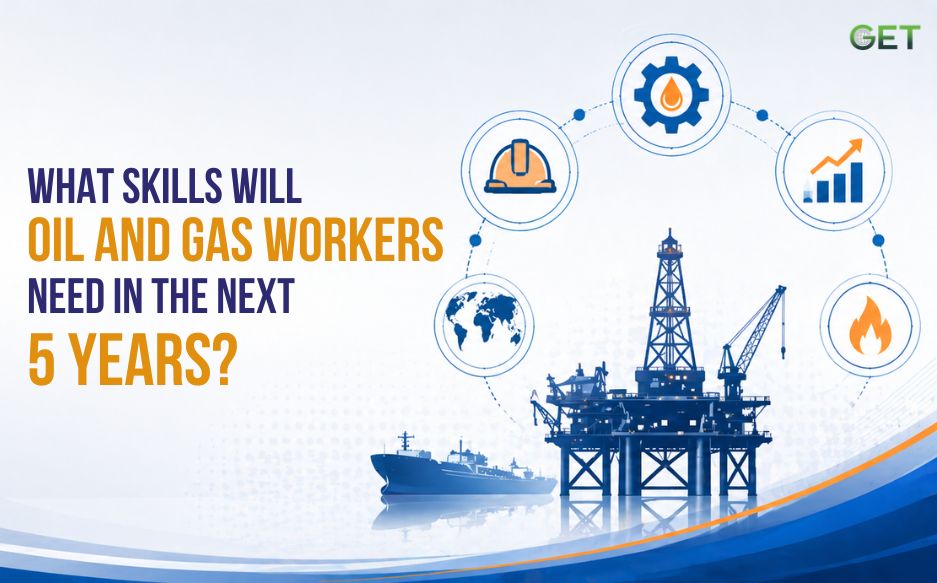
The oil and gas industry hasn’t changed this fast in decades. Between the energy transition, digital disruption, and tighter environmental rules, whatever got you hired five years ago probably won’t be enough to keep you competitive today. Whether you’re a seasoned upstream hand or a fresher trying to break into the Middle East market, figuring out which skills to build right now could shape the rest of your career.
Here’s a practical, no-fluff breakdown.
What Skills Will Oil & Gas Workers Need Over the Next Five Years? #what-skills
In short: a mix of digital skills (AI, data analytics, automation), solid HSE knowledge, remote and offshore operational competence, and the soft skills adaptability, cross-team communication that let you actually work alongside all of that. Technical know-how on its own isn’t going to cut it anymore. The people who’ll do best are the ones who can pair real field experience with digital fluency.
Why Is Everything Changing So Fast?
This industry has historically been slow to move. But a few forces have converged to force the issue:
Put those together and you get a growing gap between the skills workers have and what employers actually need.
The Skills Worth Building Right Now-
This is arguably the biggest shift underway. Reservoir engineers now lean on machine learning to forecast production decline. Drillers work alongside automated systems that can adjust bit selection in real time. Operations teams increasingly run simulations on digital twins virtual replicas of physical assets before committing to expensive field decisions.
You don’t need to become a data scientist. But understanding what these tools do, where their limits are, and how to talk to the teams running them is quickly becoming table stakes.
Worth focusing on:
Most operators have moved, or are moving, to cloud-based platforms. Tools like AVEVA’s PI System for real-time operations data and various SCADA interfaces are becoming the norm across upstream and midstream operations.
Workers who can navigate these platforms confidently have a real edge over those who can’t. Even basic comfort with Power BI for reporting, or Python for simple automation, can open doors that otherwise stay shut.
Not a new category, but a fast-evolving one. HSE requirements are tightening across the board, especially in the Middle East, where national operators and regional regulators keep raising the bar.
What’s genuinely changed is how HSE now runs through digital systems electronic permit-to-work platforms, digital risk assessments, environmental monitoring software. Paper-based processes are on their way out.
A few certifications worth knowing about:
Job postings rarely say this outright, but what employers are really looking for is people who can handle change without falling apart. The pace of transformation is intense new systems, restructured teams, hybrid roles and workers who resist that or struggle to work across departments become a liability fast.
Communication matters more than it used to as well. With integrated operations centres becoming standard, field workers now coordinate with offshore teams, digital specialists, and management, sometimes within the same shift.
What employers are quietly prioritizing:
Remote operations expanded dramatically over the last several years partly out of necessity, partly because the technology finally made it practical. Operators now run offshore platforms from onshore control rooms, and inspection drones are replacing rope-access technicians for routine checks.
For anyone in offshore roles specifically, that means getting comfortable working alongside autonomous systems, understanding remote monitoring tools, and knowing how to respond to emergencies when you’re not physically on-site.
How Technology Is Actually Reshaping These Jobs #tech-reshaping
The “robots are coming for oil and gas jobs” fear is somewhat overblown, but not entirely wrong. Repetitive, high-risk, routine tasks are the ones being automated. In practice, that looks like:
The jobs aren’t vanishing they’re changing shape. A roustabout who picks up automation skills doesn’t become redundant; they become the person running the system that replaced the old manual process.
Practical Ways to Upskill Right Now #upskill
You don’t need to quit your job and go back to school. The most effective upskilling tends to happen in small, focused steps:
Where the Job Market Is Heading #future-trends
Based on where investment and hiring demand are flowing right now:
The Middle East in particular is seeing a real surge in these roles, as Saudi Aramco, ADNOC, and QatarEnergy push ahead with expansion and digital transformation programmes.
Final Thoughts
The industry isn’t disappearing it’s evolving. The professionals taking their upskilling seriously right now are the ones who’ll be leading teams and running digital operations a decade from now.
It doesn’t have to feel overwhelming. Pick one skill gap, close it, then move to the next. What the industry actually needs is people who combine real field experience with digital capability and that combination is rarer than most employers will admit.
Read Also- How to Manage an Oil & Gas Supply Chain When Costs Keep Changing
FAQ
What are the most in-demand oil and gas skills for the next five years? Data analytics, AI and automation familiarity, HSE and compliance expertise, digital tool proficiency (SCADA, digital twins), and soft skills like adaptability and cross-team communication. Workers who combine hands-on operational experience with digital fluency will be the most competitive.
Will automation replace oil and gas workers? Not entirely. Automation is replacing specific tasks the repetitive, routine, or high-risk ones not whole roles. Workers who upskill to manage and interpret automated systems will stay essential. The job changes shape; it doesn’t disappear.
What digital skills do oil and gas professionals need most? Data literacy, comfort with cloud-based operations software like AVEVA’s PI System, a working understanding of AI-assisted drilling tools, and familiarity with remote monitoring systems. Even basic Power BI or Python skills can be a real career advantage.
How can freshers break into oil and gas with the right skills? Pursue relevant certifications (OPITO, IOSH, and NEBOSH’s current process safety offerings), build digital skills alongside core engineering qualifications, and look for graduate programmes at major Middle East operators. Internships and field exposure still matter a lot pair them with digital literacy.
What is AEO, and does it matter for job seekers? AEO (Answer Engine Optimisation) refers to how content is structured so AI-powered search tools and voice assistants can surface it. It’s not something job seekers need to worry about directly it’s more relevant to companies and training providers trying to make sure their career guidance actually reaches the people searching for it.
By Get global | September 3, 2026
Health, safety and environment in the oil and gas sector was long treated as a back-office function, running quietly alongside the core work of drilling, extraction, and processing. That is no longer the case. Extreme pressures, volatile materials, remote sites, and heavy machinery mean the risk in this industry has […]
By Get global | August 31, 2026
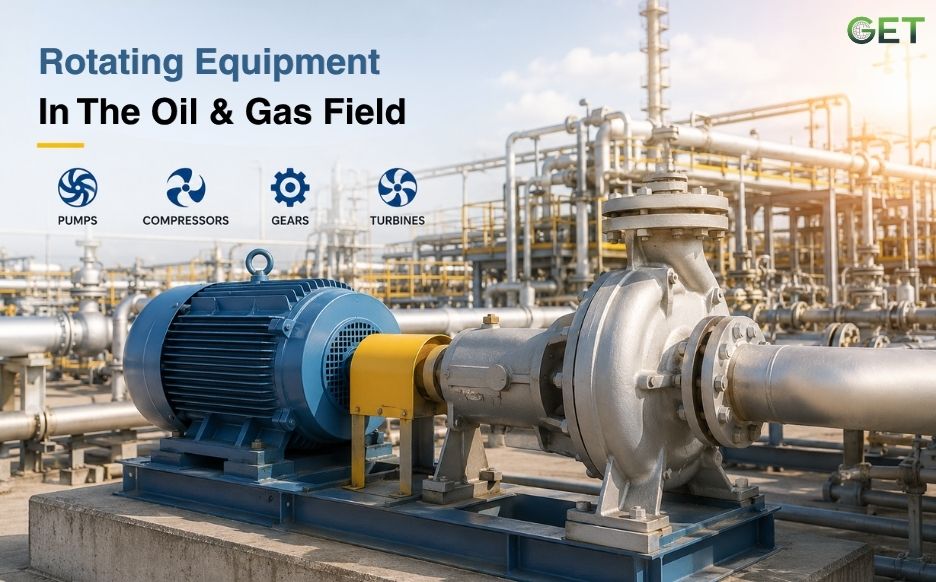
Walk onto any rig floor, production platform, or gas processing plant, and the first thing you notice isn’t the pipework – it’s the sound. That low, constant hum coming from somewhere in the facility is almost always rotating equipment doing its job. Pumps pushing fluid through miles of pipeline. Compressors […]

By Get global | August 31, 2026
Upstream oil and gas operations have always been a complex affair. From the process of exploration, to drilling, completion, production optimization, all the way up to the point of decommissioning, a typical oil company will be dealing with dozens of moving parts — and equally many service companies. Traditionally, that […]
By Get global | August 27, 2026
An offshore rig losing production can bleed staggering sums for every hour it sits idle. On the other end of the same industry, a well-run inspection or maintenance contract just keeps collecting steady, contract-locked revenue for a decade, without ever touching a barrel of crude. Same industry. Same oil underneath […]
By Get global | August 25, 2026