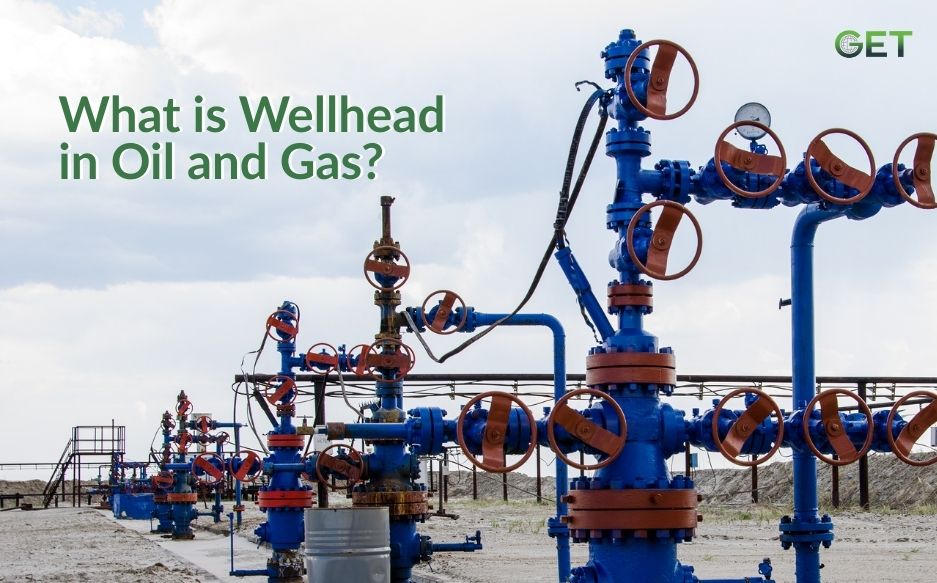
Whenever we think about a production site, especially in the upstream oil and gas operations, we often imagine visuals of drilling rigs, pipelines, and refineries. But what often goes unnoticed is the heart of every producing well – a piece that rarely gets any spotlight- the wellhead. Silently playing a crucial role at the surface, a fully functional wellhead makes it possible to safely bring hydrocarbons from deep in the surface. Without it, any modern drilling or production will cease to exist.
If you have ever wondered, “What is a wellhead in oil and gas?” – This blog explains every detail in simple terms, whether it is wellheads’ components or their importance and benefits in making oilfield operations seamless.
What is a Wellhead?
A wellhead in an oil and gas field is the equipment installed at the top of the wells, responsible for providing a secure pressure seal and supporting the casing and tubing strings in order to act as the connection point for production equipment.
In simpler terms, the wellhead is both the ‘anchor’ and the ‘gatekeeper’ of the well. It holds everything together despite the high-pressure fluids beneath it.
The parts that make up a Wellhead
As the name suggests, a wellhead is not just a single block of steel – it is a combination of specialised components, each having its own role to play. To understand it better, the main components in the assembly line include:
Together, these parts form the foundation of safe and efficient well operations.
Wellhead Control Panel – The “Nervous System”
No wellhead is complete without a wellhead control panel. To understand it better, you can call it the nervous system of the well. The panel lets you monitor and operate the safety valves and other crucial components.
A lot of control panels now come with real-time monitoring, alarms, and digital automation, used in both onshore and offshore wells to ensure safe production, playing a huge role in the upstream oil and gas industry.
Why is a Wellhead considered one of the core pieces of oilfield equipment?
It is extremely difficult to endure high pressure, withstand harsh climatic conditions of onshore and offshore operations, while remaining intact even after years of constant use. If any upstream oil and gas field has an operational wellhead, the process can hardly go out of control, as wellheads are the true backbone of safe production.
Final Thoughts
The wellheads in the upstream oil and gas industry are a true cornerstone of exploration, drilling, and production. From the casing heads to the Christmas tree and the detailed wellheads drawing to the digitally automated control panels- the entire system works seamlessly to achieve one goal- safe, reliable, lean, and efficient production.
At GET Global Group, we understand the crucial role of wellhead and the value of safe high high-quality oilfield equipment – our mission is to support the industry with digitally automated and assessed equipment that leads to no delay in works and zero downtime with our Vendor Managed Inventory (VMI). In addition to that, our specialist maintenance solutions promise timely logistics of equipment with optimum performance at the lowest possible cost.
Read Also- Algeria’s Gas Ambitions: Meeting Europe’s Energy Demands
A wellhead provides structural support for the well, seals the pressure system, and controls the safe flow of oil and gas from underground reservoirs to the surface during drilling and production.
A wellhead typically consists of casing heads, tubing heads, casing hangers, tubing hangers, seals, valves, and the Christmas tree assembly, all of which work together to maintain well integrity and pressure control.
A wellhead is the permanent equipment installed at the top of the well to support and seal the well. A Christmas tree is mounted on top of the wellhead and contains valves and controls that regulate the flow of oil and gas during production.
Regular wellhead maintenance helps prevent leaks, maintain pressure control, improve operational safety, extend equipment life, and reduce the risk of costly production downtime.
Common challenges include corrosion, high pressure, extreme temperatures, equipment wear, seal failures, and improper installation. Routine inspections and preventive maintenance help ensure reliable wellhead performance.

By Get global | October 19, 2026

By Get global | October 16, 2026

By Get global | October 12, 2026
By Get global | October 12, 2026
Saudi Arabia is traditionally considered a key country where people work in the oil and gas sector. As there is quite a lot of drilling, well intervention and production processes in this country, many engineers, technicians and specialists from the field try to find suitable positions there. However, not all […]

By Get global | October 9, 2026
Ask any person working night shifts in rigs and compressor stations what holds the industry back, and you will seldom hear anything about geology. Disconnected information, delayed decision-making, and machinery breaking down at the wrong moment – all these factors are more common causes of productivity losses in the industry. […]