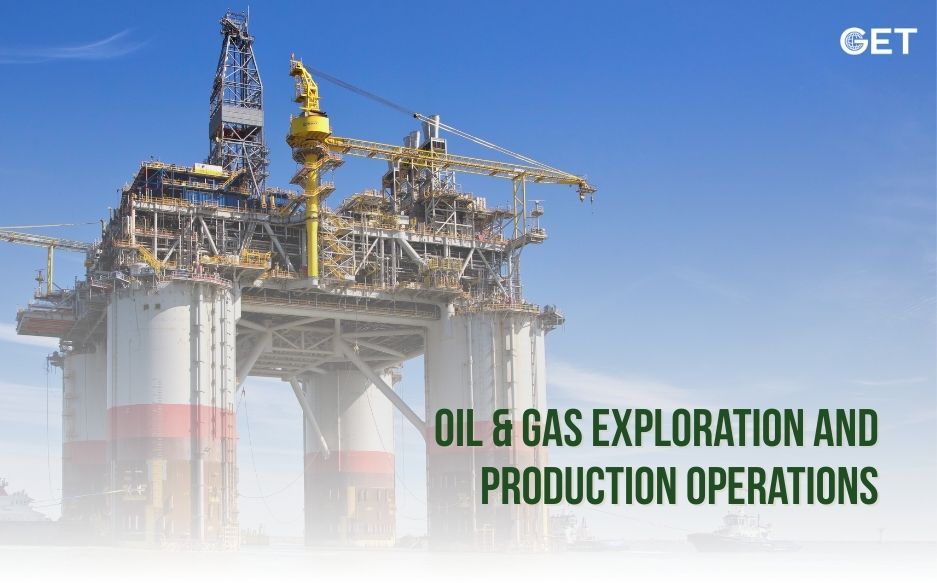
The initial point of the energy supply chain is oil and gas exploration and production. It is at this point that firms seek reserves, drill wells, and pump up hydrocarbons to the surface.
The financial exposure is real. An offshore exploration well can cost more than $100 million. Many wells fail to produce commercial volumes. Companies still proceed, guided by data, field history, and capital strength.
Here is how upstream operations work in practical terms.
Exploration begins with research, not drilling.
Geologists examine various areas of the history of the basin, rock samples, and records of nearby wells. They are concerned with the formations of the sediment that were formed millions of years ago. Oil and gas are normally produced in these layers when it is hot and under pressure.
Geophysicists then collect seismic data. Onshore teams use vibration trucks. Offshore vessels deploy air guns and long sensor cables. Sound waves travel underground and return to receivers. Software converts those signals into structural images.
The images highlight folds, faults, and traps where hydrocarbons may exist.
Teams review three measurable factors before drilling:
If the numbers justify the risk, the company approves drilling.
Seismic data suggests potential. A drilled well confirms reality.
The drilling crews assemble rigs, steel casing, drilling fluid systems, and pressure control equipment. A lot of land wells have a depth of 3,000-5,000 meters. Even deeper is the wells of the deep waters.
Drillers cut through rock in stages. After each section, they run casing and pump cement. Blowout preventers control high-pressure zones.
When the flow of hydrocarbons is within acceptable sustainable levels, then the discovery proceeds. Otherwise, the crews stuff the well with cement and give up on it. The data are still useful to basin knowledge.
The success of exploration in new frontier areas does not exceed 40 percent.
Read Also- Life on an Oil Rig: A Typical Day in the Life of a Drilling Engineer
A confirmed discovery shifts focus to development planning.
Engineers calculate how many wells the reservoir requires. They design well paths and spacing. They determine surface facility capacity and export routes.
Horizontal drilling has become the centre of attention. The horizontal section may run over 2,000 meters in the reservoir. This brings a closer touch to the contactable rock that carries hydrocarbons and enhances the production rates.
Onshore fields use well pads and gathering lines. Offshore projects require fixed platforms or floating production vessels. Construction timelines often span several years.
Large offshore developments can require capital spending in the billions.
After drilling reaches total depth, crews complete the well.
They install production tubing and downhole safety valves. They add sand control systems if the formation is unstable. If natural pressure is insufficient, they install artificial lift equipment.
Operators then conduct flow tests. They measure pressure, flow rate, and fluid composition. These numbers shape reservoir models and production forecasts.
Once testing ends, the well connects to the processing system.
Production often lasts 20 to 40 years.
Initial production depends on the pressure in the natural reservoirs. The output rises, reaches its peak and falls. The operators react by putting in place electric submersible pumps or gas lift systems.
Oil, gas, and water are separated using surface facilities. Gas is passed to compression units. Oil is deposited in storage tanks or export pipelines. Water produced is treated and then it is re-injected or disposed.
Reservoir engineers track daily data. They monitor pressure and water cut. They adjust injection volumes to support reservoir performance.
A conventional reservoir may recover 30 to 50% of the original oil in place. Enhanced recovery methods can increase that figure.
Upstream work now depends on precise measurement and monitoring tools.
Advanced seismic processing improves subsurface imaging. Directional drilling tools guide wells through thin pay zones. Measurement systems transmit formation data in real time.
Field sensors record pressure and temperature continuously. Control rooms receive alerts when readings move outside target ranges.
Maintenance teams use performance data to plan equipment repairs before failure occurs. This reduces downtime and protects production levels.
Upstream projects operate where the hydrocarbons exist, not where conditions are easy.
Desert operations deal with extreme heat. Summer temperatures often exceed 45 degrees Celsius. Equipment overheats. Crews shorten shifts to reduce heat stress. Cooling systems and water supply require daily monitoring.
Offshore projects face isolation and weather risk.
Cold climate fields bring different pressure.
Geology adds another layer of uncertainty. Subsurface models rely on seismic interpretation and offset well data. Even clear seismic signals can hide faults or unexpected water zones. Sudden pressure changes during drilling can disrupt timelines.
Safety remains strict and constant. Wells operate under high pressure. Hydrocarbons ignite easily. Crews follow defined well control steps and lifting procedures. Supervisors track compliance every day.
Logistics often determines project stability.
Each of these factors shapes cost, schedule, and field performance.
Global oil demand averaged roughly 102 million barrels per day in 2023. Natural gas continues to support electricity generation and industry worldwide.
Exploration and production supply that meets demand. The process combines geology, engineering, field execution, and logistics coordination.
Companies that maintain disciplined planning, strict safety control, and reliable supply chains sustain long-term production and asset value.
Read Also- How Oilfield Service Companies Support Upstream Operations in the Middle East

By Get global | October 9, 2026
Ask any person working night shifts in rigs and compressor stations what holds the industry back, and you will seldom hear anything about geology. Disconnected information, delayed decision-making, and machinery breaking down at the wrong moment – all these factors are more common causes of productivity losses in the industry. […]

By Get global | October 5, 2026
Specialized expertise turns a hard project in the oil and gas industry into a workable one. Every oilfield has its own geology, risks, and surprises. The teams that handle them the operations on field have usually met something similar before. In the modern world, upstream oil and gas companies are […]
By Get global | September 30, 2026

By Get global | September 28, 2026
By Get global | September 28, 2026