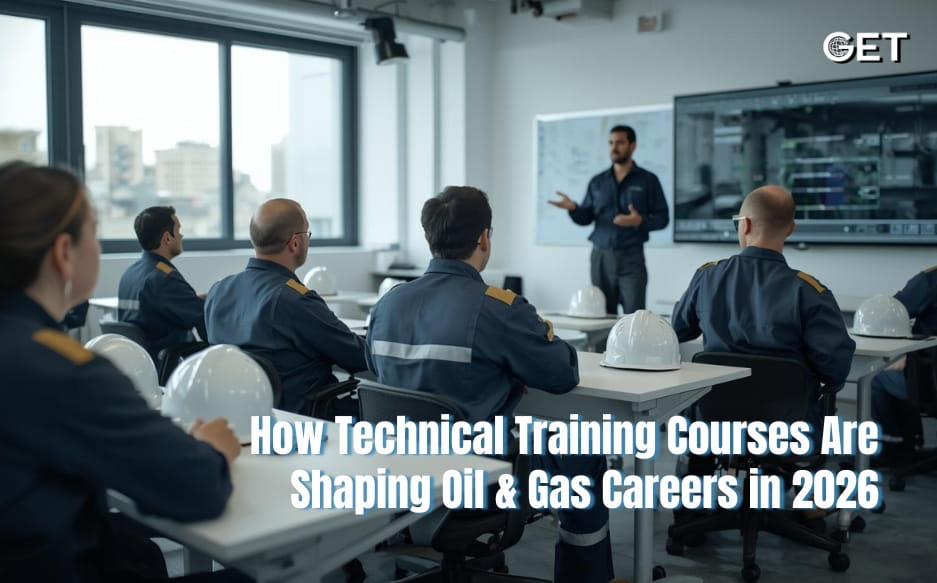
In 2026, the oil and gas landscape is no longer just about “steel and soil”. It’s about data, decarbonization, and digital fluency. For professionals in the upstream oil and gas sector and beyond, the career ladder has been replaced by a high-tech elevator and technical training courses are the floor buttons.
Whether you are a veteran engineer or a newcomer seeking your first oil and gas job, the rules of the game have changed. This year, here is how specialized training is fundamentally reshaping careers.
If you had walked onto a drilling rig five years ago, the focus would have been on mechanical prowess. Today, that same rig is very likely a “Digital Oilfield”. In 2026, employers are no longer satisfied with just a candidate who can manage a drill string; they are looking for a person who can interpret the data that is being sent from it.
Technical training courses in Artificial Intelligence (AI) and Machine Learning (ML) have progressed from “nice to have” to “must have.” Digital twins, which are virtual copies of physical assets, are now being used in reservoir management for performance forecasting. If you lack skills in these digital models, you would be literally flying blind.
The upstream oil and gas sector is currently defined by “Capital Discipline.” Companies aren’t just drilling everywhere; they are drilling smarter. This has created a massive surge in demand for specialized training in advanced seismic imaging and automated well planning.
In 2026, an oil and gas job in the upstream sector requires a hybrid identity. You are part geologist, part data scientist. Training programs that bridge this gap—teaching you how to use Python for subsurface modeling or SQL for production data—are the ones seeing the highest enrollment.
“Energy Transition” isn’t a buzzword anymore; it’s a line item in every company’s budget. Careers are being reshaped by the need to lower carbon intensity.
We are seeing a massive influx of professionals taking courses in Carbon Capture, Utilization, and Storage (CCUS) and Methane Emissions Monitoring. Why? Because in 2026, your ability to manage a project’s “Environmental, Social, and Governance” (ESG) metrics is just as important as your ability to manage its ROI.
The 2026 Reality: A Project Manager who understands carbon credits and emission-reduction technology is more likely to lead a major project than one who only knows traditional extraction.
Read Also- Top Oil & Gas Training Courses to Build Your Career in 2026
In the past, the method of learning used to be mainly through lectures and presentations. The boring PowerPoint presentations which used to be the worst part of learning in a classroom are no longer there. By the year 2026, the technical training courses are going to be fully based on Augmented Reality (AR) and Virtual Reality (VR) technologies.
The new employees already “see” the gas plant with high-pressure conditions through the goggles and get to practice emergency shutdowns without any risk rotating areas. Thus, the industry’s new measures have not only contributed to the safety aspect but also to the increase in the onboarding time by 75%. If you are applying for a position in the field, getting “VR-certified” will be a proof to the employer that you are competent for the modern worksite.
If you’re feeling overwhelmed by the “tech-heavy” nature of the industry today, don’t be. The goal isn’t to become a computer programmer; the goal is to become a digitally-enabled energy professional.
The oil and gas job market of 2026 is rewarding those who treat their career like a software update—constantly refining, improving, and adding new features. Technical training courses are no longer a box to check for HR; they are the fuel for your professional engine.
The industry is cleaner, smarter, and more complex than ever. By investing in the right training today, you aren’t just keeping your job—you’re future-proofing your life.
Read Also- Best 5 Oil and Gas Companies in Abu Dhabi
By Get global | March 25, 2026
The Middle East has forever been the heart and soul of the oil and gas industry. In this day and age, the technology is advanced and ever-changing; the Middle East is also evolving. Not just by production but also innovation, diversification and investment in the workforce. As the global landscape […]
By Get global | March 25, 2026
Upstream oil and gas has never been casual work. You deal with formation pressure that does not forgive miscalculations. You operate equipment that weighs hundreds of tons. You manage projects where a few hours of downtime can cost more than a year of someone’s salary. In 2026, what’s changing is […]
By Get global | March 18, 2026
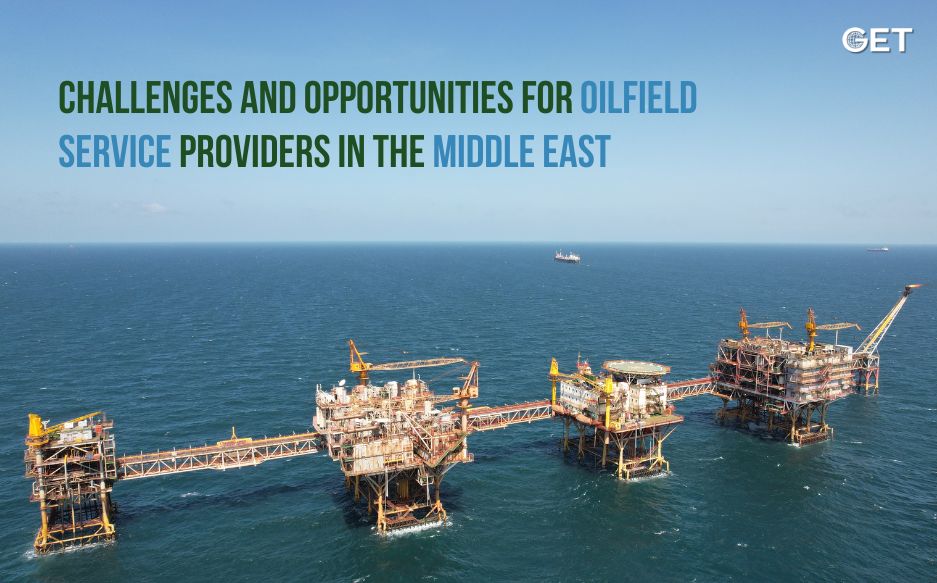
The Middle East has always been the heartbeat of the global energy industry. It holds some of the world’s largest oil and gas reserves. And for decades, it has attracted investment from every corner of the globe. But the landscape is changing. Fast. Today, oilfield service providers operating in this […]
By Get global | March 16, 2026

By Get global | March 11, 2026
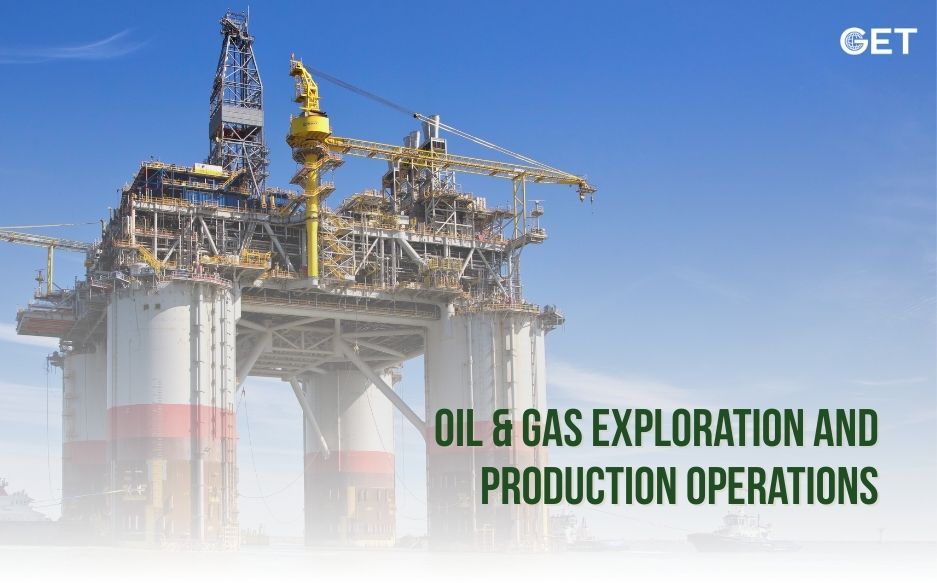
The Middle East has always been one of the key regions for the oil and gas industry with some of the largest hydrocarbon reserves in the world. Upstream exploration and production have been a major contributor to economic growth and energy development for many Middle Eastern countries. For instance, cities […]