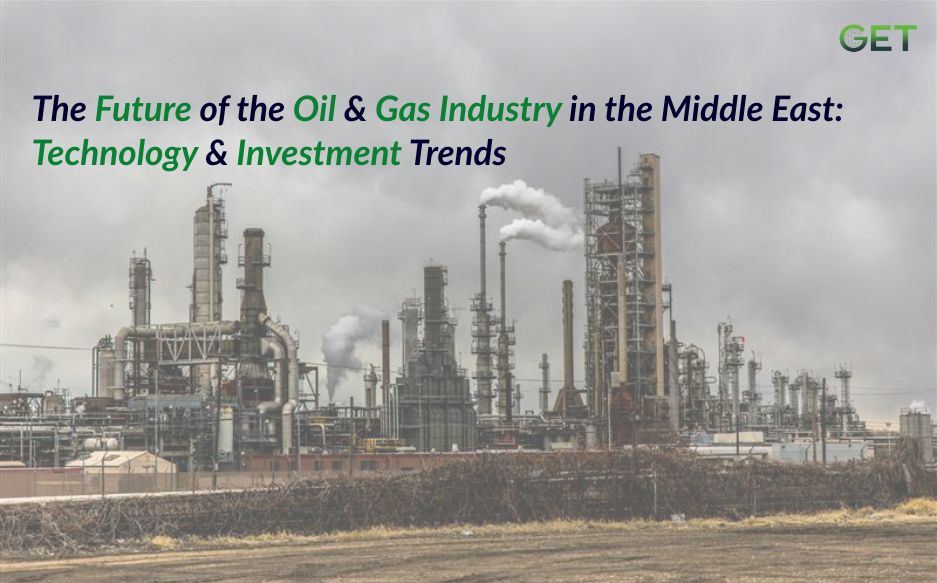
The Middle East has forever been the heart and soul of the oil and gas industry. In this day and age, the technology is advanced and ever-changing; the Middle East is also evolving. Not just by production but also innovation, diversification and investment in the workforce. As the global landscape changes, so does the oilfield industry.
Let’s talk about the three key factors that shape the oil and gas industry:
Technology is pretty much the brain of this transformation in the Middle Eastern oil and gas landscape. Digital transformation tools such as Artificial Intelligence (AI), Internet of Things (IoT), and robotics are the major reasons for reduced cost as well as improved efficiency.
These technologies help in improving and enabling:
Smart Oilfields and Automation:
Digitally connected environments – or “smart oilfields” – are becoming more common in the region. Through the use of various types of sensors, data systems, and automation tools, operators now have access to continuous insights about their operations.
Automation is helping operators remove many manual tasks from hazardous environments and thereby improve safety and continue to maximize productivity.
In addition to driving efficiencies in operations, technology is also helping advance the industry’s sustainability efforts. Middle Eastern countries are investing in technologies that will help them meet global sustainability objectives, including:
Carbon capture and storage (CCS):
Hydrogen production (including green hydrogen), and
Integration of renewable energy sources.
These activities demonstrate a commitment by Middle Eastern countries to decrease their environmental impact while continuing to lead the global energy industry.
Read Also- Digital Transformation in the Downstream Oil and Gas Industry in the UAE
Investments have always been and will continue to be a crucial part in shaping the future of the oil and gas industry, especially in the Middle East. The Middle East is witnessing major capital inflows. This helps in expanding the energy operations and sector and diversifying the traditional operations.
Expanding Core Oil and Gas Capabilities
In middle east, all the national oil companies are making substantial capital investments to maintain their international leadership requirements. As the competition is tough, the marketing is heavy on inflows of capital. These investments focus on:
Such efforts ensure that the Middle East remains a key supplier in the global energy market.
Diversification Beyond Oil:
In parallel, many of the region’s governments are also trying to lessen their reliance on oil revenue.
Governments have been investing money into:
Strategic Partnerships and Global Collaboration
Increasingly, organizations are collaborating with partners from other nations.
These types of partnerships can provide:
Through global partnerships, Middle Eastern countries are strengthening their competitive advantage in the energy market as that market continues to evolve.
The oil and gas industry in the Middle East is changing. This creates a need to hire, grow and keep talent in the workplace. Companies need new skills to meet demands in digital technology.
Talent created by technology is driving up demand for digitally skilled workers with the following types of skills:
Addressing talent shortages:
The talent shortages that exist in the current job market can and will create challenges for industries and businesses trying to fill vacant positions. The barriers to talent are:
Training and Development Priorities:
To help improve their situation, companies are making large investments in workforce development programs. These programs include:
These actions play a key role in developing a skilled workforce that meets the demands of future generations with energy.
Workforce Wellbeing:
Along with developing skills, companies are more focused on providing comfort, safety, and support to their employees. This is especially true for people who work in difficult and isolated working conditions. Companies are recognizing the need to support the welfare of their workers in order to ensure long-term success.
Challenges in the Middle Eastern Oil and Gas Industry
The Middle East’s oil and gas is an exciting prospect. However, with opportunity comes challenges, including:
Despite the above mentioned challenges, the Middle Eastern oil and gas industry has opportunities for innovation, growth, leadership and transition to a clean, green energy source.
The oil and gas industry in the Middle East is going through an immense transition and the future is bright. The oilfield industry is no longer defined solely by its production. Now, it is evolving into a sector driven by advanced technology, strategic investments and inflows, and a future-ready workforce tat are prepared for all the trends of the industry.
By Get global | October 16, 2026
By Get global | October 12, 2026
Saudi Arabia is traditionally considered a key country where people work in the oil and gas sector. As there is quite a lot of drilling, well intervention and production processes in this country, many engineers, technicians and specialists from the field try to find suitable positions there. However, not all […]
By Get global | October 9, 2026
Ask any person working night shifts in rigs and compressor stations what holds the industry back, and you will seldom hear anything about geology. Disconnected information, delayed decision-making, and machinery breaking down at the wrong moment – all these factors are more common causes of productivity losses in the industry. […]
By Get global | October 5, 2026
Specialized expertise turns a hard project in the oil and gas industry into a workable one. Every oilfield has its own geology, risks, and surprises. The teams that handle them the operations on field have usually met something similar before. In the modern world, upstream oil and gas companies are […]
By Get global | September 30, 2026