Ask around any operations team in the oil and gas industry and someone will have a story, about the crew that showed up late, undertrained, or missing half the certifications the job needed. It happens more than it should. And in upstream oil and gas, a weak crew isn’t just an inconvenience. It turns into unplanned downtime, near-misses, and rework that quietly chews through the margin on a well.
Picking a crew service partner isn’t really a procurement task. It’s more like bringing on a business partner who happens to be on someone else’s payroll. Make the right selection and that partner gets to the job with the gear in hand, knowing it’s everyone’s business and not being hand-held on elementary safety procedures. Miss it, and the project has hidden risks that arise in the middle of the job, typically at the wrong time, the most inopportune time.
Cost matters, Of course it does. But a day rate that looks too good to be true generally is. Low rates tend to mean thinner training budgets, higher turnover, or crews stretched too thin across too many jobs at once. None of that shows up on the invoice. It shows up three weeks in, when a valve gets misread, and the site burns a day figuring out what went wrong.
A partner worth its rate can point to actual, verifiable project history in well environments common to upstream oil and gas operations, not a glossy case study pulled from a sales deck. Push for references tied to real field conditions: same basin type, similar equipment stack, similar pace of work. A crew that’s crushed it on shallow onshore wells won’t necessarily hold up in deepwater or high-pressure settings, and any partner worth hiring should say so plainly instead of overselling.
Obvious advice, and it still trips people up constantly. Certifications lapse. Training goes stale. Somebody gets swapped onto the roster last minute, and their paperwork isn’t quite current. A reliable partner doesn’t treat certification tracking as a box checked once at contract signing. It’s a living system for them.
Before any crew sets foot on site, it’s worth confirming a few things directly:
Partners that lean on structured technical training programs tend to catch these gaps before they turn into field problems. Competency verification becomes part of the ongoing relationship rather than a one-time gate crews clear and forget about.
Crew reliability and vendor reliability are more tangled up than most contracts admit. A crew can be sharp and still end up standing around waiting on parts, tools, or a subcontractor who never showed. The better crewing partners keep tight relationships with their equipment suppliers and flag potential delays before they hit the schedule, not after the fact.
This is really where vendor management discipline separates the keepers from the ones that just look fine on paper. A crew provider actively managing their supply chain, tracking vendor performance, and holding backup options for critical gear is protecting the operator’s timeline just as much as their own. Sales pitches rarely bring this up unprompted, so ask directly: what actually happens when a subcontractor misses a delivery window mid-job?
Anyone can look sharp in a proposal meeting. The real test is 2 a.m., when something’s going sideways downhole and a call needs to get made fast. Reliable partners have clear escalation paths, one point of contact who genuinely has authority to decide, and a habit of over-communicating instead of waiting to be chased for updates.
A few things worth probing during vetting:
If a partner gets cagey or vague on these questions during the sales process, that’s usually exactly how they’ll behave once the ink is dry.
Some crewing outfits run one staffing model for everything. Easier for them. Less useful for the operator whose well doesn’t quite fit the mold. A reliable partner builds crew composition around the actual job scope, adjusting for well complexity, terrain, and the equipment stack involved, rather than sending out whoever’s free that week.
That’s tied closely to how well the partner handles procurement planning ahead of mobilization. Operators who coordinate crew staffing and equipment procurement instead of proceeding on two separate paths end up with many fewer crew/equipment mismatches.
Reliability in crew services isn’t one thing. It’s certification discipline, vendor coordination, communication under real pressure, and a staffing approach flexible enough to fit the job instead of forcing the job into a template. Operators who vet crew partners with the same rigor they’d apply to major equipment procurement tend to see it pay off in fewer NPT hours and far fewer surprises mid-well.
The partners worth keeping around aren’t the ones with the smoothest pitch deck. That’s the discipline that separates real partners in the oil and gas industry from vendors just filling a roster. They’re the ones who can answer hard questions about training gaps, subcontractor delays, and middle-of-the-night escalation without blinking, because they’ve already built the systems to handle exactly that.
Read Also- Top 5 Oil and Gas Companies in Dubai That Are Actually Worth Knowing About
By Get global | September 14, 2026
Ten years back, most HSE policies stopped at the company gate. Whatever happened past that point, subcontractors, transport, equipment vendors, was technically someone else’s problem, at least on paper. Not anymore. And the reason is blunt: trace a serious incident back far enough, and often it started somewhere in the supply chain, not […]

By Get global | September 14, 2026
Health, safety and environment in the oil and gas sector was long treated as a back-office function, running quietly alongside the core work of drilling, extraction, and processing. That is no longer the case. Extreme pressures, volatile materials, remote sites, and heavy machinery mean the risk in this industry has […]

By Get global | September 14, 2026
By Get global | September 9, 2026
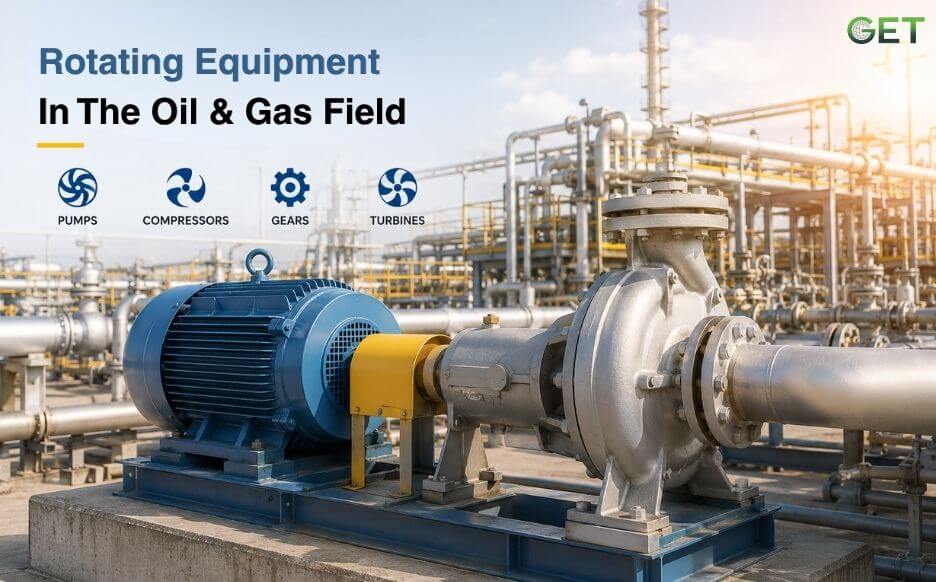
Walk onto any rig floor, production platform, or gas processing plant, and the first thing you notice isn’t the pipework – it’s the sound. That low, constant hum coming from somewhere in the facility is almost always rotating equipment doing its job. Pumps pushing fluid through miles of pipeline. Compressors […]

By Get global | September 9, 2026