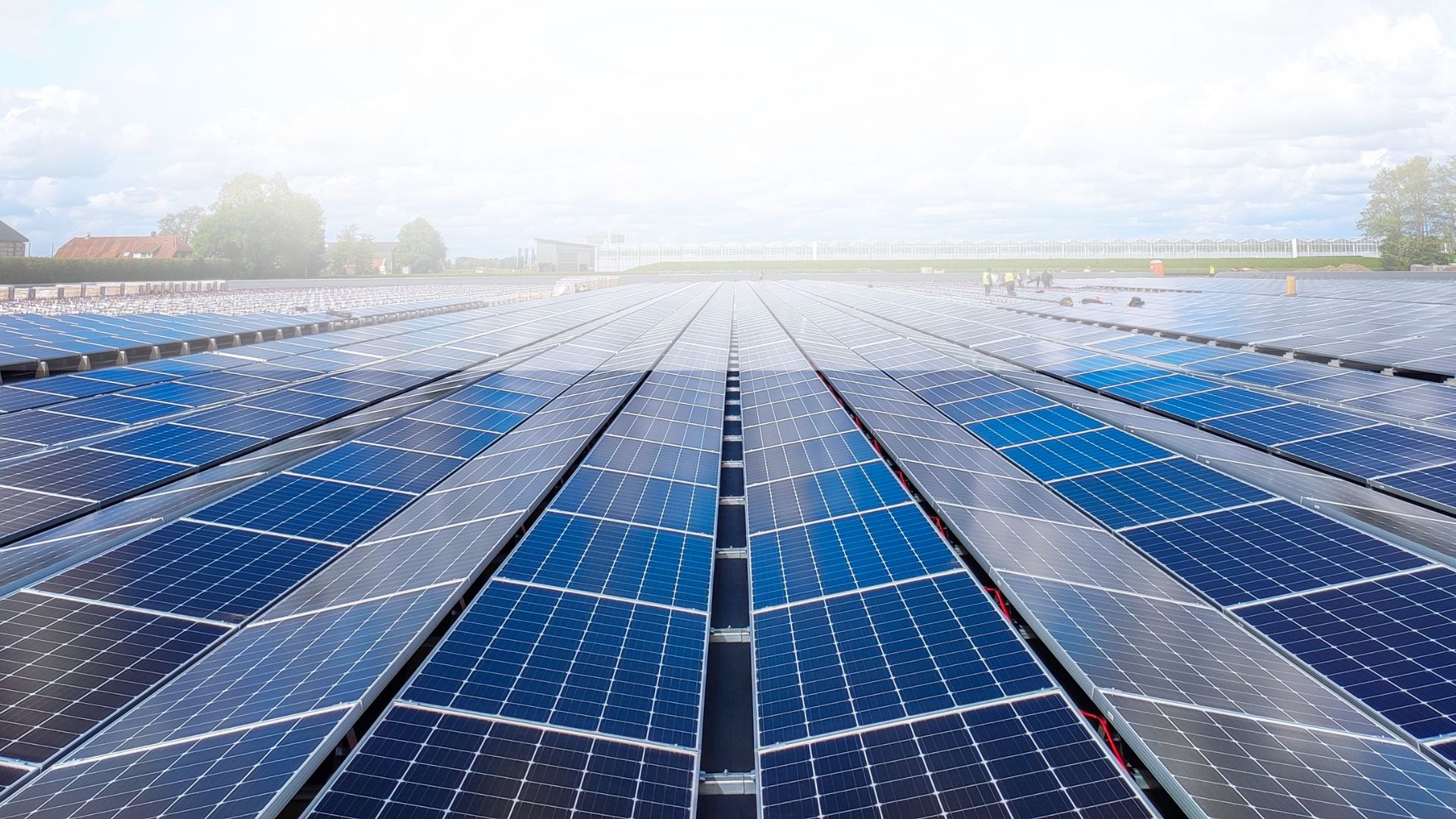
The energy world is changing fast. And not just in the way people talk about it at conferences. Real change is happening on the ground — in oilfields, in boardrooms, and in control rooms across the globe.
For upstream oil and gas companies, this change brings a big question: How do you stay profitable today while preparing for a very different tomorrow?
The answer, for many operators, is hybrid solutions. These are energy systems that combine traditional fossil fuel infrastructure with renewable or cleaner energy sources. They are not perfect. But they are practical. And right now, practical matters.
In this blog, we will break down what hybrid energy solutions actually are. We will look at why upstream oil and gas companies are adopting them, what challenges they face, and what real opportunities exist. No jargon. No fluff. Just a clear, honest look at where things stand.
A hybrid energy solution is simply a system that uses two or more energy sources working together. In the oil and gas world, this often means pairing diesel generators or gas turbines with solar panels, wind turbines, or battery storage systems.
Think of it like a hybrid car. A hybrid car uses both a petrol engine and an electric motor. Neither one is doing all the work alone. Together, they make the vehicle more efficient and less costly to run.
The same idea applies to energy on a drilling site or a production facility. Instead of running a diesel generator at full power 24 hours a day, you might run it only when solar is unavailable, and use batteries to smooth out the gaps.
Common hybrid combinations in the sector include: solar plus diesel, wind plus gas, and battery storage paired with existing power infrastructure. Some facilities are even experimenting with green hydrogen as a clean fuel backup.
This is not just about being green. For most upstream oil and gas companies, the primary motivation is economics.
Fuel costs are enormous on remote sites.
Diesel has to be transported — sometimes by truck, sometimes by helicopter — to locations that are far from any grid. The cost adds up quickly. In some remote operations, fuel can account for 30 to 40 percent of total operating expenses.
Solar panels and wind turbines, once installed, provide power at near-zero marginal cost. Combine that with a smaller diesel generator as a backup, and you can cut fuel consumption significantly.
Then there is the regulatory pressure.
Governments across the world are tightening emissions regulations. Carbon taxes are rising. Investors are asking harder questions about sustainability. Upstream oil and gas companies that ignore these pressures risk losing access to capital, licenses, and markets.
Hybrid solutions offer a way to reduce scope 1 emissions — the direct emissions from on-site operations — without completely overhauling the business model. That is a realistic transition path, not an idealistic one.
Finally, there is reliability. Many oil and gas sites operate in regions where the power grid is unstable or simply does not exist. A well-designed hybrid system, with battery storage included, can actually deliver more reliable power than a single diesel generator that breaks down.
Hybrid energy sounds great on paper. But anyone who has worked in the oil and gas industry knows that reality is messier than a PowerPoint slide.
Installing solar arrays or wind systems on a remote oil field is expensive. The equipment costs money. The engineering studies cost money. The logistics of getting heavy equipment to remote locations cost even more money.
Many upstream oil and gas companies, especially smaller independents, are already operating on tight margins. Committing large capital budgets to energy infrastructure — rather than to exploration or production — is a tough sell for boards and investors.
Oil and gas facilities were not designed with renewable energy in mind. Adding solar or wind to an existing facility means dealing with legacy electrical systems, safety standards, and operational protocols that were built around a single energy source.
Getting systems to talk to each other — the renewable source, the battery, the backup generator, and the facility’s power management system — requires careful engineering. If done poorly, it creates new risks rather than reducing old ones.
The people who work in upstream oil and gas companies are experts in drilling, production, and reservoir management. Many of them are not trained in renewable energy systems, battery management, or power electronics.
This creates a real challenge. You cannot just install new technology and expect the existing workforce to maintain it effectively. Training takes time. Hiring specialists costs money. And on remote sites, getting technical support quickly is often impossible.
Solar power depends on the sun. Wind power depends on the wind. Not all oil and gas sites are in locations with good solar or wind resources. A site in a northern Canadian oilfield has very different conditions than a site in the Middle East or West Africa.
Designing a hybrid system that actually works — and delivers reliable power — requires detailed site assessments, accurate resource data, and careful load analysis. Shortcuts here lead to underperforming systems and wasted investment.
Read Also- Challenges and Opportunities for Oilfield Service Providers in the Middle East
Despite the challenges, the opportunities are real. And for companies that move early and move smart, the advantages can be significant.
Successful hybrid deployments have shown fuel savings of 20 to 60 percent in some remote operations. Over a five to ten year asset life, those savings can far exceed the initial capital investment. The payback periods are getting shorter as the cost of solar panels and batteries continues to fall.
Lower fuel costs also mean lower exposure to diesel price volatility. That improves project economics and makes financial planning more predictable — something investors and operators both value.
Environmental, Social, and Governance (ESG) metrics matter more than ever. Large institutional investors are screening portfolios for carbon risk. Some major banks have committed to reducing their financing of high-emission projects.
Upstream oil and gas companies that demonstrate a credible path to lower emissions — backed by real hybrid projects and measurable data — are in a much better position to attract capital on favorable terms.
A hybrid system with battery storage can keep critical loads running even when the primary power source fails. This kind of resilience is especially valuable on offshore platforms or remote onshore locations where a power outage can mean costly production shutdowns.
Better energy management also means equipment runs more consistently within designed parameters, which can extend the lifespan of critical machinery and reduce maintenance costs.
Every hybrid project deployed today is a learning experience. Companies that start now — even on small pilots — are building the internal knowledge, vendor relationships, and operational experience that will matter in a world with tighter carbon constraints.
The skills developed in hybrid energy management — data analytics, energy optimization, system integration — are also transferable to other parts of the business. This is genuine organizational capability building, not just PR.
Not every hybrid solution is worth pursuing. The companies that get the most out of these systems follow a few clear principles.
Start with the data.
Before committing to any technology, do a thorough energy audit. Understand your current consumption patterns, your peak demand periods, and your fuel costs. This baseline is essential for designing a system that actually fits your needs.
Be realistic about site conditions.
Solar in a desert location has very different economics than solar in a cloudy, northern environment. Match the technology to the location, not the other way around.
Plan for operations, not just installation.
Many hybrid projects fail not because the technology is wrong, but because operations teams were not prepared to manage the new system. Invest in training. Build maintenance procedures. Set up remote monitoring from day one.
Partner carefully.
The market for hybrid energy systems is full of vendors making bold claims. Look for partners with a track record in similar environments — remote, off-grid, industrial — and insist on performance guarantees backed by real data.
The technology is improving quickly. Battery costs have dropped by over 80 percent in the past decade. Solar panel efficiency continues to improve. Digital energy management platforms are making it easier to optimize complex hybrid systems in real time.
Green hydrogen is also emerging as a potential game-changer. If hydrogen can be produced cheaply and stored safely, it could serve as a long-duration backup fuel that replaces diesel entirely in some applications.
Regulators are also moving faster. The European Union, the UK, and several major oil-producing nations are implementing or planning carbon pricing mechanisms that will directly affect the cost structure of upstream operations.
For upstream oil and gas companies, the window to act proactively — rather than reactively — is narrowing. Those who invest now in hybrid solutions gain operational experience, cost advantages, and regulatory goodwill. Those who wait may find themselves forced to change under less favorable conditions.
Hybrid solutions are not a silver bullet. They will not solve every problem that upstream oil and gas companies face. But they are one of the most practical and financially sound tools available for reducing costs, cutting emissions, and building resilience — right now, with technology that exists today.
The energy transition is not happening overnight. It is happening in steps. And hybrid energy systems are one of the most important steps that operators can take today.
The companies that will thrive in the next decade are the ones thinking carefully about energy — not just as a cost to manage, but as a strategic lever. Hybrid solutions, done right, can be exactly that lever.
Read Also- National Oil Companies Leading the Middle East Energy Sector

By Get global | September 22, 2026
By Get global | September 21, 2026
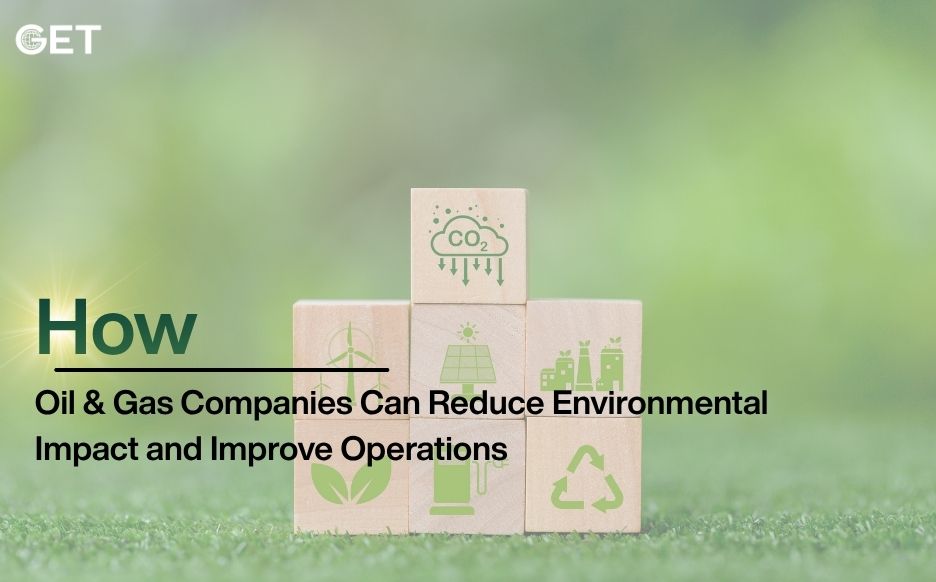
Regulators are tightening the screws on emissions. Investors are asking harder questions about ESG performance. And communities near production sites have gotten a lot less patient with flaring, leaks, and spills that used to get a shrug. For upstream operators, environmental performance isn’t a side conversation anymore. It’s sitting right […]

By Get global | September 18, 2026
By Get global | September 14, 2026
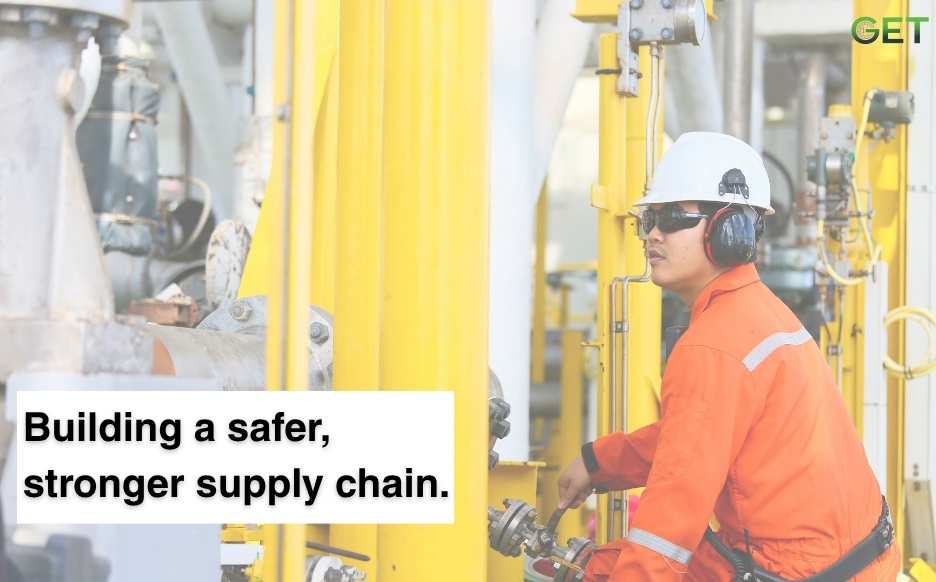
Ten years back, most HSE policies stopped at the company gate. Whatever happened past that point, subcontractors, transport, equipment vendors, was technically someone else’s problem, at least on paper. Not anymore. And the reason is blunt: trace a serious incident back far enough, and often it started somewhere in the supply chain, not […]

By Get global | September 14, 2026
Health, safety and environment in the oil and gas sector was long treated as a back-office function, running quietly alongside the core work of drilling, extraction, and processing. That is no longer the case. Extreme pressures, volatile materials, remote sites, and heavy machinery mean the risk in this industry has […]