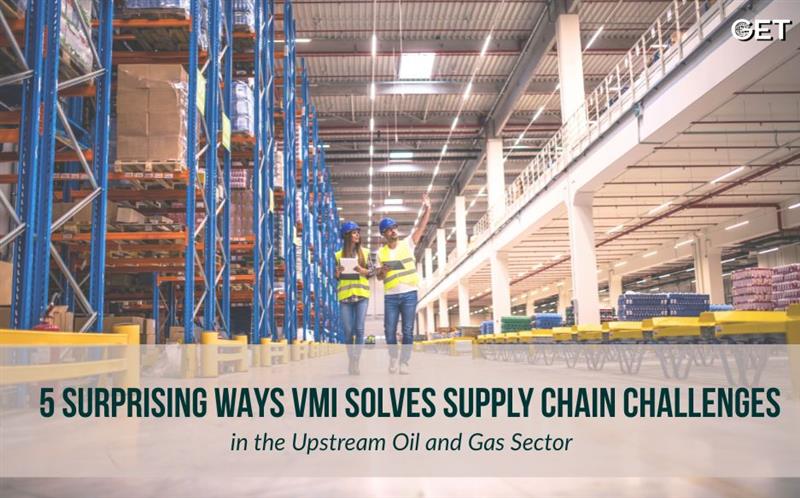
Anyone who’s worked in upstream oil and gas knows this: operations don’t wait. If a rig is down because a part didn’t show up, the cost is real—and it escalates fast. Supply chain challenges in this industry aren’t theoretical—they show up on site, in downtime reports, and in panicked phone calls at 2 AM.
That’s why more and more companies are turning to Vendor Managed Inventory (VMI). It’s not a magic fix, but when done right, it takes a huge load off internal teams and brings measurable impact. While people often talk about the basic benefits—less paperwork, fewer stockouts—what’s really interesting is how VMI quietly solves problems most teams just live with.
Here are five such ways we’ve seen it make a difference.
We’ve all been there: the part wasn’t available, the job is in 48 hours, and now someone’s calling logistics for urgent air freight. Not only does that cost a fortune, but it also creates tension across teams. VMI doesn’t eliminate surprises, but it reduces their frequency.
How? Because the vendor is tracking usage and movements. They know when stock is running low and replenish accordingly—before you even raise a PO. For a client we worked with in Saudi Arabia, this meant cutting down emergency shipments by almost 30% in the first four months.
The surprise wasn’t just the savings—it was how much calmer their operations team became.
In many field locations, we see operators overstocking just to avoid downtime. It’s understandable—but not ideal. Over the years, we’ve seen yards full of unused valves, flanges, and control panels that haven’t moved in two years.
With VMI, you don’t need that much guesswork. The vendor has consumption data and trend history. If they see that you burn through a certain set of items every 10 days, they stock accordingly—neither too much nor too little. When the approach is right, it helps increase uptime without inflating inventory.
Let’s be blunt—your engineers and supervisors didn’t sign up to be procurement coordinators. But in most operations, they’re constantly checking stock, raising requests, and chasing deliveries. It takes away time from actual maintenance, planning, or safety walkdowns.
What we’ve seen is that VMI gives this time back. The vendor handles stock checks, initiates replenishment, and ensures on-site materials are aligned with upcoming jobs. One operations manager in the UAE told us he saved 8–10 hours every week, just by not having to deal with inventory calls.
That’s a full workday reclaimed—every single week.
Upstream projects today are under more scrutiny than ever. Whether it’s internal quality checks or client audits, the expectation is clear: every item used on site should be traceable—origin, batch, expiry, certification, everything.
Here’s where VMI has been a quiet hero. Many vendors now use barcoded or digitized systems that track every item from warehouse to well site. Need a mill certificate? It’s attached in the system. Want to know when that valve was last replaced? Just scan and check.
This isn’t about being flashy—it’s about being ready when someone walks in asking tough questions. And if you’ve ever been in a compliance audit without your documentation in order, you know how valuable that is.
Read Also- Digital Transformation in Oil and Gas: How Technology Is Reshaping Field Operations
The upstream business cycles fast. A project you planned for next quarter suddenly moves up. Or worse, a project gets paused halfway. In traditional inventory models, adjusting to that can be messy—either you’re understocked or sitting on excess.
With VMI, we’ve seen vendors who can flex quickly—because they’re watching your forecast and job orders in real time. One client had two unplanned interventions in the same month. Their VMI partner managed to fulfil both without any additional lead time, simply because stock levels were aligned with expected activity.
Another example? During COVID’s supply chain chaos, clients with VMI were able to ride out the storm better than those managing everything in-house. Why? Because vendors were already adjusting their global inventory plans based on usage—not waiting for an urgent PO to drop.
It’s important to say this: VMI isn’t a plug-and-play solution. It works best when it’s tailored to the operation. Here’s what we’ve seen help:
· Start with a pilot: Pick one asset or one material category. Slickline tools or rotating equipment spares are good starting points.
· Define clear expectations: This isn’t just about replenishment. Set KPIs around stockout rates, TATs, and consumption visibility.
· Keep communication open: Weekly syncs between the vendor and your operations team help anticipate issues, not react to them.
· Use the data: VMI gives you consumption trends. Use them for planning and budgeting—not just inventory.
For upstream oil and gas companies, VMI is proving to be more than a supply chain tool—it’s a practical operational support system. It reduces pressure on site teams, lowers holding costs, keeps jobs moving, and improves response during volatile periods.
Yes, there’s an initial learning curve. And yes, it requires trust between client and vendor. But when it’s set up well, VMI makes operations smoother—not louder.
If your team is still firefighting inventory issues, maybe it’s time to try a smarter way.
Read Also- Top 5 Tips To Start Your Oil and Gas Career in the Upstream Sector

By Get global | October 27, 2026

By Get global | October 26, 2026
Oil and Gas industry have always been in an environment that is capital intensive and where operational efficiency, safety, and cost management take precedence. But there have been instances where supply chain management within energy sector had issues like poor communication, disjointed tracking, lengthy vendor onboarding process, and reactive procurement […]

By Get global | October 19, 2026

By Get global | October 16, 2026

By Get global | October 12, 2026