Upstream oil and gas has never been casual work.
You deal with formation pressure that does not forgive miscalculations. You operate equipment that weighs hundreds of tons. You manage projects where a few hours of downtime can cost more than a year of someone’s salary.
In 2026, what’s changing is not the intensity of the work. It’s the level of scrutiny.
Operators are tightening contractor qualification rules. Clients are auditing more aggressively. Insurance providers are reviewing risk exposure in detail. And regulatory bodies are asking for documented proof of competence, not verbal assurances.
Experience still matters. But experience plus certification carries more weight.
If you’re building a serious career in upstream, these upstream oil & gas certifications are not just helpful. They are strategic.
Let’s start where the risk is most visible: well control.
High-pressure, high-temperature wells are becoming more common. Managed pressure drilling techniques are expanding. Complex completions are standard. In this environment, pressure margins are narrow.
IWCF certification forces drilling professionals to revisit fundamentals that can get rusty over time:
It also creates a shared technical language across crews.
In 2026, many operators are not just asking for IWCF. They are asking for higher-level certifications and frequent renewals. For drilling supervisors and well engineers, an expired certificate can stall career progression immediately.
It’s not about theory. It’s about proving you can manage pressure under pressure.
Offshore work changes the equation entirely.
When you are working in deepwater, evacuation windows are limited. The weather can delay helicopters. Medical access is constrained. If something goes wrong, response time is not measured in minutes.
OPITO training, especially BOSIET, covers:
These scenarios are practiced repeatedly for a reason.
In 2026, offshore assets are often integrated with remote monitoring systems and centralized control rooms. But that digital layer does not remove physical risk. Certified offshore workers are still the frontline defense against escalation.
No operator wants someone offshore who has not been trained for worst-case scenarios.
Read Also- QHSE Training Certification Course in the UAE: Vouchers to Higher Standards for a Safe Tomorrow
In the upstream, safety culture is easy to talk about. Harder to structure.
NEBOSH forces professionals to move beyond reactive thinking. It teaches risk assessment methodologies, incident root cause analysis, and management system implementation.
What this means in practice:
In 2026, many operators require documented HSE governance alignment. Having NEBOSH-certified personnel helps demonstrate that field supervision is not improvising safety decisions.
The value of this certification shows up during audits. And audits are not becoming lighter.
Upstream production depends on infrastructure integrity.
Pressure vessels, flowlines, separators, storage tanks. These assets operate continuously under stress. Corrosion, fatigue, and mechanical degradation are constant threats.
API certifications like 510, 570, and 653 focus on inspection discipline. Not guesswork. Not visual estimation. Standards.
An API-certified inspector understands:
Asset integrity programs are being digitised and managed. Predictive maintenance systems receive inspection data. Such data is more credible when there are certified professionals to make such inspections.
And credible data reduces operational risk.
As fields mature, intervention activity increases.
Plug and abandon operations. Re-completions. Workovers. Stimulation jobs.
Every intervention involves interacting with a live well system. Pressure behavior can change rapidly. Equipment misalignment can escalate quickly.
Pressure control certifications validate knowledge of:
In 2026, with operators extending the life of aging assets, well intervention skill sets are becoming more important than initial drilling in some regions.
Certified intervention professionals are harder to replace.
Upstream projects involve more than technical execution.
They include coordination of logistics, vendors, scheduling of the crew, prediction of risks and control of the budget.
A delayed equipment shipment can idle an entire drilling crew. Poor risk planning can push timelines by months.
PMP certification provides a structured project management discipline. It teaches professionals how to think in terms of dependencies, milestones, and risk buffers.
This certification is a gap between the technical and operational oversight in the case of engineers moving to leadership positions.
In 2026, that combination is increasingly valuable.
HAZOP is about disciplined imagination.
It forces teams to walk through process deviations step by step. What happens if pressure exceeds limits? What if flow drops unexpectedly? What if power fails mid-operation?
In modern upstream facilities, where automation and complex process integration are common, structured hazard analysis is critical.
Professionals trained in HAZOP methodology are better at:
Regulators appreciate documented risk analysis. Operators appreciate fewer surprises.
This is where 2026 feels different from 2016.
Real-time production dashboards. Remote well monitoring. Automated alerts. Predictive maintenance models.
Engineers who can interpret operational data alongside physical equipment behavior have an advantage.
Training in SCADA systems, industrial automation, and digital asset platforms enables professionals to:
Upstream is not purely mechanical anymore. It is mechanical plus digital.
And professionals who ignore that shift risk being left behind.
Environmental oversight has intensified.
Emission reporting, waste disposal tracking, water management, and sustainability documentation are closely monitored.
Certifications aligned with environmental management systems demonstrate structured compliance capability.
This knowledge will save project delays in areas where the permits are conditional on environmental accountability.
In 2026, environmental competence is directly tied to project approval timelines.
Upstream oil and gas is not shrinking. But it is filtering.
Operators want people who are experienced and verifiable. Clients want reduced liability. Insurers want documented competence.
Certifications are a way to reduce uncertainty.
They show that you:
Experience builds capability. Certification validates it.
Together, they create professional resilience.
Read Also- Challenges and Opportunities for Oilfield Service Providers in the Middle East
By Get global | March 25, 2026
The Middle East has forever been the heart and soul of the oil and gas industry. In this day and age, the technology is advanced and ever-changing; the Middle East is also evolving. Not just by production but also innovation, diversification and investment in the workforce. As the global landscape […]
By Get global | March 18, 2026
The Middle East has always been the heartbeat of the global energy industry. It holds some of the world’s largest oil and gas reserves. And for decades, it has attracted investment from every corner of the globe. But the landscape is changing. Fast. Today, oilfield service providers operating in this […]
By Get global | March 16, 2026

By Get global | March 11, 2026
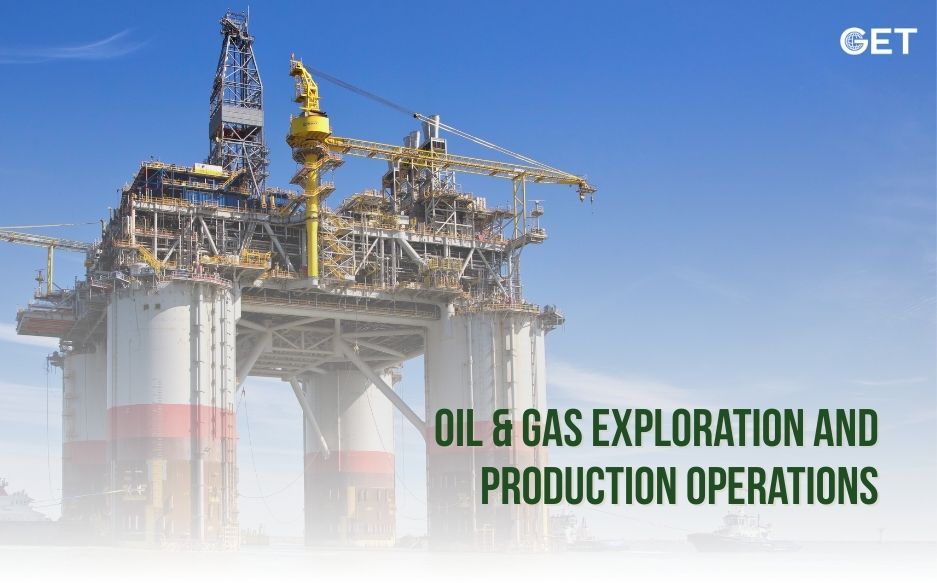
The Middle East has always been one of the key regions for the oil and gas industry with some of the largest hydrocarbon reserves in the world. Upstream exploration and production have been a major contributor to economic growth and energy development for many Middle Eastern countries. For instance, cities […]
By Get global | March 10, 2026
The Middle East operates as the core of the oil and gas industry since most energy industry developments throughout the world converge at this particular region. The region provides career opportunities which offer exceptional salary packages and thrilling work experiences throughout its Saudi Arabian deserts and Abu Dhabi urban centers […]