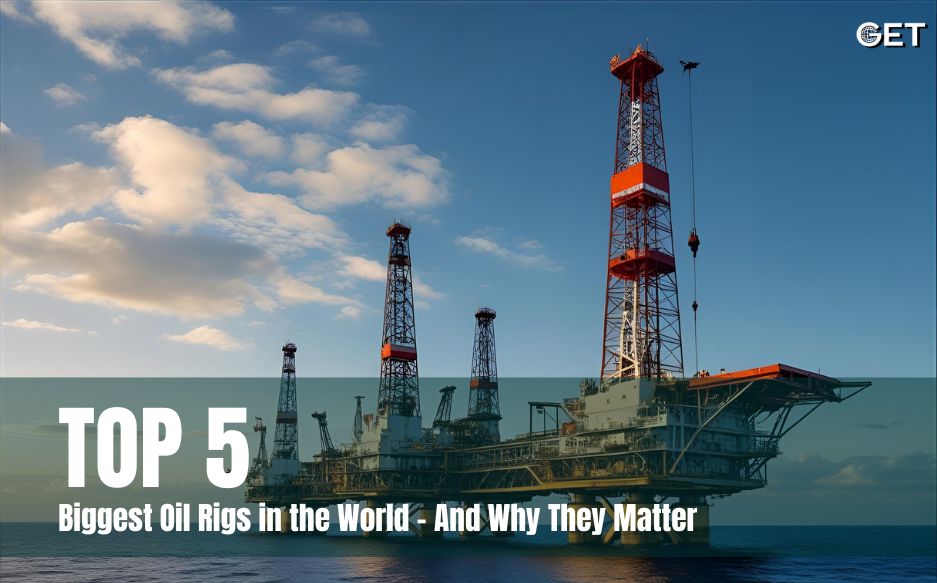
Oil rigs are among the most fascinating machines on Earth. Not just for their whopping size — but for what they symbolize: human creativity, perseverance, and the desire to break new ground. Whether towering in the Arctic or floating in deep ocean water, these giants play a critical role in powering our world, especially in the upstream oil and gas sector, which is the backbone of exploration and production in the oil and gas industry.
Read on to discover the five largest oil rigs ever constructed. We’ll explore what makes each one unique, how they operate, and why they remain vital in today’s quest for energy across the global oil and gas industry.
Let’s see top biggest oil Rig in the world:-
Type: Fixed platform
Operator: Rosneft & Exxon Neftegas
Location: Sea of Okhotsk, Russia
The Berkut platform is a beast. It is the heaviest oil rig and is in the freezing waters off Russia’s east coast. Engineered for some of the most challenging weather on the planet, it withstands bone-chilling temperatures of minus 44 degrees Celsius and ice that is two meters deep. Oh, and it’s engineered not to collapse in an earthquake.
Quick Facts:
Weight (topside): Over 200,000 tons
Annual production: About 4.5 million tons of oil
Estimated cost: $13 billion+
Berkut is more than just massive — it’s a symbol of resilience. A marvel of upstream oil and gas engineering, it proves oil can be extracted even in nature’s harshest corners. For Russia, it’s a vital asset in energy export and economic strength.
Type: Spar platform (floating)
Operator: Shell
Site: 200 miles offshore in the Gulf of Mexico
Think deep—really deep. That’s where Perdido comes in. It’s the deepest-operating offshore oil platform in the world, floating in water 2,450 meters deep. Even though it is so far from land, it can extract oil and gas from several fields with remarkable efficiency.
Quick Facts:
Height (if upright): ~267 meters
Depth: 2,450 meters underwater
Capacity per day: 100,000 barrels of oil and 200 million cubic feet of gas
Perdido is a milestone in deepwater upstream oil and gas operations. With remote-controlled tech and smart subsea systems, it reflects the industry’s shift toward smarter, tech-driven energy production.
Type: Compliant tower
Operator: Chevron & Marathon Oil
Location: Gulf of Mexico, USA
In height, as you may say, Petronius goes one better. If you go from the sea floor to the top, it’s taller than the Burj Khalifa! But it doesn’t stand stiff like a skyscraper — it dances with the ocean. That’s what makes it so strong.
Quick Facts:
Total height: 640 meters
Built in: 2000
Designed to last: 25+ years
This tower stands as a symbol of adaptive engineering in the oil and gas industry. It showcases how innovation helps tackle harsh sea conditions in deepwater exploration.
Read Also- Oil and Gas Logistics Services in the UAE: Challenges and Solutions
Type: Gravity base structure (GBS)
Operators: ExxonMobil, Chevron, Suncor, & elsewhere
Location: Offshore Newfoundland
Built in one of the world’s most dangerous offshore spots, the Hibernia platform is solid as a fortress. The North Atlantic is notorious for its stormy seas and wandering icebergs, so this platform was built with a unique ice-resistant concrete base—along with “ice teeth” that chew up icebergs before they can make a real dent.
Quick Facts:
Weight (ballasted): 1.2 million tons
Storage capacity: 1.3 million barrels
Water depth: ~80 meters
Hibernia is a case study in design that works with nature. “It’s designed to run year-round — safely producing oil while providing good-paying jobs and boosting Canadian energy independence.
· Type: Gravity base structure
· Operators: ExxonMobil (lead), Chevron, Suncor & others
· Location: Jeanne d’Arc Basin, Newfoundland
Commissioned in 2017, Hebron is another gravity-based giant built for Canada’s eastern offshore. It’s fixed to the seabed and operates in waters that freeze, storm, and shift—all without blinking.
Quick Facts:
· Weight: 750,000 tons
· Daily production: Up to 150,000 barrels
· Expected life: 30+ years
Hebron adds long-term value to Canada’s offshore oil sector. It was designed not just to survive but to thrive in one of the planet’s roughest marine environments.
Even with the rise of renewables, oil remains essential for transport, heating, industry, and plastics. These platforms help meet the world’s ongoing demand.
Each rig is an example of advanced engineering—from deepwater architecture to ice-resistant structures. They reflect decades of research and human effort.
Oil rigs don’t just extract oil—they create thousands of jobs, fuel local economies, and support entire supply chains from logistics to safety services.
Today’s rigs come equipped with real-time monitoring, automated safety shutoffs, and eco-friendly systems to reduce environmental risks.
Some older rigs are being explored for future roles in carbon capture, offshore wind, or hydrogen projects, showing how legacy infrastructure can support the shift to greener energy.
These five oil rigs aren’t just engineering marvels—they’re powerful contributors to the global upstream oil and gas movement. From frozen Russian coasts to the depths of the Gulf, they represent resilience, innovation, and the reality that oil still drives much of the world.
While renewables gain momentum, the oil and gas industry continues to adapt, invest, and prepare for a more balanced energy mix. Whether these platforms serve oil extraction or future green tech, one thing is certain—they’re not going away anytime soon.
Read Also- Offshore Oil Rigs in 2025: Innovation, Challenges, and the Road Ahead
By Get global | March 18, 2026
The Middle East has always been the heartbeat of the global energy industry. It holds some of the world’s largest oil and gas reserves. And for decades, it has attracted investment from every corner of the globe. But the landscape is changing. Fast. Today, oilfield service providers operating in this […]
By Get global | March 16, 2026

By Get global | March 11, 2026
The Middle East has always been one of the key regions for the oil and gas industry with some of the largest hydrocarbon reserves in the world. Upstream exploration and production have been a major contributor to economic growth and energy development for many Middle Eastern countries. For instance, cities […]
By Get global | March 10, 2026
The Middle East operates as the core of the oil and gas industry since most energy industry developments throughout the world converge at this particular region. The region provides career opportunities which offer exceptional salary packages and thrilling work experiences throughout its Saudi Arabian deserts and Abu Dhabi urban centers […]
By Get global | March 6, 2026