Let me be blunt: if you work in the upstream oil and gas sector and you’re still treating geopolitics as a “macro risk” to footnote in a quarterly report — you’re already behind. This isn’t an abstract boardroom concern. It shows up in your morning briefing when a government suddenly revokes a drilling license. It shows up when your logistics contractor calls to say the border crossing is closed. It shows up when your crew refuses to fly into a field site because the security situation changed overnight.
I’ve spoken to enough engineers, project managers, and executives in this space to know that geopolitical disruption has a way of making everything else — cost overruns, equipment failures, bad weather — look manageable by comparison. So let’s actually talk about what’s happening, how it hits operations, and what the people running these projects are doing about it.
Here’s the inconvenient truth about oil: it’s not where the stable countries are. The biggest upstream oil and gas reserves on Earth happen to sit under some of the most contested, unstable, and politically volatile territory on the planet. That’s not a coincidence — it’s what makes this industry so complicated and, frankly, so interesting.
Upstream operations — exploration, drilling, production — don’t have the luxury of choosing convenient neighbors. A midstream pipeline company can route around a problem. A downstream refiner can switch crude inputs. But if your production license sits in a field that’s suddenly in a dispute zone, you can’t just pick it up and move it. That physical immobility is what makes upstream operators uniquely exposed whenever the political temperature rises.
And right now? The political temperature is running pretty hot.
The Russia-Ukraine conflict in 2022 was a case study in how fast a geopolitical shock can gut a supply chain. Within weeks of Western sanctions hitting, oilfield services companies like SLB, Halliburton, and Baker Hughes pulled out of Russia. That sounds clean on paper. In practice, it meant drilling equipment sitting idle, contracts torn up overnight, and a sudden scramble for alternative suppliers everywhere else — because those same suppliers were now being called on from three different directions at once.
Talk to anyone sourcing drilling equipment in late 2022 or 2023 and they’ll tell you the same thing: lead times that used to be six weeks stretched to six months. Rig day rates jumped. Specialist crews were suddenly hard to find because the global pool had been reshuffled. The sanctions weren’t aimed at operations in Nigeria or the Gulf of Mexico or the North Sea — but operators there felt them anyway, because supply chains don’t respect borders.
That interconnectedness is both the strength and the vulnerability of modern upstream oil and gas operations. Efficiency is built on global integration. But global integration means a conflict in one region sends shockwaves into your procurement office thousands of miles away.
Here’s something the financial press often glosses over: political risk doesn’t just raise the cost of capital. At a certain level, it kills investment entirely. No risk premium is high enough to justify deploying hundreds of millions of dollars into an upstream project when there’s a genuine chance the government changes and your assets get nationalized six months later.
This has happened. Venezuela nationalized oilfield assets. Bolivia did it. It happened in bits and pieces across West Africa and Central Asia. And every time it does, it doesn’t just hurt the company directly involved — it poisons the well for the entire region. Investors have long memories. Capital that left Venezuela in 2007 still hasn’t fully come back.
The International Energy Agency has consistently flagged political risk as a top barrier to upstream investment in emerging markets. The result is predictable: chronic underinvestment in regions that actually hold significant reserves, which contributes to supply tightness years down the road. Geopolitics creates scarcity — not because the oil isn’t there, but because no one will pay to go get it.
The discussion around geopolitical risk in energy tends to focus on capital and logistics. That makes sense — those are the numbers that show up in earnings calls. But there’s another dimension that doesn’t get enough attention: the people actually doing the work.
The Niger Delta has seen decades of pipeline sabotage and kidnapping. Libya’s civil conflict essentially switched off large sections of the country’s production capacity — not because the oil ran out, but because it became too dangerous to operate. In parts of Iraq, upstream workers have operated under threat of militant attacks for years. These aren’t hypothetical risks. They are operational realities that affect crew rotation schedules, insurance costs, contractor availability, and — most importantly — actual human lives.
Companies operating in high-risk environments end up spending 15–30% more on security infrastructure: hardened compounds, armed escorts, evacuation protocols, intelligence monitoring. And even with all of that, the harder problem is recruitment. Plenty of experienced engineers won’t take a posting in a conflict zone, full stop. The talent pool shrinks. The people who do go carry a psychological load that the industry rarely acknowledges openly.
Sanctions are the geopolitical tool du jour, and they’ve become extraordinarily complex to navigate. The U.S. Office of Foreign Assets Control (OFAC) maintains a sanctions list that updates constantly. The EU has its own. The UN has its own. And they don’t always align cleanly. For an upstream company working across multiple jurisdictions with dozens of contractors, subcontractors, and financing partners — staying compliant is a genuine operational challenge, not just a legal formality.
The penalties for getting it wrong are severe. Not just fines — though those can be enormous — but loss of access to U.S. dollar clearing, which effectively cuts you off from most international finance. Companies have had to exit otherwise profitable positions simply because maintaining them became a compliance liability.
What’s less discussed is the speed cost. Upstream operations often have narrow windows — seasonal drilling in Arctic environments, offshore weather windows, regulatory approval timelines. When geopolitical complexity forces lawyers and compliance teams into every major decision, it slows everything down. That slowdown has a dollar figure attached to it, even if it rarely appears on a risk register.
Here’s a twist worth noting: the same geopolitical pressures that have disrupted upstream oil and gas operations in some regions have actively accelerated investment in others. After Russia’s invasion of Ukraine, energy security became a political emergency across Europe. Suddenly, LNG import terminals were being fast-tracked. Long-stalled upstream projects in the U.S., Qatar, and Australia were getting final investment decisions.
There’s a painful irony in this. The very instability that makes upstream investment risky in one region creates urgency for it elsewhere. Governments that had been gradually talking about phasing out fossil fuel investment found themselves approving new licenses because the alternative — energy dependence on an adversary — was politically untenable.
The World Bank’s energy security research has documented this shift clearly: energy independence has become a national security doctrine, not just an environmental or economic one. That has real consequences for how upstream capital gets allocated globally — and for how long the sector remains strategically critical despite the energy transition narrative.
Complaining about geopolitics doesn’t move barrels. Here’s what operators who’ve figured this out are actually doing:
None of this eliminates the risk. Anyone who tells you there’s a playbook that fully insulates upstream operations from geopolitics is selling something. But the gap between companies that treat political risk as a genuine operational discipline and those that treat it as background noise is growing wider every year.
Upstream oil and gas operations exist at the intersection of geology, engineering, finance, and politics. You can optimize the first three all you want. But the fourth one has a habit of overriding everything else at the worst possible moment.
The companies and operators who will navigate the next decade successfully aren’t necessarily the ones with the best drilling technology or the lowest lifting costs. They’re the ones who’ve genuinely internalized that geopolitics is an operational variable — something to be planned for, hedged against, and built into every major decision — not a headline risk to be acknowledged and then quietly set aside.
The barrels are still there. Getting them out is the complicated part. And right now, the complications are mostly political.
Read Also- Why HSE Performance Matters When Selecting Oilfield Service Companies
By Get global | March 18, 2026
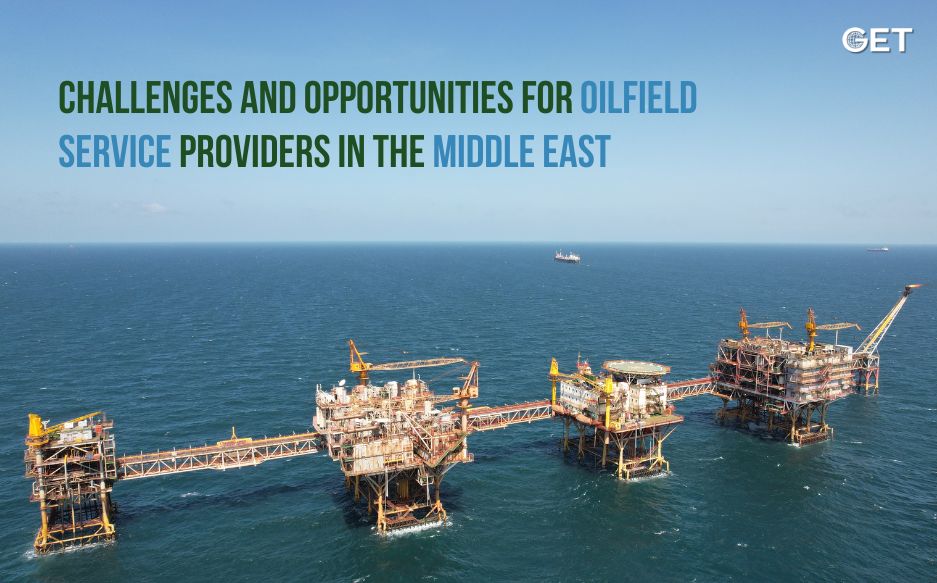
The Middle East has always been the heartbeat of the global energy industry. It holds some of the world’s largest oil and gas reserves. And for decades, it has attracted investment from every corner of the globe. But the landscape is changing. Fast. Today, oilfield service providers operating in this […]
By Get global | March 16, 2026

By Get global | March 11, 2026
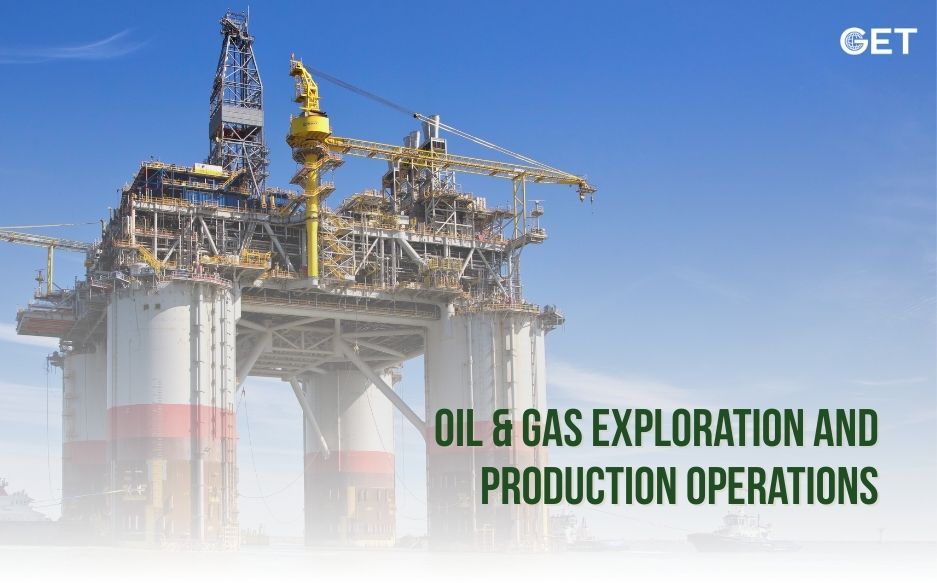
The Middle East has always been one of the key regions for the oil and gas industry with some of the largest hydrocarbon reserves in the world. Upstream exploration and production have been a major contributor to economic growth and energy development for many Middle Eastern countries. For instance, cities […]
By Get global | March 10, 2026
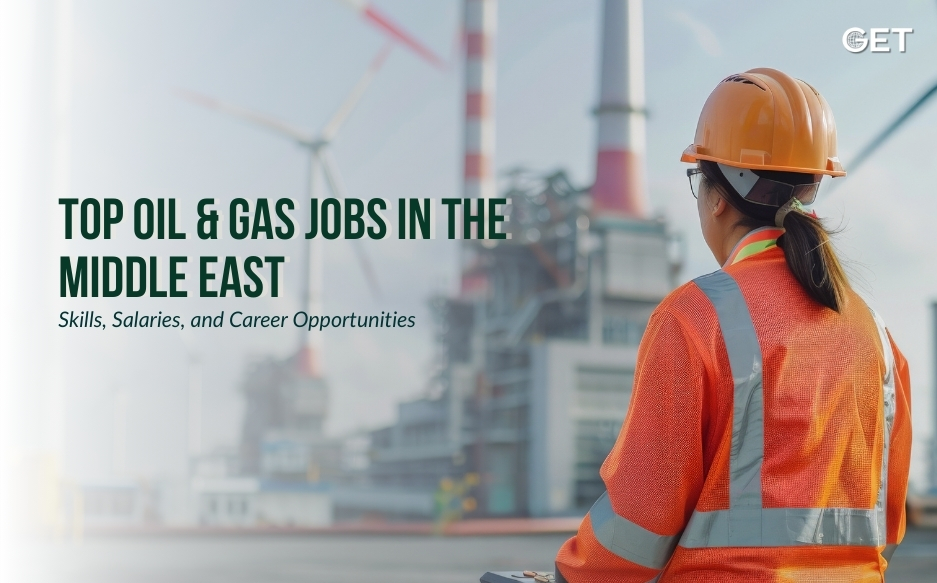
The Middle East operates as the core of the oil and gas industry since most energy industry developments throughout the world converge at this particular region. The region provides career opportunities which offer exceptional salary packages and thrilling work experiences throughout its Saudi Arabian deserts and Abu Dhabi urban centers […]
By Get global | March 6, 2026