Understanding the Difference: Upstream vs. Downstream Oil and Gas Operations

Upstream vs. Downstream

Introduction

The oil and gas industry is one of the most complex sectors in the world. It operates across a long, interconnected oil and gas value chain. This chain moves from raw resource discovery all the way to the fuel in your car or the gas in your kitchen stove.

At the core of this chain are two major divisions: upstream vs downstream oil and gas operations. Knowing the difference helps you understand how the industry functions — whether you’re an investor, a job seeker, or simply curious about energy.

Let’s break it down step by step.

What Are Upstream Oil and Gas Operations?

Upstream oil and gas meaning: The upstream sector covers all activities involved in finding and producing oil and gas. It is also called the Exploration and Production (E&P) segment.

Simply put, upstream is where everything begins.

Key Activities in Upstream Operations

  • Geological surveys — Scientists study rock formations to locate oil and gas reservoirs.
  • Exploratory drilling — Test wells are drilled to confirm the presence of hydrocarbons.
  • Well development — Once confirmed, production wells are drilled.
  • Crude oil extraction — Oil and natural gas are pumped to the surface.
  • Initial processing — Basic separation of oil, gas, and water at the wellhead.

Companies in the upstream oil and gas industry operate in some of the most remote and technically demanding environments on earth — from deep-sea offshore platforms to desert oilfields.

What Are Downstream Oil and Gas Operations?

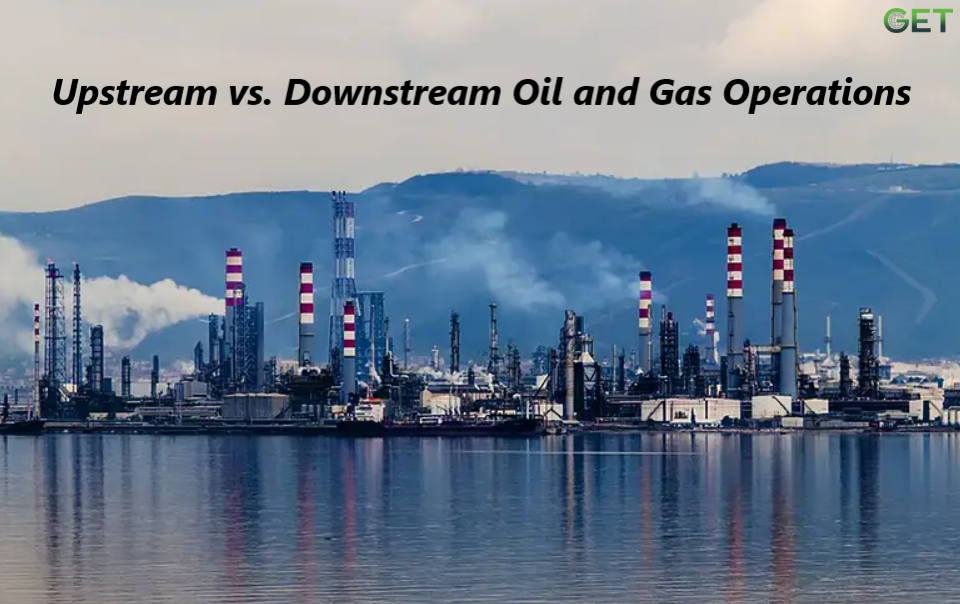
Downstream oil and gas process: The downstream sector handles everything that happens after crude oil and natural gas are extracted. It transforms raw hydrocarbons into usable products and delivers them to consumers.

Think of downstream as the “last mile” of the energy journey.

Key Activities in Downstream Operations

  • RefiningCrude oil is processed in refineries to produce petrol, diesel, jet fuel, and more.
  • Petrochemical production — Derivatives are used in plastics, fertilizers, and chemicals.
  • Distribution — Refined products are transported to wholesalers and retailers.
  • Retail sales — Fuel stations and distributors sell products directly to end users.
  • Marketing — Branding and selling finished petroleum products in local and global markets.

Upstream vs Downstream Oil and Gas Operations: Key Differences

Here is a clear comparison to help you understand the two sectors at a glance.

Feature Upstream Downstream
Focus Exploration & Production Refining & Distribution
Stage in Value Chain Beginning End
Key Output Crude oil, natural gas Refined fuels, chemicals, LPG
Capital Risk Very high (exploration risk) Moderate (market-driven)
Revenue Driver Crude oil price Crack spread / refining margin
Key Players ExxonMobil E&P, Shell Upstream Reliance Industries, Valero Energy
Location Oilfields, offshore platforms Refineries, pipelines, fuel stations
Skill Requirements Geology, drilling, reservoir engineering   Chemical engineering, logistics, retail
Environmental Risk Oil spills, emissions Air pollution, chemical waste


Role of Midstream in the Oil and Gas Value Chain

When people discuss midstream vs upstream vs downstream, midstream is often the overlooked middle link. Yet it plays a critical connecting role.

Midstream covers the transportation, storage, and processing of crude oil and natural gas between the production site and the refinery.

Key Midstream Activities

  • Pipelines — The most cost-effective way to move large volumes of crude oil and gas.
  • Tankers and rail — Used when pipelines are unavailable or for export.
  • Gas processing plants — Remove impurities before the gas enters the distribution network.
  • Storage terminals — Hold crude oil and products to manage supply and demand fluctuations.

Without midstream infrastructure, upstream output would have no path to the downstream refinery.

Why Understanding Upstream vs Downstream Matters

Whether you’re looking at this from a business, career, or investment angle — these distinctions are hugely important.

Business & Investment Perspective

  • Upstream companies are heavily exposed to oil price volatility. When crude prices fall, revenues drop sharply.
  • Downstream companies often benefit from low crude prices because their refining margins improve.
  • Investors use this knowledge to hedge portfolios across both segments.

Career & Job Roles Perspective

  • Upstream jobs include petroleum engineers, geologists, drilling supervisors, and reservoir analysts.
  • Downstream jobs include chemical engineers, refinery operators, supply chain managers, and retail analysts.

Understanding where you fit in the upstream oil and gas services ecosystem can help sharpen your career focus.

Real-World Examples of Upstream and Downstream Operations

Upstream Examples

  • Saudi Aramco operates massive oilfields in Saudi Arabia, producing millions of barrels daily.
  • BP’s North Sea operations involve offshore drilling and gas extraction in the Atlantic Ocean.
  • ONGC in India explores and produces crude oil from onshore and offshore fields.

Downstream Examples

  • Reliance Industries runs one of the world’s largest refining complexes in Jamnagar, India.
  • Valero Energy (USA) is a leading independent petroleum refiner and marketer.
  • Indian Oil Corporation (IOC) distributes refined petroleum products across India’s retail network.

These examples show how the same oil and gas value chain plays out on a global scale.

Challenges in Upstream vs Downstream Operations

Both segments face unique and significant challenges.

Upstream Challenges

  • High exploration costs — Drilling a single well can cost tens of millions of dollars.
  • Geopolitical risks — Operations in unstable regions expose companies to sudden disruptions.
  • Oil price volatility — Unpredictable global crude prices directly impact profitability.
  • Environmental regulations — Stricter emissions and drilling rules increase compliance costs.

Downstream Challenges

  • Refining margin pressure — Fluctuating crude and product prices squeeze profit margins.
  • Logistics complexity — Managing distribution networks across vast geographies is difficult.
  • Regulatory compliance — Fuel quality standards and emissions norms vary by country.
  • Energy transition risk — Growing EV adoption threatens long-term demand for refined fuels.

FAQs on Upstream vs Downstream Oil and Gas Operations

1. What is the main difference between upstream and downstream oil and gas?

Upstream refers to the exploration and production of crude oil and natural gas. Downstream refers to refining that crude into usable products and distributing them to consumers. In short — upstream finds and extracts; downstream processes and sells.

2. Which sector is more profitable — upstream or downstream?

It depends on market conditions. Upstream tends to be more profitable when oil prices are high. Downstream performs better when crude prices are low because refining margins improve. Integrated companies like ExxonMobil and Shell operate in both to balance risk.

3. What is midstream in oil and gas?

Midstream is the segment between upstream and downstream. It handles the transportation, storage, and initial processing of crude oil and natural gas. Pipelines, tankers, and storage terminals are all part of midstream infrastructure.

4. Can a company operate in both upstream and downstream?

Yes. These are called integrated oil and gas companies. Examples include Saudi Aramco, Shell, BP, and TotalEnergies. They manage the full oil and gas value chain — from exploration to retail fuel sales.

Conclusion

The oil and gas industry runs on a complex but well-defined value chain. Upstream vs downstream oil and gas operations represent two fundamentally different — yet deeply connected — parts of that chain.

Upstream is about finding and producing raw energy. Downstream is about converting it into products that power everyday life. Midstream bridges the two. Together, they form the backbone of global energy supply.

Whether you’re exploring career paths, making investment decisions, or simply learning about the energy sector — understanding these distinctions gives you a major advantage.

Read Also- What Is a Hybrid Solar-Diesel Power System and How Does It Work on an Oil Field?

More Readings

Related blogs

Upstream oil and gas industry

Seismic Survey Techniques: A Complete Guide for Oil & Gas Professionals

By Get global | May 20, 2026

Drilling blind is a bad idea for any team of oil and gas drillers. The subsurface situation must be as clear as possible as much of the work involved in a single well can take months of planning and not a little capital, so the subsurface picture must be as […]

upstream oil and gas industry

How to Succeed in the Oil and Gas Industry as a Beginner

By Get global | May 19, 2026

Starting Out in Oil and Gas — What Nobody Tells You Breaking into the oil and gas industry is not like applying for a desk job. The sector operates on a different rhythm — long rotations, remote locations, technically demanding environments, and a culture that rewards competence above almost everything […]

Hybrid solution in energy solution

Understanding Hybrid Energy Solutions: Key Challenges and Opportunities

By Get global | May 15, 2026

Introduction: In the ever-evolving landscape of the energy sector, a revolutionary force is steering the industry toward a more sustainable future — the integration of hybrid solutions. As the world grapples with the imperative of balancing energy demands and environmental preservation, the concept of combining traditional and renewable energy sources […]

IPD

How IPD enables better project performance for the energy industry

By Get global | May 11, 2026

Introduction The energy industry is facing unprecedented challenges in the 21st century, including the need for sustainable and environmentally responsible solutions to meet growing global energy demands. As a result, successful project delivery has become vital for companies in the energy sector. Among the methodologies gaining prominence is Integrated Project […]

oil and gas

How Technical Consulting Improves Drilling Efficiency

By Get global | May 7, 2026

The Real Cost of Inefficient Drilling Every hour a rig sits idle costs money. Every wrong bit run, every unplanned casing point, every crew that does not know how to respond to an early kick indicator — these are not just technical failures. They are business failures. For oil and […]