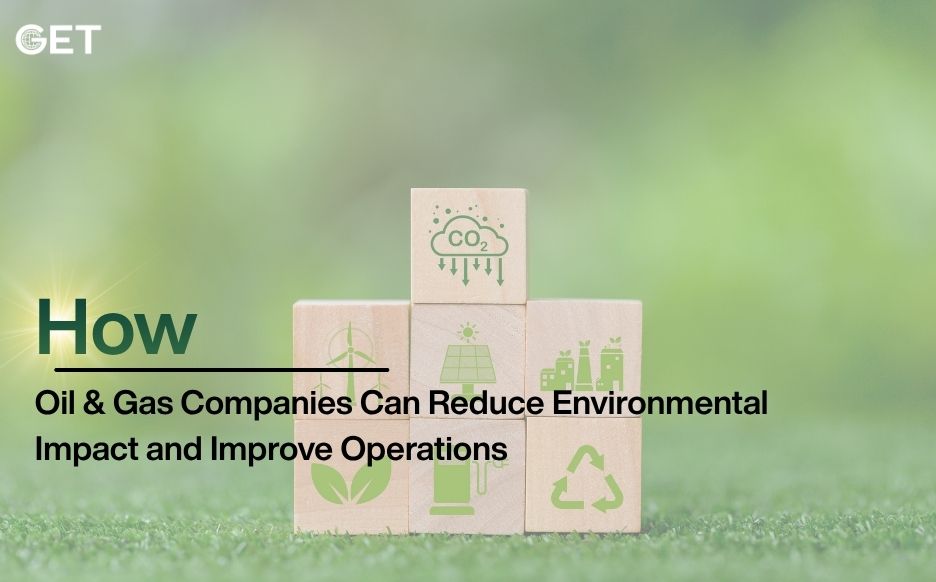
Regulators are tightening the screws on emissions. Investors are asking harder questions about ESG performance. And communities near production sites have gotten a lot less patient with flaring, leaks, and spills that used to get a shrug. For upstream operators, environmental performance isn’t a side conversation anymore. It’s sitting right next to production targets and cost control on the same priority list.
Fortunately, many of the solutions that reduce environmental footprint also reduce operating costs. Bigger, faster and more intelligent vessels and crews don’t need to be written in pretty writing on a sustainability report. They clean out more product, rather than letting it escape to the atmosphere, and they avoid having to shut down the operations for emergency repairs. The actual advantages are in here.
Methane gets most of the attention, and for good reason. Federal estimates put the oil and natural gas sector at roughly a quarter of total U.S. methane emissions, which is why the Department of Energy and EPA have poured hundreds of millions into projects that help operators detect, measure, and cut those emissions using equipment that’s already commercially available. The technology to fix this problem largely exists. The gap is in whether it’s actually deployed and maintained at the well site.
This is where predictive maintenance earns its keep. A worn valve seal or a compressor seal that’s starting to degrade doesn’t announce itself with a loud bang. It shows up first as a small pressure anomaly or a vibration signature that’s easy to miss on a manual inspection schedule. Sensor-based monitoring catches that drift early, before it turns into a fugitive emissions event or a full equipment failure that takes a unit offline for days.
Operators running integrated maintenance programs, the kind that combine condition monitoring with scheduled interventions rather than a strict calendar-based approach, tend to catch these issues while they’re still cheap to fix. It’s the difference between swapping a $200 seal during planned downtime and losing three days of production plus a compliance headache after it fails in the field.
It’s easy to think of procurement as a cost function that has nothing to do with emissions. That’s a mistake. The compressors, valves, and pneumatic controllers an operator sources today determine the leak rate baseline for years to come. Older pneumatic devices, for instance, are notorious methane vents built into normal operation, not equipment failure. Replacing them with low-bleed or electric alternatives during a routine procurement cycle is one of the most cost-effective emissions reductions available, and it’s exactly the kind of upgrade the DOE funding rounds have been targeting for small and mid-sized operators who can’t absorb a full facility retrofit on their own budget.
Supply chain decisions matter in a second way too. Sourcing parts and materials from vendors closer to the operating region cuts transport emissions and shortens the lead time for replacement parts, which means less time running degraded equipment while waiting on a shipment. A well-run procurement function isn’t just hunting for the lowest unit price. It’s weighing total lifecycle impact, including how long a part will run clean before it becomes the next leak point.
Read Also- Strengthening HSE Performance Across the Supply Chain
An operator’s environmental record is only as good as the weakest contractor on site. A crew service partner that cuts corners on flaring practices or skips a required leak detection survey creates liability that lands on the operator, not just the subcontractor. This is why vendor qualification needs an environmental compliance layer built in from the start, not bolted on after an incident.
Take a composite example that’s fairly typical across mid-sized operations: an operator working across multiple fields with a rotating bench of maintenance contractors found that emissions incidents clustered heavily around two or three vendors who were using outdated flaring protocols. Once vendor selection criteria were rewritten to require documented emissions training and equipment certification, incident rates at those sites dropped noticeably within the first year, without any change to production volumes. The lesson wasn’t that the operator needed new technology. It needed a vendor management process that actually screened for environmental competence instead of just price and availability.
Field crews are the last line of defense against most environmental incidents, and they’re also the group most often left out of the conversation when companies plan sustainability initiatives. A technician who understands why a particular valve configuration matters for emissions, not just how to bolt it in place, catches problems that a checklist alone won’t surface.
Technical training programs built around real operating scenarios, rather than generic HSE modules, tend to stick better with crews who’ve seen enough compliance paperwork to tune it out. Training that walks through actual leak detection procedures, proper flaring sequences, and equipment-specific maintenance protocols gives crews the judgment to catch small problems before they escalate. It’s a lower upfront cost than a technology overhaul, and it compounds. A well-trained crew makes better calls on every shift, not just during an audit.
None of these levers work in isolation. Tighter maintenance depends on procurement choices about what equipment gets installed in the first place. Vendor standards only hold if the vendors sending crews to site have trained people who know what compliance actually looks like on the ground. Operators who treat environmental performance as one integrated system, rather than four separate checkboxes, are the ones seeing both lower emissions and fewer unplanned outages.
The regulatory pressure isn’t going away, and neither is the cost pressure. The operators pulling ahead right now are the ones who figured out these two things were never actually in conflict.
Read Also- Oil and Gas Jobs in Dubai: Qualifications, Visa Requirements, and Hiring Process

By Get global | September 18, 2026
By Get global | September 14, 2026
Ten years back, most HSE policies stopped at the company gate. Whatever happened past that point, subcontractors, transport, equipment vendors, was technically someone else’s problem, at least on paper. Not anymore. And the reason is blunt: trace a serious incident back far enough, and often it started somewhere in the supply chain, not […]
By Get global | September 14, 2026
Health, safety and environment in the oil and gas sector was long treated as a back-office function, running quietly alongside the core work of drilling, extraction, and processing. That is no longer the case. Extreme pressures, volatile materials, remote sites, and heavy machinery mean the risk in this industry has […]
By Get global | September 14, 2026
By Get global | September 9, 2026
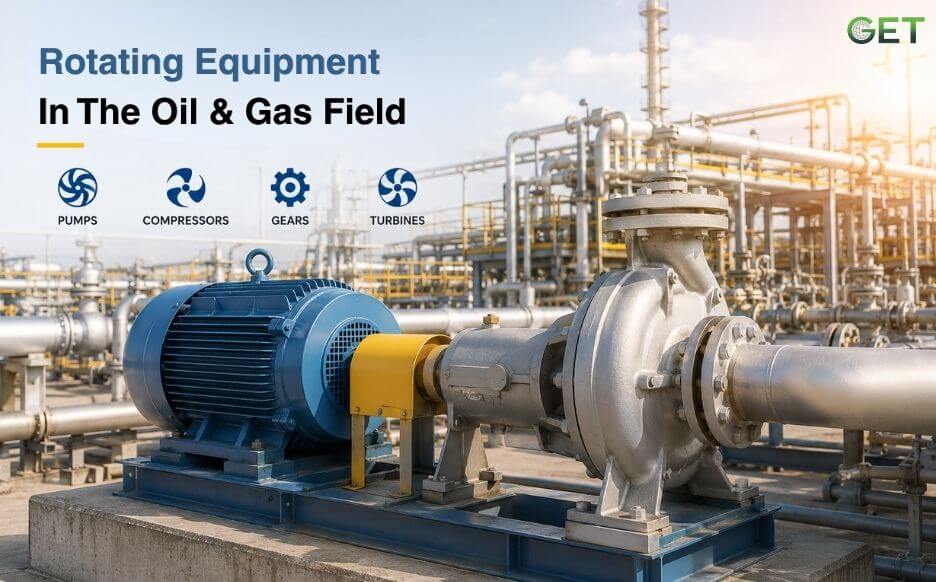
Walk onto any rig floor, production platform, or gas processing plant, and the first thing you notice isn’t the pipework – it’s the sound. That low, constant hum coming from somewhere in the facility is almost always rotating equipment doing its job. Pumps pushing fluid through miles of pipeline. Compressors […]