The Real Cost of Inefficient Drilling
Every hour a rig sits idle costs money. Every wrong bit run, every unplanned casing point, every crew that does not know how to respond to an early kick indicator — these are not just technical failures. They are business failures.
For oil and gas companies operating in today’s margin-sensitive environment, drilling inefficiency is simply not something that can be absorbed and moved on from. The upstream oil and gas industry has become too competitive, too capital-intensive, and too scrutinized for that.
This is the reality that GET Global Group works within every day. As a UAE-based oil and gas service provider with active operations across the oil and gas sector in the Middle East, Africa, and emerging markets like Guyana, we see what separates wells that perform from wells that drain budgets. More often than not, the difference comes down to one thing: the quality of technical expertise applied at every stage of the drilling program.
What Technical Consulting Actually Means in the Field
There is a version of consulting that exists on paper — reports, recommendations, slide decks. That is not what the upstream oil and gas industry needs, and it is not what GET Global Group delivers.
Technical consulting in drilling means having the right person standing at the right place at the right time, with the experience to make a call that prevents a $500,000 problem. It means a directional drilling consultant who has seen that formation before and knows how it behaves. It means a drilling engineer who can look at real-time data and immediately understand what the wellbore is telling them.
For oil and gas companies in UAE and KSA in particular, where reservoir complexity and operational pace are both high, this boots-on-the-ground technical presence is what moves the needle on drilling performance.
Cutting Non-Productive Time Before it Happens
Non-productive time, or NPT, is the most honest measure of drilling inefficiency. It captures every hour where the rig is running costs but not making hole. In offshore oil rig environments, that number can exceed $500,000 per day. Even in onshore oil fields, NPT is one of the single largest controllable cost items in any well budget.
The most effective way to reduce NPT is not to react to it — it is to prevent it. Technical consultants contribute to NPT reduction across three windows:
Before the well: Thorough well planning that stress-tests assumptions, identifies geological risks early, and ensures that upstream oil and gas equipment is specified correctly for the conditions expected.
During drilling: Real-time wellsite supervision and remote support that catches deviations before they become incidents. A consultant who recognizes an early washout trend or an unexpected torque signature can save days of fishing operations.
After the well: Honest post-well analysis that does not just celebrate the good news but examines what went wrong, why it went wrong, and what changes to make on the next well.
This three-stage approach to NPT management is one of the core ways that oil and gas services companies like GET Global Group deliver measurable value to operators drilling in complex environments.
Well Design That Holds Up Under Pressure
A well that is designed well drills well. This sounds straightforward, but the practical reality is that well design in the upstream sector of the oil and gas industry involves hundreds of interdependent decisions — trajectory, casing architecture, bit program, hydraulics, wellbore stability management — each of which has downstream consequences for everything that follows.
Technical consultants bring something that in-house teams, no matter how capable, often cannot replicate: exposure to a wide range of well types, basins, and operating conditions. A consultant who has worked across upstream oil and gas operations in the UAE, KSA, and Guyana brings pattern recognition that accelerates good decision-making and flags risks that might otherwise go unnoticed until they surface in the hole.
At GET Global Group, our consultants work directly with operator engineering teams to pressure-test well designs, challenge assumptions, and ensure that the program being sent to the rig is one that the rig can actually execute — not just one that looks clean on paper.
People are Part of the Efficiency Equation
Upstream oil and gas solutions cannot be separated from the people delivering them. The best well design in the world will underperform if the crew running it is not competent to execute it. This is why oil and gas training is not a separate conversation from drilling efficiency — it is the same conversation.
GET Global Group has built oil and gas technical training into the core of what we offer. Through structured competency development, on-the-job mentoring, and formal assessment programs, we ensure that the people working in oil fields are genuinely prepared for the conditions they face.
This matters especially in markets where localization is a strategic priority. In KSA, for example, the demand for technically qualified Saudi nationals in the upstream oil and gas industry is accelerating rapidly. Programs like GET Global Group’s Kafayat initiative are specifically designed to bridge the gap between fresh engineering graduates and field-ready professionals — creating a talent pipeline that benefits both the biggest oil and gas companies operating in the region and the national workforce they employ.
Oil and gas training companies that understand this dynamic are not just providing courses. They are building the human infrastructure that the oil and gas sector will depend on for the next decade.
Supply Chain Efficiency Starts with Technical Clarity
One of the less visible ways that technical consulting improves drilling efficiency is through its impact on Procurement and Supply Chain Management. Inefficient procurement in the upstream oil and gas industry is often not a procurement problem — it is a specification problem. The wrong equipment gets ordered because the technical requirements were not clearly defined. Delivery timelines slip because nobody flagged a long-lead item during well planning. Substitutions get made under time pressure that compromise well integrity.
Technical consultants prevent these situations by ensuring that upstream oil and gas equipment is specified precisely and procured with enough lead time to avoid last-minute compromises. For oil and gas companies managing complex multi-well programs, integrating technical expertise into the Supply Chain Management process is one of the highest-return improvements they can make.
GET Global Group: Built for the Upstream Sector
GET Global Group is an upstream oil and gas company headquartered in the UAE, delivering technical consulting, workforce mobilization, oil and gas technical training, and Supply Chain Management solutions to operators and energy service companies across the globe.
We work with oil and gas companies in UAE, oil and gas companies in KSA, and operators in frontier markets including Guyana — supporting everything from single-well programs to multi-year drilling campaigns. Our team brings direct field experience across the full spectrum of upstream oil and gas services, and we operate with the understanding that our clients measure success in wells drilled on time, on budget, and to the performance targets set before spud.
If your drilling program is not performing the way it should, the answer is rarely more equipment. It is usually better technical judgment, applied earlier and more consistently. That is what GET Global Group is here to provide.
Read Also- Effective Strategies for Managing Risk in the Oil and Gas Industry
By Get global | May 6, 2026
Effectively managing risks within the oil and gas industry demands a meticulous blend of foresight, innovation, and resilience. In this complex sector, risk mitigation strategies are crucial for ensuring operational stability, safeguarding financial investments, and upholding stringent health, safety, and environmental standards. Amidst the diverse array of challenges faced by […]
By Get global | May 4, 2026
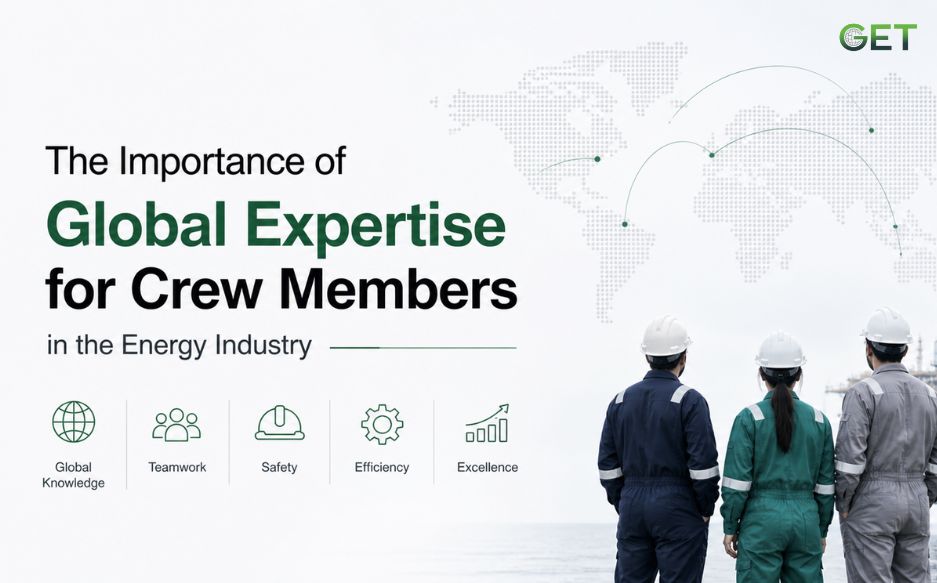
Introduction In the dynamic and ever-evolving world of the energy industry, crew members in the upstream oil and gas sector find themselves at the forefront of a complex and globalized landscape. The importance of possessing global know-how cannot be overstated, as it plays a pivotal role in ensuring the success, […]
By Get global | April 30, 2026
The oil and gas industry is going through one of its biggest transformations in decades. Between the energy transition, digital disruption, and stricter environmental regulations, the skills that got workers hired five years ago may not be enough to keep them competitive today. Whether you’re a seasoned upstream professional or […]
By Get global | April 27, 2026
Ask anyone who’s worked in oil and gas procurement long enough, and they’ll tell you the same thing: the moment you think you’ve got costs under control, something shifts. A tanker gets rerouted. A sanctions list gets updated overnight. Steel prices jump 15% because of a policy announcement three continents […]
By Get global | April 27, 2026
If you’ve ever worked in upstream oil and gas, you already know this. Mobilising a crew into the Middle East isn’t just about booking flights and getting people to site. What looks simple on paper often turns into visa delays, certification gaps, contract issues, and last-minute surprises. In the oil […]