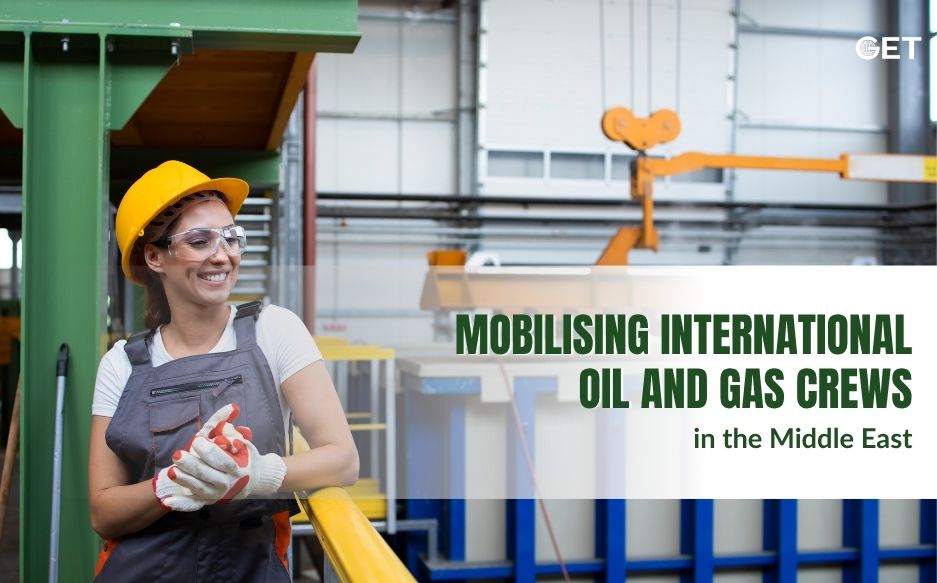
If you’ve ever worked in upstream oil and gas, you already know this. Mobilising a crew into the Middle East isn’t just about booking flights and getting people to site.
What looks simple on paper often turns into visa delays, certification gaps, contract issues, and last-minute surprises. In the oil and gas industry, even small delays can translate into serious operational and financial impact.
The reality is, most of these issues are avoidable. They usually come down to missing one detail somewhere in the process.
A lot of compliance issues begin before hiring even starts.
Are your workers on payroll? Are they contractors? Or are you hiring through a third party?
If you don’t have a legal entity in the country, things get complicated quickly. You can’t simply move people across borders for oil and gas jobs and sort compliance later.
That’s why many companies rely on an Employer of Record (EOR). It allows you to stay compliant without setting up a full entity, especially in regions like Saudi Arabia or the UAE.
In upstream oil and gas projects, visa delays are one of the biggest bottlenecks.
Work visas in the Middle East are tied to sponsors and involve multiple steps like entry permits, medical checks, and ID registrations.
The common mistake? Starting too late.
Visa processing should begin early, sometimes even before onboarding is finalised. It also needs clear ownership. Passing it between teams is where delays creep in.
You can have the right candidate, the right visa, and the right contract. But one expired certification, and they’re not stepping on site.
This is especially critical in oil and gas jobs, where safety and technical certifications are non-negotiable.
It’s not just about having them. They must stay valid throughout the entire assignment.
Strong mobilisation teams verify everything before travel. The best ones track expiry dates in advance to avoid last-minute issues.
Contracts and Payroll Must Match Local Laws
Each country has its own labour regulations, and they don’t always align with your home country policies.
Contracts need to reflect local compliance requirements. Payroll is even more complex in oil and gas operations, especially with rotational shifts, multiple currencies, and cross-border employment.
Some countries also enforce wage protection systems. If your payroll doesn’t meet those standards, you’re already at risk.
Once documentation is sorted, many teams relax. That’s usually when problems show up.
Mobilisation includes flights, accommodation, site access, and inductions. If even one of these isn’t aligned, the worker may arrive but won’t be operational.
For example, someone lands but doesn’t have site clearance. That’s lost time and productivity.
In upstream oil and gas, where timing is critical, this matters more than people expect.
Don’t Ignore Local Workforce Requirements
Countries like Saudi Arabia have strict local content policies.
You can’t build a fully international crew and expect approvals to go smoothly. There needs to be a balance between local and expatriate workers.
This impacts hiring decisions early, especially when planning for oil and gas jobs in the region.
Teams that consistently deliver smooth mobilisation don’t do anything extraordinary.
They:
Some patterns show up repeatedly in oil and gas mobilisation:
Individually, these seem minor. Together, they delay entire projects.
Mobilising an international crew in upstream oil and gas isn’t difficult because the process is complex. It’s difficult because everything is connected.
A delay in visas affects onboarding. A missing certification affects site access. A payroll issue affects compliance.
When you treat mobilisation as one connected system instead of separate tasks, things run far more smoothly.
That’s really the difference. Not more effort. Just better alignment.
Read Also- Why Integrated Crew Services are Important in Upstream Operations
By Get global | June 29, 2026
By Get global | June 26, 2026
By Get global | June 3, 2026
Every barrel counts. In oil and gas, even a few hours of unexpected downtime can cost companies thousands, sometimes millions of dollars. And yet, so many operators are still juggling dozens of vendors without any real system in place. It’s messy. It slows things down. And honestly, it’s holding production […]

By Get global | May 28, 2026

By Get global | May 26, 2026
Oil and gas companies have always worked with data. The difference now is the scale, speed, and pressure to use it well. Live readings are sent out by a drilling rig every second. Thousands of process variables are monitored in a refinery control room. Pipelines, storage terminals, compressors, pumps, offshore […]