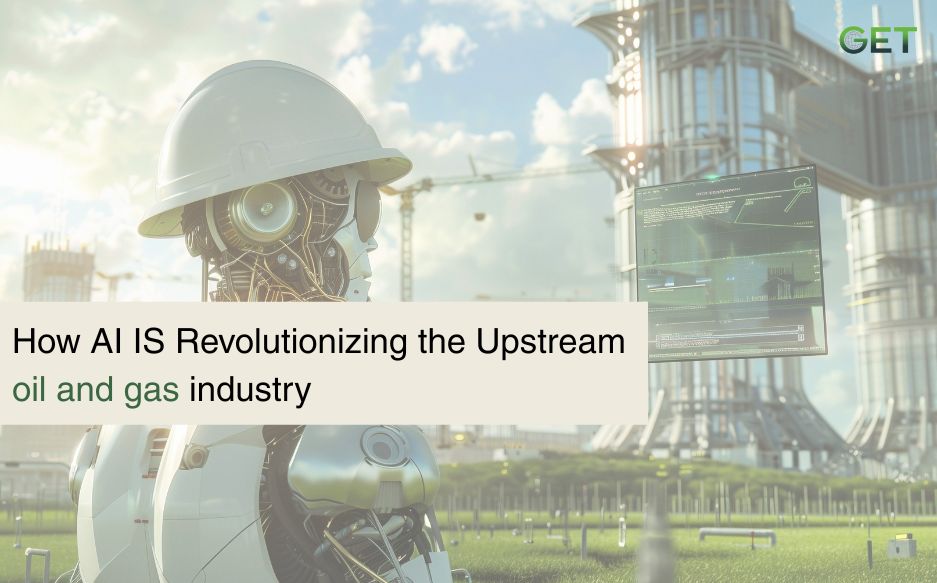
There is no question that AI is revolutionizing the upstream oil and gas industry. From exploration and drilling to production monitoring, artificial intelligence is changing how energy companies operate at every level. The results are faster decisions, lower costs, and safer work environments. For any business still relying on traditional methods, this shift is too significant to ignore.
Upstream oil and gas refers to the earliest stages of the energy supply chain. It covers everything from finding oil and gas reserves to extracting them from the ground. These operations are expensive, risky, and highly complex. AI is now stepping in to make them smarter and more efficient.
This blog breaks down what AI means for upstream operations, the real benefits it brings, and how companies are already using it. Whether you are an energy professional or a business leader, this guide will help you understand why AI adoption is no longer optional it is essential.
Artificial intelligence in the upstream oil and gas sector refers to using machine learning, data analytics, computer vision, and predictive algorithms to improve decision-making. These tools analyze vast amounts of geological, operational, and sensor data. The goal is to replace slow, manual analysis with fast, accurate insights. Simply put, AI helps companies find oil faster, drill smarter, and produce more efficiently.
These technologies work best when integrated with real-time data from sensors, satellites, and IoT devices. Companies that invest in ai development services are building the foundation for smarter, data-driven upstream operations. The combination creates an ecosystem where every decision is backed by data.
Finding new oil and gas reserves has always been a gamble. Traditional seismic analysis is slow and prone to human error. AI processes seismic data in a fraction of the time and identifies reservoir characteristics with greater precision. This dramatically reduces the cost of dry wells and unsuccessful exploration campaigns.
Drilling is one of the most expensive parts of upstream operations. AI optimizes drilling paths, reduces non-productive time (NPT), and minimizes equipment wear. Companies have reported cost savings of 10–20% simply by applying AI to drilling operations. Over time, these savings compound into significant competitive advantages.
Oil and gas worksites are inherently dangerous. AI-powered sensors and cameras can detect hazardous conditions in real time. They alert workers and supervisors before accidents occur. This proactive approach reduces injury rates and protects valuable personnel especially important for those pursuing an oil and gas job in field operations.
Once oil is discovered and wells are drilled, maintaining optimal production is critical. AI monitors well performance continuously and suggests adjustments. It detects declines in production early and recommends interventions. This keeps output high and reduces unnecessary downtime.
Sustainability is a growing priority in the energy sector. AI helps reduce flaring, optimize water usage, and minimize environmental footprints. Smarter operations mean fewer emissions and less waste. Companies using AI can demonstrate stronger ESG credentials to investors and regulators.
AI starts with data. Sensors placed on drilling rigs, pipelines, and wellheads collect thousands of data points every second. Satellites and drones contribute geospatial and visual data. This massive data stream forms the raw material for all AI-driven insights. Without quality data, AI cannot function effectively.
Raw data is fed into machine learning models that have been trained on historical operational records. These models identify patterns, correlations, and anomalies. The analysis happens in real time or near real time. Engineers receive actionable insights rather than raw data dumps.
Based on the analysis, AI systems make recommendations or take automated actions. A predictive maintenance system might automatically schedule a pump inspection. A reservoir management tool might suggest changing injection rates. Human engineers review and approve major decisions, but routine tasks are increasingly automated.
The best AI systems improve over time. Each new data point refines the model’s accuracy. As more wells are drilled and more production data accumulates, the AI becomes smarter. This continuous learning cycle is what makes AI a long-term competitive asset rather than a one-time tool.
Major oil companies like Shell and ExxonMobil use AI to build more accurate reservoir models. These models predict how oil and gas will flow through rock formations. Better models mean fewer surprises during production. The result is more efficient extraction with lower costs.
BP has deployed AI-driven predictive maintenance across its upstream assets. The system monitors equipment health and flags potential failures weeks in advance. This prevents costly unplanned shutdowns. It also extends the operational life of expensive equipment.
Companies like Halliburton and Schlumberger (now SLB) have developed AI platforms that optimize drilling in real time. These platforms adjust drill bit speed, weight on bit, and mud flow automatically. The result is faster drilling with fewer complications. It also reduces the risk of wellbore instability.
AI models analyze production history and current well data to forecast future output. These forecasts help planners make better decisions about infrastructure investment. They also assist in scheduling maintenance windows with minimal production loss. Accurate forecasting directly impacts financial planning and investor confidence.
Not every company needs to overhaul its operations overnight. However, there are clear signals that it is time to start. If your exploration success rate is declining, AI-powered seismic analysis could help. If you are experiencing frequent equipment failures or high non-productive time, predictive maintenance is worth exploring.
Businesses already using digital oilfield technologies and IoT sensors are well-positioned for AI integration. You likely already have the data you need. Partnering with providers of upstream oil and gas services that specialize in AI can accelerate the transition significantly.
Answering these questions honestly will help set realistic expectations. AI is not a magic fix — it requires investment, patience, and organizational commitment. The companies that succeed are those that treat AI as a strategic priority, not just a technology experiment.
There is little doubt that AI is revolutionizing the upstream oil and gas industry in ways that were unimaginable just a decade ago. It is making exploration more precise, drilling more efficient, and production more reliable. Most importantly, it is making the entire value chain safer and more sustainable. For energy companies, the question is no longer whether to adopt AI it is how quickly they can do so.
The transition will not happen overnight. It requires the right technology partners, quality data infrastructure, and a culture that embraces innovation. But for those who move decisively, the rewards are substantial: lower costs, higher output, and a stronger competitive position in an increasingly demanding market.
Start by identifying your biggest operational pain points. Then explore how AI tools can address them. The future of upstream energy is intelligent and it is already here.
Read Also- Major Upstream Oil & Gas Projects in the Middle East to Watch in 2026

By Get global | May 26, 2026
Oil and gas companies have always worked with data. The difference now is the scale, speed, and pressure to use it well. Live readings are sent out by a drilling rig every second. Thousands of process variables are monitored in a refinery control room. Pipelines, storage terminals, compressors, pumps, offshore […]
By Get global | May 25, 2026

By Get global | May 20, 2026
By Get global | May 19, 2026
Starting Out in Oil and Gas — What Nobody Tells You Breaking into the oil and gas industry is not like applying for a desk job. The sector operates on a different rhythm — long rotations, remote locations, technically demanding environments, and a culture that rewards competence above almost everything […]
By Get global | May 15, 2026
Introduction: In the ever-evolving landscape of the energy sector, a revolutionary force is steering the industry toward a more sustainable future — the integration of hybrid solutions. As the world grapples with the imperative of balancing energy demands and environmental preservation, the concept of combining traditional and renewable energy sources […]