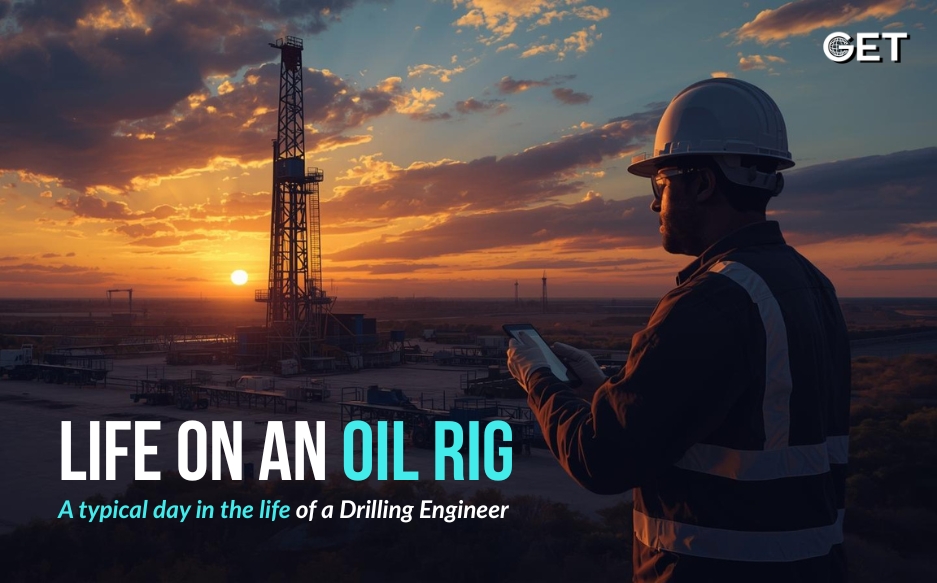
Life on an oil rig is unlike any conventional 9-to-5 job. The constant hum of machinery, high-pressure operations, and exposure to extreme weather conditions define the dynamic environment of upstream oil and gas. Among the many roles on a rig, the drilling engineer stands out as a key figure responsible for ensuring that wells are drilled safely, efficiently, and economically.
A drilling engineer’s day begins before sunrise with a mandatory safety briefing. These meetings are essential for identifying potential hazards, reviewing operational plans, and aligning the team on safety protocols. In high-risk environments like oil rigs, safety is non-negotiable.
During this time, drilling engineers also review night shift data—including drilling parameters and equipment performance—to plan the day’s operations.
Post-briefing, the engineer focuses on technical analysis. This includes:
These parameters are critical. For example, incorrect mud weight can lead to wellbore instability or blowouts. The drilling engineer acts as the bridge between design and execution, ensuring that the well trajectory and drilling program align with safety and performance goals.
Drilling engineers are not confined to control rooms. They are frequently:
This hands-on troubleshooting is vital, as drilling rarely goes exactly as planned. The ability to adapt quickly is a hallmark of a successful drilling engineer.
In the latter half of the day, engineers:
Modern rigs often use Measurement While Drilling (MWD) and Logging While Drilling (LWD) tools to enhance data accuracy and decision-making.
Despite the demanding environment, long hours, noise, and isolation, the sense of accomplishment and global exposure make this a rewarding career.
As the shift ends, a structured handover is conducted. This includes:
Effective handovers are critical to avoid miscommunication and operational errors. Best practices include using checklists, digital logs, and standardized formats.
After work, downtime may involve workouts, team meals, or online courses to stay updated with industry trends.
Read Also- What Is Coiled Tubing Operation?
Key Steps for Aspiring Drilling Engineers
If you’re considering this career path, here are practical tips:
Conclusion
The life of a drilling engineer is far from ordinary. It demands a blend of technical expertise, adaptability, and resilience. From early safety briefings to real-time data analysis and field troubleshooting, each day presents new challenges and opportunities. For those who thrive in dynamic, high-pressure settings, this career offers unmatched rewards and global exposure.

By Get global | September 22, 2026

By Get global | September 21, 2026
Regulators are tightening the screws on emissions. Investors are asking harder questions about ESG performance. And communities near production sites have gotten a lot less patient with flaring, leaks, and spills that used to get a shrug. For upstream operators, environmental performance isn’t a side conversation anymore. It’s sitting right […]

By Get global | September 18, 2026
By Get global | September 14, 2026
Ten years back, most HSE policies stopped at the company gate. Whatever happened past that point, subcontractors, transport, equipment vendors, was technically someone else’s problem, at least on paper. Not anymore. And the reason is blunt: trace a serious incident back far enough, and often it started somewhere in the supply chain, not […]

By Get global | September 14, 2026
Health, safety and environment in the oil and gas sector was long treated as a back-office function, running quietly alongside the core work of drilling, extraction, and processing. That is no longer the case. Extreme pressures, volatile materials, remote sites, and heavy machinery mean the risk in this industry has […]