The oil and gas industry had never had it easy. It has been price wars, recessions, new regulations and most recently a worldwide push to cleaner energy. However, somehow it adapts. This is what makes this industry so intriguing: any challenge gives rise to the new way of functioning.
Today, the rate of change is more than ever before. In the world of automation and AI, sustainability and smarter drilling, the upstream oil and gas companies are being challenged to innovate, not only to live, but also to remain relevant.
Here’s what’s driving that transformation.
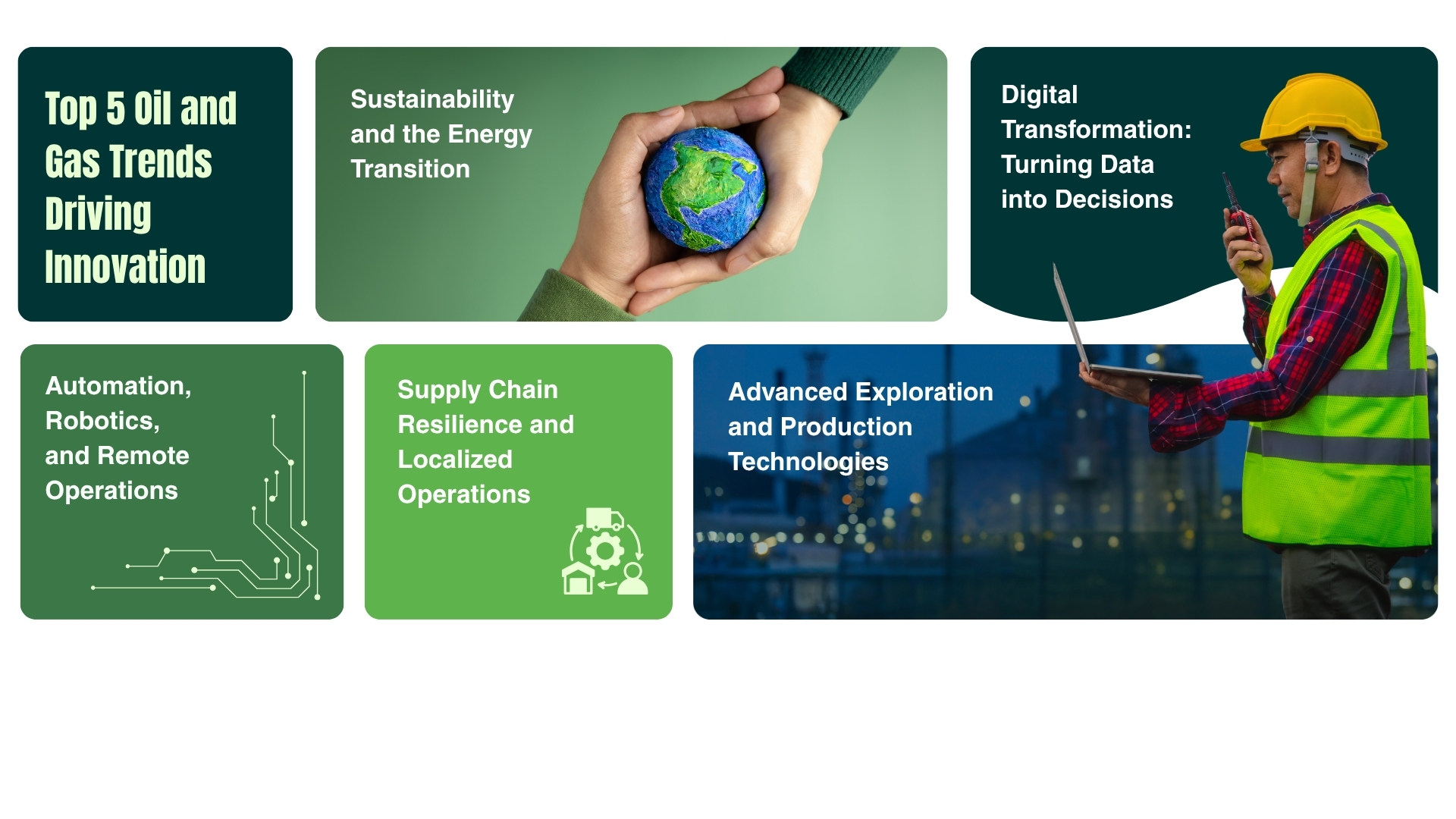
Rigs were primarily intuitive ten years ago. Today, they run on real time data.
Everything is now being monitored by sensors, AI models, cloud dashboards, and assists engineers in taking action before the issue becomes downtime: pressure, flow, heat, vibration, and so on.
A digital twin, such as the one, can model the behavior of a pump or a pipeline in specific circumstances. When something does not appear right, there is the possibility of teams correcting it virtually without having to touch the actual equipment. The result? Fewer close downs, less waste and safer crews.
But digital transformation isn’t just about new tools — it’s about trust. Field engineers are learning to rely on data instead of instinct. That’s a big shift for an industry built on gut decisions. Yet it’s working. The best-performing firms aren’t just digital — they think digital.
Sustainability was a box not many years ago. Today, it’s the business plan.
Oil and gas companies are currently aiming at setting their net-zero emissions targets and how to make them profitable. The carbon capture projects are on the rise. Other companies are either generating hydrogen or utilizing renewable energy to operate.
Even garbage is becoming an opportunity. Use flared gas – what was being burnt in the atmosphere is being converted into electricity or feedstock to the chemicals. That’s real progress.
Interesting is the fact that collaboration is making this change. Conventional oil companies are collaborating with clean-energy upstarts, university research centers, and even governments to reconsider the way in which energy systems are operated. Leaders who think of sustainability as a strategy, and not charity, are laying the groundwork of the new generation of oil and gas.
Walk into a modern drilling control room and it feels more like a space mission than an oil site.
Drones now inspect flare stacks hundreds of feet in the air. Robotic crawlers scan deep pipelines. Automated rigs handle the most dangerous tasks — faster and more accurately than humans ever could.
And behind it all, remote operation centers allow engineers to monitor multiple rigs from thousands of miles away. A single click can adjust valves, shut down systems, or reroute pressure — all in real time.
The point isn’t to remove people. It’s to protect them. Less time in hazardous environments means fewer accidents. And as the workforce ages, automation helps capture decades of experience in software, keeping knowledge alive long after veterans retire.
The pandemic altered the perspectives of companies on the issue of supply chains. Time that used to take days to deliver parts took months. A large number of companies have had to discover the painful lesson that reaching the global market is not necessarily synonymous with trust.
It is now turning to localized sourcing and modular design – equipment manufactured in closer proximity to the point at which it will be used, assembled more quickly, and tailored more easily.
Digital supply platforms are also assisting teams to monitor materials in real time and predict delays and verify shipments through blockchain. What has been a black box is now an open book.
Resilience is the new efficiency. The companies that can adapt quickly — whether to political shocks or port delays — are the ones that stay ahead.
Read Also- 5 ways Digital Technology is fueling the Future of Upstream Oil and Gas Industry
Despite all the talk about renewables, exploration and production remain the backbone of the industry — just smarter than before.
With AI-assisted modeling, companies can identify drilling opportunities faster and with more accuracy. Techniques like enhanced oil recovery (EOR) are giving old wells a second life, using CO₂ or heat to push out what’s left underground.
Seismic imaging and directional drilling have become so precise that entire projects can be planned digitally before breaking ground. Every dollar counts — and these technologies help make sure each one delivers.
The new mantra isn’t “drill more.” It’s “drill better.”
However much we may talk about technology, the real work of oil and gas innovation remains with the people, the engineers that figure out how to do things when you are miles deep in the earth, the operators that keep the systems running in the harshest of conditions and the leaders that are willing to re-examine the very nature of how energy is produced.
In GET Global Group, we do not view innovation as a buzzword or even a catalyst to a cleaner, smarter future, a future in which technology will serve not only to energize the planet but also the people who drive it.
These five trends are the digital transformation, sustainability, automation, supply resilience, and smarter exploration, which indicate where the industry is moving. It’s not just evolution. It is reinventing, necessitated and purposefully directed.
And if history tells us anything, oil and gas knows how to reinvent itself better than anyone.
By Get global | September 14, 2026
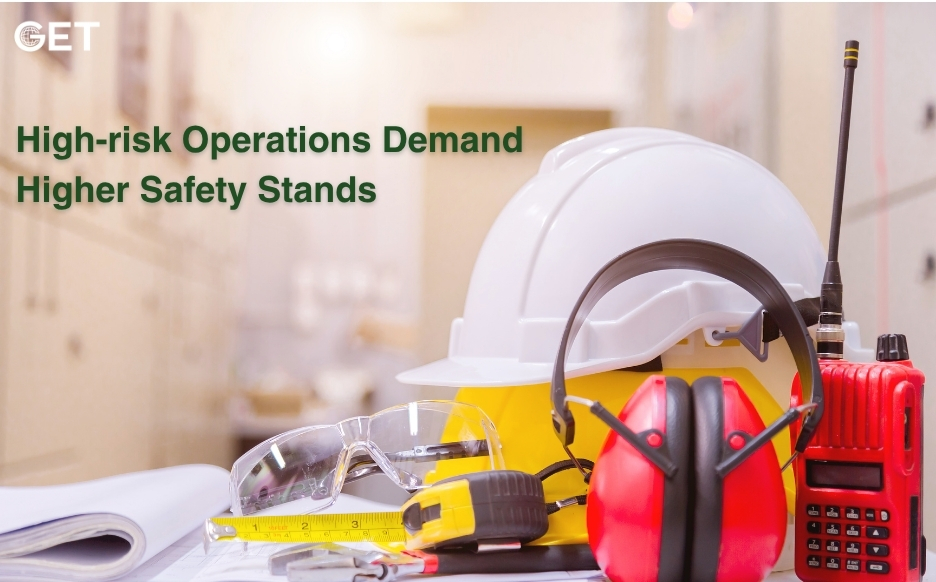
Ten years back, most HSE policies stopped at the company gate. Whatever happened past that point, subcontractors, transport, equipment vendors, was technically someone else’s problem, at least on paper. Not anymore. And the reason is blunt: trace a serious incident back far enough, and often it started somewhere in the supply chain, not […]
By Get global | September 14, 2026
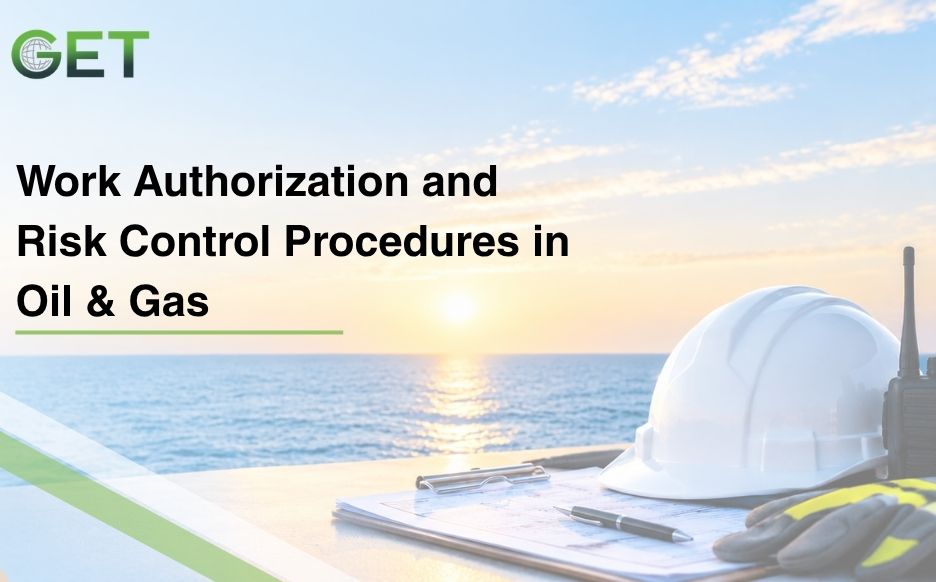
Health, safety and environment in the oil and gas sector was long treated as a back-office function, running quietly alongside the core work of drilling, extraction, and processing. That is no longer the case. Extreme pressures, volatile materials, remote sites, and heavy machinery mean the risk in this industry has […]
By Get global | September 14, 2026
By Get global | September 9, 2026
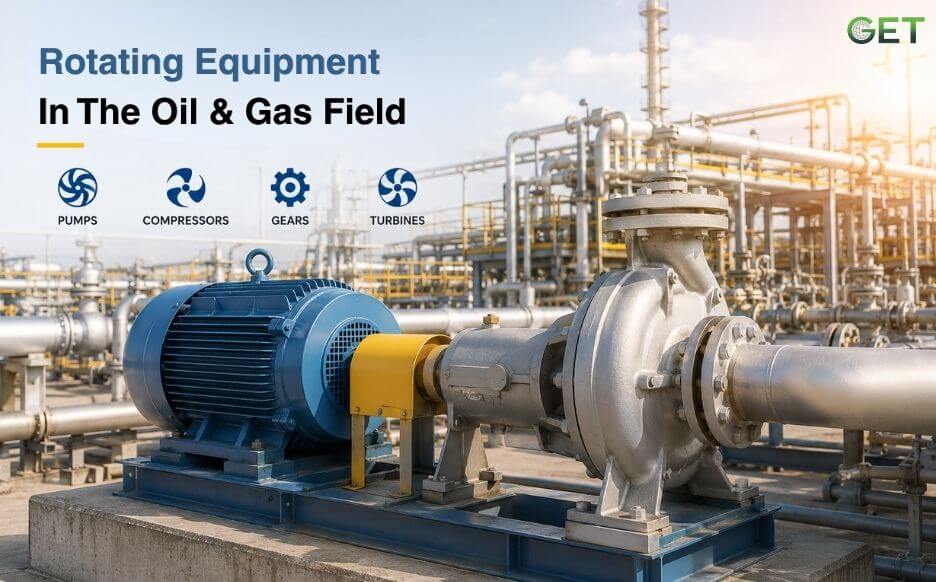
Walk onto any rig floor, production platform, or gas processing plant, and the first thing you notice isn’t the pipework – it’s the sound. That low, constant hum coming from somewhere in the facility is almost always rotating equipment doing its job. Pumps pushing fluid through miles of pipeline. Compressors […]

By Get global | September 9, 2026