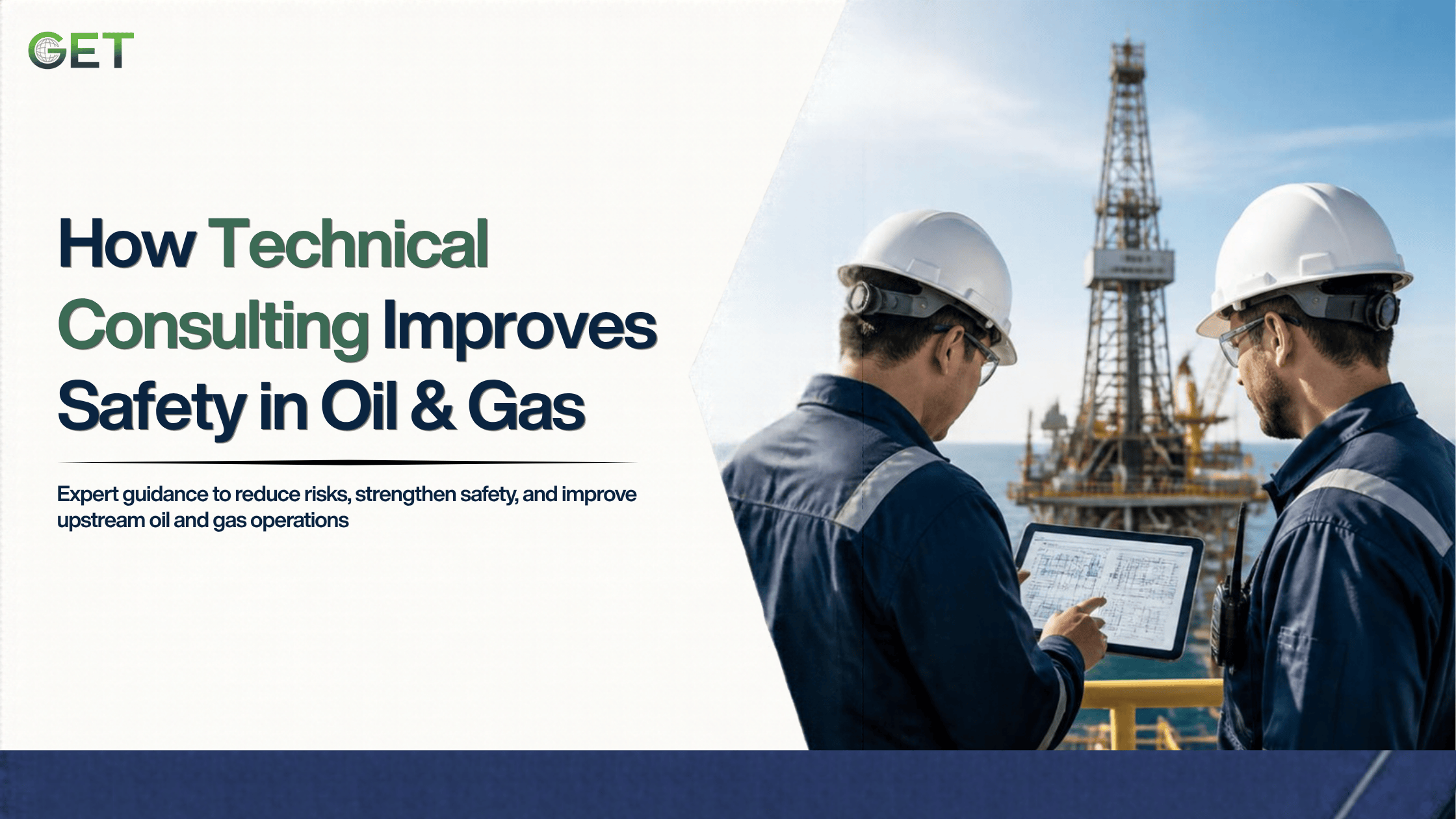
Safety and productivity are two major priorities in upstream oil and gas operations. Companies must manage complex equipment, demanding working conditions, and strict safety requirements. Even small operational issues can lead to costly delays, equipment failures, or workplace accidents.
Technical consulting in the upstream oil and gas industry helps companies identify these challenges and find practical solutions. It provides expert guidance on equipment performance, maintenance planning, operational procedures, and risk management.
With the right technical support, companies can make informed decisions, reduce operational risks, and improve daily performance. This article explains how technical consulting supports safer, more productive upstream operations.
Technical consulting involves providing specialized knowledge and practical advice to solve operational and engineering challenges. Consultants assess existing processes, identify weaknesses, and recommend improvements based on industry requirements.
In upstream operations, technical consultants support activities related to exploration, drilling, well intervention, production, and equipment maintenance.
Their work may include:
For example, if a production facility experiences repeated equipment failures, a technical consultant can investigate the causes. They can recommend maintenance improvements and operating changes to reduce future disruptions.
The goal is to help companies operate safely, make better technical decisions, and use resources effectively.
Upstream oil and gas operations involve challenging environments, expensive equipment, and activities with significant safety risks. Companies need reliable technical processes to manage these demands.
Technical consulting helps address several common challenges.
Technical consultants evaluate work procedures, equipment conditions, and potential hazards. They help identify risks before these issues cause serious problems.
Their recommendations may include improved inspection schedules, safer operating procedures, and better emergency preparedness.
Equipment failures can interrupt drilling, production, and maintenance activities. Consultants review equipment performance and maintenance records to identify recurring problems.
They can recommend preventive maintenance, equipment upgrades, and better inspection practices.
Oil and gas companies must follow applicable safety, environmental, and operational requirements. Technical consultants help review procedures and documentation against relevant standards.
This support helps companies identify compliance gaps and take corrective action.
Choosing the wrong equipment or maintenance approach can increase costs and operational risks. Consultants assess technical requirements and compare available solutions.
Their recommendations help decision-makers select options that suit operating conditions and project objectives.
Technical consulting can improve operational performance by addressing safety risks, equipment problems, and inefficient processes.
A safer workplace begins with identifying hazards and controlling risks. Technical consultants help companies review job procedures, assess operational hazards, and strengthen safety practices.
Key improvements may include:
These measures help teams work with clearer procedures and better awareness of operational risks.
Unexpected equipment failures can delay projects and disrupt production. Technical consultants examine failure patterns and recommend practical ways to improve equipment reliability.
For example, reviewing pump performance and maintenance history may reveal problems that require attention before a major failure occurs.
Addressing these issues early can reduce unplanned downtime and support more consistent operations.
Productivity depends on having the right skills, equipment, procedures, and technical support. Consultants help identify process gaps that slow down daily activities.
They may recommend better task planning, clearer operating procedures, and improved coordination between technical teams.
As a result, employees can complete tasks with fewer avoidable delays and less rework.
Operational problems often create additional expenses through repairs, production interruptions, and repeated maintenance work.
Technical consultants help identify the underlying causes of these costs. They recommend improvements that balance operational requirements, equipment reliability, and maintenance spending.
Oil spills, gas leaks, and improper waste handling can damage the environment and create serious liabilities.
Consultants can help review environmental risks, identify weaknesses in operating procedures, and recommend appropriate monitoring and preventive measures.
These actions support responsible operations and help companies meet applicable environmental requirements.
Read Also- How Technical Consulting Reduces Project Risk
Technical consulting follows a structured process. The exact approach depends on the facility, project requirements, and operational challenges.
Consultants review existing processes, equipment conditions, maintenance records, and safety procedures.
This assessment helps establish the current performance level and identify areas requiring attention.
The next step is to identify problems affecting safety, reliability, and productivity.
These may include repeated equipment failures, outdated procedures, poor maintenance planning, or gaps in workforce training.
Consultants prepare recommendations based on their findings. These may involve changes to operating procedures, maintenance schedules, technical specifications, or inspection methods.
Recommendations should consider safety requirements, operational conditions, available resources, and project objectives.
A technical recommendation delivers value only when it is applied correctly. Consultants may support implementation by coordinating with engineering teams, reviewing technical documents, and helping resolve technical issues.
They can also assist with training and procedural updates where required.
Companies should measure whether the changes produce the expected improvements.
Useful performance indicators include:
Regular reviews help companies identify further improvements and maintain progress.
Technical consulting supports different activities across upstream operations. Here are four practical examples.
Drilling activities involve complex equipment, changing geological conditions, and significant operational risks.
Consultants can review drilling procedures, evaluate equipment requirements, and identify potential operational hazards. Their recommendations help teams improve planning and manage technical challenges.
Production facilities rely on equipment such as pumps, compressors, pipelines, and processing systems.
Technical consultants can assess equipment performance, investigate recurring failures, and recommend suitable maintenance strategies. These improvements can help reduce interruptions and support reliable production.
Poor maintenance planning can lead to unnecessary repairs and unexpected failures.
Consultants can evaluate existing maintenance programs and identify opportunities for improvement. They may recommend condition monitoring, preventive maintenance, or better inspection intervals.
Remote sites often face challenges involving equipment access, technical resources, and emergency response.
Consultants can help review operating procedures, assess equipment suitability, and develop maintenance plans for local conditions. This support helps teams prepare for operational challenges before they escalate.
Both technical consulting and in-house technical teams help maintain safe and reliable operations. However, their roles may differ depending on the company’s needs.
| Factor | Technical Consulting | In-House Technical Support |
| Expertise | Provides specialized external knowledge when needed | Develops knowledge of company operations |
| Availability | Engaged for specific projects or ongoing support | Usually available within normal staffing arrangements |
| Main focus | Addresses defined technical challenges and improvement opportunities | Supports daily operations and recurring technical needs |
| Flexibility | Can provide additional expertise for changing requirements | Depends on existing team capacity and skills |
| Best suited for | Specialized assessments, complex problems, and improvement projects | Routine troubleshooting and continuous operational support |
The two approaches can complement each other. An in-house team may manage daily operations while consultants provide specialist expertise for complex challenges.
The best arrangement depends on operational requirements, internal capabilities, project duration, and budget.
Companies should consider technical consulting when existing resources cannot fully address a technical or operational challenge.
It can be particularly useful when:
For smaller, routine issues, an experienced in-house team may be sufficient. For complex or recurring problems, external technical consulting can provide an additional perspective and specialized knowledge.
Companies may not receive the expected benefits if technical consulting is approached incorrectly.
Mistake 1: Focusing only on equipment
Equipment is important, but safety and productivity also depend on procedures, workforce capabilities, and coordination. A complete assessment should consider these factors together.
Mistake 2: Treating recommendations as a final solution
A report alone cannot improve operations. Companies must implement suitable recommendations and monitor their results.
Mistake 3: Ignoring workforce training
Employees need to understand updated procedures and equipment requirements. Training and communication are essential when operational practices change.
Mistake 4: Choosing consultants based only on cost
Low consulting fees do not necessarily deliver the best value. Companies should evaluate relevant experience, technical capabilities, industry knowledge, and the quality of proposed solutions.
Mistake 5: Failing to measure results
Without performance indicators, companies cannot easily determine whether improvements are working. Establishing clear targets helps measure progress and guide future decisions.
A technical consultant provides expert advice on engineering challenges, equipment performance, maintenance planning, operational procedures, and safety requirements. Their role is to help companies resolve technical problems and improve operational performance.
Technical consulting helps identify workplace hazards, review operating procedures, assess equipment risks, and recommend preventive measures. These actions help companies strengthen risk management and reduce the likelihood of incidents.
Yes. Technical consulting can help identify the causes of equipment failures, maintenance inefficiencies, and production interruptions. Addressing these problems may reduce avoidable expenses and improve resource utilization.
Technical consulting primarily involves assessing challenges and recommending technical improvements. Maintenance services involve inspecting, servicing, repairing, or maintaining equipment. Depending on the service provider, consulting may also include implementation support.
Companies should evaluate a provider’s upstream industry experience, technical expertise, safety knowledge, service capabilities, and track record. They should also confirm that the provider understands the company’s operational requirements and can deliver practical recommendations.
Technical consulting helps upstream oil and gas companies improve safety, equipment reliability, and workforce productivity.
The main benefits include:
Companies can achieve better results by combining expert advice with effective implementation, workforce training, and regular performance monitoring.
Safety and productivity are essential for successful upstream oil and gas operations. However, equipment problems, technical challenges, and operational risks can make these goals difficult to achieve.
Technical consulting provides the expertise needed to identify weaknesses, evaluate solutions, and improve operating practices. It helps companies make informed decisions while addressing safety, reliability, and cost concerns.
Choosing an experienced technical consulting partner can help organizations manage complex operational requirements and build more reliable processes. When supported by effective implementation and continuous monitoring, technical consulting becomes a valuable part of long-term operational improvement.
For companies operating across the upstream oil and gas industry, the right technical expertise can support safer work practices and more consistent performance. Professionals interested in technical roles can also explore relevant opportunities in the oil and gas job market.
Read Also- How Integrated Crew Services Improve Productivity and Operational Performance