Upstream oil and gas has always involved uncertainty. What feels different in 2026 is how quickly small issues turn into big ones. Fields are more remote, approvals take longer, and a delayed shipment or missing spare can stall work far sooner than it used to.
For operators and EPCs, picking an upstream oilfield services company is not a routine vendor step anymore. The same option is reflected later in near-misses, the frequency with which crews are waiting rather than working, and the extent to which the project is held together upon plan changes.
It is an attempt to guide the making of such a decision with a clear head with an eye on what the teams encounter after the boots are on the ground and the operations are in progress.
The upstream environment has changed in such a manner that nearly all projects, big and small, are affected. The business is not new, but the circumstances surrounding it are less lenient than they used to be.
The cost variances are going in every direction and overrun tolerance has reduced. Budgets become stricter, approvals much monitored and delays more difficult to justify when the operations have commenced.
This change is being driven by a number of factors:
In this environment, an upstream oilfield services partner is no longer operating at the edge of the project. They are tied directly into day-to-day outcomes. When the partner understands the terrain, plans carefully, and responds quickly, problems tend to stay contained. When they do not, the impact is felt immediately in lost time, higher costs, and rising operational risk.
Upstream oilfield services are often described broadly, but on the ground, their role is very specific.
At a minimum, these companies support exploration and production activities through drilling support, well services, equipment supply, maintenance, and logistics coordination. In many projects, especially offshore, logistics and supply chain execution become just as critical as technical capability.
The difference between a smooth operation and a delayed one often comes down to how well these services are aligned and executed.
Experience only starts to matter once you place it next to your own operating reality. A long company history sounds reassuring, but it does not help much if their teams are seeing your type of field for the first time.
The better question is where their people have actually worked. Have they spent time offshore, or only supported it remotely. Have they handled deepwater operations, or mostly stayed in shallow zones. Have they worked in isolated deserts, rough seas, or regions where weather regularly disrupts plans. It also helps to know whether they have stayed involved beyond drilling and supported production when pressures change.
When teams already understand the environment, they spend less time adjusting and more time keeping things moving.
Safety culture becomes obvious when things stop going smoothly. Anyone can follow rules when timelines are comfortable. The difference shows when pressure builds.
Strong service providers tend to be consistent in the small details. Crews follow procedures even when supervisors are not standing nearby. Near misses are talked about openly instead of quietly ignored. Training feels like part of the job, not a formality before inspections.
When you look at safety, try to understand how they actually behave:
Weak safety practices usually stay hidden until they cause real damage.
Read Also- Why Health, Safety, and Environment Matter in the Oil and Gas Sector
Many upstream delays begin far away from the rig.
Late equipment, missing spares, or transport that was not thought through can stop work even when crews are ready. In offshore and remote onshore projects, logistics is not a background function. It directly affects whether work continues or stalls.
You usually see logistics strength in how calmly things run:
When logistics work well, no one talks about it. When it fails, everything else slows down.
Upstream operations depend on people making decisions when conditions are uncomfortable and time is limited.
Headcount numbers do not tell you much. What matters is how prepared those people are when plans change.
Look for signs such as:
Prepared teams tend to catch issues early and resolve them before they spread.
Technology is useful only when it helps people in the field do their jobs better.
The most effective service providers use digital tools quietly. They help teams see problems sooner and respond faster without adding extra steps or distractions.
This often appears through maintenance systems that flag issues early, simple digital reporting that works even in poor conditions, and clear tracking of critical equipment as it moves through the supply chain. The best systems fit into existing workflows rather than forcing teams to work around them.
Upstream projects rarely move in straight lines. Changes happen, and pressure builds over time. A service provider’s stability becomes more visible once that pressure sets in.
Companies on solid footing are better able to retain experienced crews, keep equipment in shape, and stay consistent when plans shift. Clear contracts and straightforward pricing also reduce friction when issues arise.
That clarity makes it easier to focus on solving problems together instead of arguing over terms.
Most upstream projects run into trouble for reasons that are familiar. The warning signs are usually there early, but they are easy to miss when decisions are being made in meeting rooms rather than at the site.
A common starting point is price. When there is a tight time and budget constraint, there is a temptation to gravitate towards the minimum on the table. The thing is that the way upstream works hardly ever acts in a way a spreadsheet predicts it will.
Some of the mistakes that come up most often include:
These issues rarely show up during tendering. They surface after mobilization, when schedules are locked in and choices are limited. Taking time to dig deeper during selection can save weeks of disruption and far higher costs later in the project.
Selection criteria are becoming more operationally focused.
Operators increasingly expect:
Reliability and uptime now weigh as heavily as technical scope.
A long-term upstream services partner shows their value in how they behave once the work starts, not in how well they sell at the beginning. The relationship feels less like a handover and more like shared ownership of what is happening in the field.
These partners stay close to operations. They do not disappear after contracts are signed or scopes are agreed. When conditions change, which they often do upstream, they stay involved in figuring out what needs to adjust and why.
You usually notice the difference in a few clear ways:
Over time, this way of working creates stability. Fewer surprises make it through to the field, disruptions are handled faster, and performance becomes easier to predict. That consistency is what turns a service provider into a long-term upstream partner.
In upstream operations, partners are usually chosen after a few hard lessons. Over time, operators learn that technical capability alone is not enough. What matters is whether a service provider can hold things together when plans stop going as expected.
That is why experienced partners tend to stand out. They understand how upstream work actually unfolds, how logistics can quietly make or break a schedule, and how decisions made offsite affect people working in the field. Their value shows up in steady execution, clear communication, and fewer last-minute surprises.
Companies work with groups like GET Global Group because reliability matters most when access is limited, timelines are tight, and safety margins are narrow. In those conditions, experience is not a talking point. It is what keeps operations moving.
Choosing an upstream oilfield services company in 2026 is less about optimism and more about preparation. Most risks do not arrive suddenly. They build up through small gaps in planning, coordination, or execution.
A strong partner helps absorb that pressure. They bring structure to complex operations and reduce the number of decisions that have to be made in crisis mode. Experience, safety discipline, logistics capability, and field-ready teams all play a role in that stability.
In upstream oil and gas, the impact of a poor choice rarely shows up early. It usually appears later, when schedules are tight, costs are committed, and fixing the problem is far harder than preventing it in the first place.
By Get global | March 18, 2026
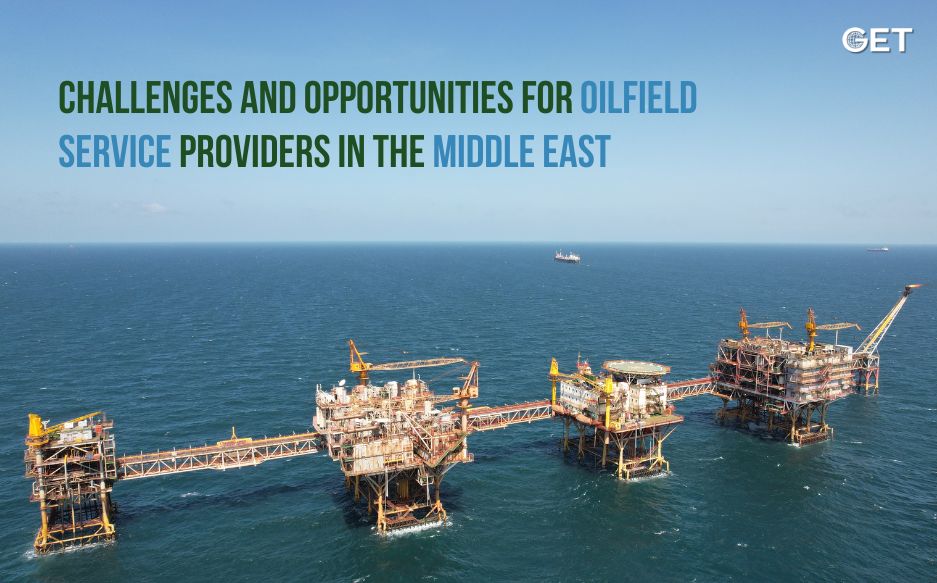
The Middle East has always been the heartbeat of the global energy industry. It holds some of the world’s largest oil and gas reserves. And for decades, it has attracted investment from every corner of the globe. But the landscape is changing. Fast. Today, oilfield service providers operating in this […]
By Get global | March 16, 2026

By Get global | March 11, 2026
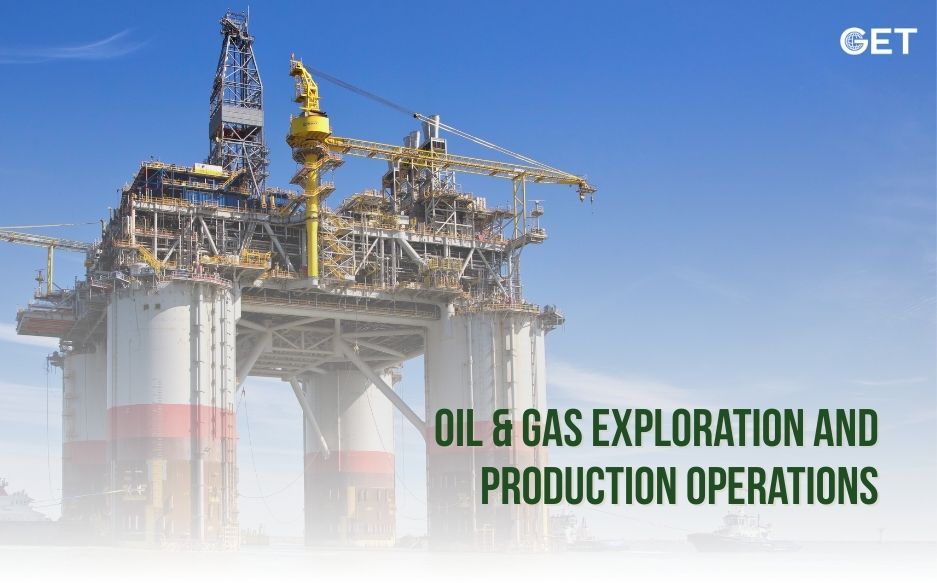
The Middle East has always been one of the key regions for the oil and gas industry with some of the largest hydrocarbon reserves in the world. Upstream exploration and production have been a major contributor to economic growth and energy development for many Middle Eastern countries. For instance, cities […]
By Get global | March 10, 2026
The Middle East operates as the core of the oil and gas industry since most energy industry developments throughout the world converge at this particular region. The region provides career opportunities which offer exceptional salary packages and thrilling work experiences throughout its Saudi Arabian deserts and Abu Dhabi urban centers […]
By Get global | March 6, 2026