In the energy industry, uninterrupted operations are extremely important to maintain productivity, ensure safety, and control operational costs. Every planned shutdown is is scheduled carefully, but what about unplanned downtime? It can quickly derail production targets, delay ongoing projects, and increase maintenance costs. As the result, energy assets become more complex, and operations expand across multiple locations.
At GET Global Group, we’ve witnessed this shift firsthand while supporting clients across the global energy sector with technical manpower, workforce solutions, and maintenance support.
The operators today are not solely looking at maintenance as anisolated tasks. Instead, they’re adopting integrated maintenance strategies, which connect people, processes, and technologies that can help improve equipment performance while reducing operational disruptions.
Rather than waiting for equipment to fail, these maintenance services emphasize on ensuring the critical assets are reliable throughout their lifecycle. This proactive approach reduces downtime and enables companies to improve resources, improve workforce productivity, and achieve better long-term operational performance.
Integrated maintenance has become an essential component of asset management for companies operating in the upstream oil and gas sector, where every hour of production counts.
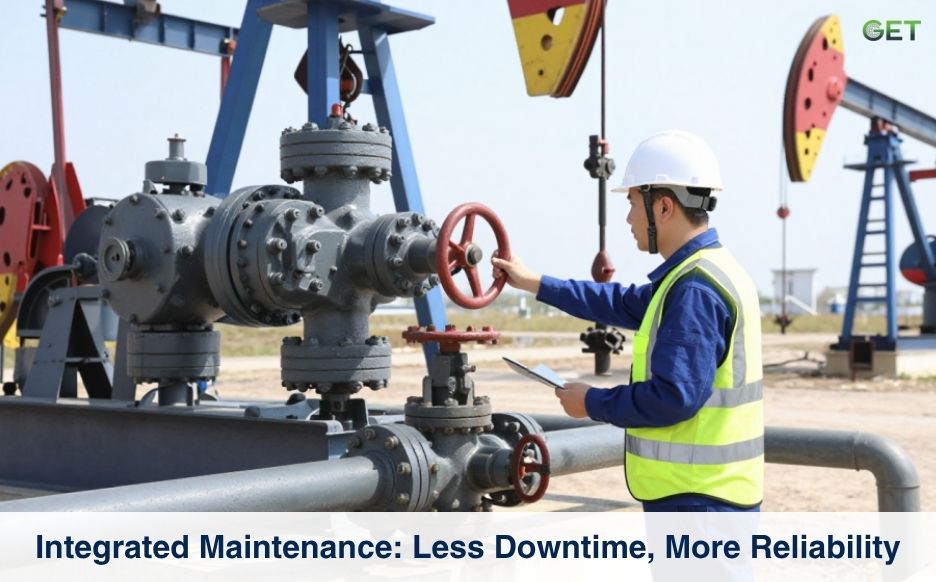
Integrated maintenance is approach that brings together various maintenance disciplines, which include but are not limited to mechanical, electrical, instrumentation, inspection, reliability engineering, and operations. All of these and more under one unified strategy.
Instead of different teams working independently, everyone operates with the same objective: maintaining asset reliability while minimising production interruptions.
At GET Global Group, maintenance projects often involve multiple specialists working together to ensure that inspections, repairs, equipment servicing, and workforce planning are executed altogether seamlessly. This advanced collaborative model is highly efficient in reducing communication gaps and allows maintenance activities to be completed more efficiently.
Integrated maintenance also combines preventive, predictive, and corrective maintenance practices. Instead of relying solely on scheduled servicing or emergency repairs, maintenance decisions are supported by equipment condition, operational data, and risk assessments.
This balanced approach is highly beneficial for operators to maximise equipment availability and avoid unnecessary maintenance activities.
As the demand for reliable oil and gas maintenance continues to grow, integrated maintenance is the best way to move from reactive repairs to proactive asset management.
Read Also- How Vendor Management Services Help Increase Daily Oil Production and Reduce Downtime
Unplanned downtime has always been expensive. Energy companies face tighter production schedules, stricter safety regulations, rising operational costs, and increasing pressure to maximise asset utilisation. Even a single failure of the equipment can affect numerous systems, which leads to production loss, delay in projecs, and expensive emergency repairs.
Although these are issues are preventable but it requires maintenance teams to have access to accurate equipment data and a structured maintenance plan.
This is where integrated maintenance delivers measurable value.
Instead of responding to failures after they occur, operators can identify issues well in advanced, which can help prioritise maintenance activities, and allocation of resources more effectively.
For organisations delivering oilfield maintenance, this proactive mindset improves operational continuity while reducing unexpected disruptions.
Large energy facilities involve multiple stakeholders that are from operations and maintenance teams to contractors, inspection engineers, planners, and reliability specialists. Lack of right coordination can result in duplicated work, scheduling conflicts, and extended shutdowns.
Integrated maintenance is beneficial in creating a unified framework where every team works towards one shared operational goal.
Coordinated workforce planning plays a significant role in supporting maintenance projects across offshore and onshore facilities. By ensuring that skilled personnel are available when and where they are needed, operators can complete maintenance activities safely, efficiently, and within planned schedules.
High level of coordination becomes extremely valuable while managing complex upstream maintenance services. Multiple workstreams often need to be executed simultaneously without affecting ongoing operations.
Traditional preventive maintenance has long been the backbone of industrial operations. Equipment servicing is fixed at regular intervals based on manufacturer recommendations or operating hours, regardless of its actual condition. While this approach helps in reducing breakdowns, it can also result in unnecessary maintenance.
Integrated maintenance is the only way to undertake predictive maintenance techniques. Using real-time equipment data, vibration analysis, thermal imaging, oil analysis, and condition monitoring, maintenance teams can identify early warning signs before they escalate into costly failures.
For example, a slight increase in vibration levels on a compressor may indicate bearing wear. Instead of waiting for the next scheduled maintenance cycle—or worse, a complete breakdown—the issue can be addressed during a planned maintenance window. This minimises disruption while preventing more extensive damage.
At GET Global Group, supporting clients with skilled technical personnel and maintenance expertise enables operators to implement proactive maintenance practices that improve equipment performance and reduce operational risk. As oil and gas maintenance works continues to evolve, predictive maintenance is becoming a huge part of the integrated asset management.
Not every piece of equipment requires the same level of maintenance: this is rightly said in most cases. Some assets are mission-critical, where failure can halt the entire production resulting in loss of production cost and compromise on safety, while others have limited operational impact.
Reliability-Centred Maintenance (RCM) helps companies identify which assets have the greatest demand attention by evaluating factors such as operational importance, failure history, safety implications, and equipment maintenance costs.
Instead of treating every asset equally, RCM prioritises maintenance activities where they deliver the greatest value.
For operators in the upstream oil and gas industry, this approach ensures that critical equipment—such as compressors, turbines, pumps, drilling equipment, and process control systems—receives the appropriate level of monitoring and maintenance.
Are Digital Technologies in Integrated Maintenance Crucial?
Digital advancement has changed how maintenance is planned, structured and executed.
In the modern world, energy facilities generate a huge amount of operational data through sensors, inspection reports, SCADA systems, Computerised Maintenance Management Systems (CMMS), and digital asset management platforms.
Integrated maintenance is the only wat to bring these systems together to provide a unified, comprehensive view of asset health.
Maintenance managers have more access to monitoring the performance of the equipment in real time, scheduling work orders more efficiently, tracking maintenance history, and then, making informed decisions considering accurate operational data.
It is because of this visibility that communication between operations, maintenance, engineering, and planning teams are improved. For companies, delivering in oilfield maintenance industry, digital maintenance systems also improve reporting, documentation, compliance, and workforce coordination across multiple project locations.
Reliable operations cannot singlehandedly be delivered using Technology.
Behind every successful maintenance programme is an expert workforce, which is capable of interpreting data along with executing repairs safely, and responding quickly to all the production challenges.
Workforce planning is one of the most overlooked aspects of integrated maintenance.
Even the most detailed maintenance schedule can be disrupted if the right technicians, inspectors, or supervisors are unavailable when required.
Coordinating multidisciplinary teams- including mechanical, electrical, instrumentation, welding, inspection, and commissioning specialists- requires careful planning and strong project management.
This is where GET Global Group adds value through its global network of highly skilled, trained and technical professionals.
Supplying experienced personnel for shutdowns, commissioning projects, operations, and maintenance activities, are all where GET helps energy companies maintain continuity while reducing resource shortages that often delay maintenance work.
As demand for specialised upstream maintenance services continues to grow, access to the right talent has become just as important as access to the right technology.
Maintenance is not only about keeping equipment operational—it is also about protecting people.
Equipment failures increase the likelihood of leaks, pressure incidents, fires, and other hazardous situations that place personnel at risk.
Integrated maintenance reduces these risks by identifying equipment deterioration before failures occur.
Routine inspections, predictive diagnostics, and structured maintenance schedules ensure that potential hazards are addressed early, supporting safer working environments.
For industries where safety is non-negotiable, integrating maintenance with operations, engineering, and workforce planning creates a stronger safety culture while supporting regulatory compliance.
At GET Global Group, safety remains central to every workforce solution, maintenance assignment, and project execution, ensuring clients receive both technical expertise and operational reliability.
Integrated maintenance delivers benefits that extend beyond reducing equipment failures. When maintenance activities are strategically planned and supported by skilled professionals, organisations experience measurable improvements across operations, safety, and overall business performance.
One of the most significant advantages is increased asset availability. Equipment that operates reliably requires fewer emergency interventions, allowing production schedules to remain on track and maintenance teams to focus on planned activities rather than unexpected breakdowns.
Maintenance costs also become more predictable. Instead of spending heavily on emergency repairs, expedited spare parts, and unplanned shutdowns, organisations can allocate resources more effectively and optimise maintenance budgets over the long term.
At GET Global Group, we understand that reliable operations depend not only on technology but also on having the right people in place. Through our global workforce solutions and technical expertise, we support clients in building maintenance programmes that enhance operational efficiency while maintaining the highest safety standards. As organisations continue investing in oil and gas maintenance, integrated maintenance will remain a key driver of long-term operational success.
While the benefits of integrated maintenance are clear, implementing it successfully requires careful planning.
One of the biggest challenges organisations face is breaking down operational silos. Maintenance, operations, engineering, procurement, and inspection teams often work independently, making communication difficult and slowing decision-making.
Another challenge is managing ageing infrastructure. Many energy facilities operate equipment that has been in service for decades, making maintenance planning increasingly complex. Integrating historical maintenance records with modern digital tools requires both technical expertise and a structured implementation approach.
Workforce capability is equally important. Digital systems, predictive technologies, and modern maintenance strategies can only deliver results when supported by skilled technicians, engineers, supervisors, and planners.
This is where GET Global Group plays a vital role. By providing experienced technical professionals across maintenance, operations, commissioning, inspections, and shutdown projects, GET helps organisations strengthen their maintenance capabilities while ensuring projects are delivered safely and efficiently.
For companies operating in the upstream oil and gas industry, partnering with experienced service providers enables a smoother transition towards integrated maintenance practices.
The future of maintenance is becoming increasingly connected, data-driven, and proactive.
Artificial intelligence, machine learning, Industrial Internet of Things (IIoT), and digital twins are enabling operators to predict equipment failures with greater accuracy than ever before. These technologies provide maintenance teams with real-time insights, allowing them to intervene before failures occur and optimise maintenance schedules based on actual equipment condition.
Remote monitoring is also transforming maintenance operations. Engineers can now monitor offshore platforms, drilling rigs, and processing facilities from central control rooms, reducing response times and improving decision-making.
However, technology alone cannot deliver reliable operations.
The future of maintenance is going to depend on smart and skilled professionals who can interpret data, execute maintenance safely, and adapt to the every-evolving operational challenges. Combining digital innovation with skilled technical expertise is going to remain essential for achieving sustainable performance improvements.
As energy companies continue expanding their oilfield maintenance capabilities, integrated maintenance will become a standard practice rather than a competitive advantage.
Successfully implementing integrated maintenance requires not solely maintenance schedules and software platforms but also skilled personnel, disciplined planning, technical knowledge, and an in-depth understanding of the operational requirements.
This is where partnering with an experienced organisation makes all the difference.
At GET Global Group, we support companies across the globe by providing expert workforce solutions, reliable operations and maintenance support, commissioning services, shutdown and turnaround expertise, and specialised technical personnel for high intensity and complex energy projects.
Our teams work alongside clients to ensure all the maintenance activities are safely executed, and with minimal disruption to operations. Whether supporting offshore platforms, refineries, petrochemical facilities, LNG terminals, or other energy infrastructure, our focus remains the same – helping clients improve asset reliability while maintaining operational continuity.
By combining technical expertise with experienced manpower, GET Global Group enables organisations to strengthen their upstream maintenance services, improve workforce efficiency, and deliver maintenance programmes that support long-term business objectives.
In today’s energy landscape, maintenance is no longer simply about repairing equipment—it is about ensuring operational continuity, protecting valuable assets, and enabling sustainable business performance.
Integrated maintenance allows companies to go beyond reactive maintenance by bringing together people, technology, data, and planning into a single coordinated strategy. What’s the result of this activity? It results in reduced downtime, improved equipment reliability, enhanced safety, lower maintenance costs, and greater operational resilience.
Energy facilities are becoming complex day-by-day, but integrated maintenance is continuing to play a key role in achieving production excellence.
At GET Global Group, we are committed to help companies achieve these goals through trustworthy workforce solutions, advanced technical expertise, and comprehensive maintenance support. By partnering with experienced professionals and adopting integrated maintenance strategies, operators can achieve their highest asset performance while preparing confidently for the future of the energy industry.
Read Also- From Reservoir to Market: Why Reliable Oilfield Services Matter for Every Barrel Produced
Frequently Asked Questions (FAQs)
Integrated maintenance is a coordinated approach that combines preventive, predictive, and corrective maintenance with workforce planning, inspections, and digital technologies to improve equipment reliability and minimise downtime.
By identifying potential equipment issues before they become failures, integrated maintenance enables planned interventions, reducing emergency repairs, production interruptions, and costly shutdowns.
Reliable assets improve production efficiency, enhance safety, reduce maintenance costs, extend equipment life, and minimise operational disruptions, making them essential for successful upstream operations.
Predictive maintenance uses equipment condition data and monitoring technologies to detect early signs of deterioration, allowing maintenance teams to address issues before they lead to equipment failure.
GET Global Group supports energy companies through skilled technical manpower, operations and maintenance services, shutdown and turnaround support, commissioning expertise, and workforce solutions that help improve asset reliability and operational performance.
Integrated maintenance is widely used across upstream oil and gas, offshore energy, LNG facilities, refineries, petrochemical plants, power generation, and other industrial sectors where equipment reliability is critical.
By Get global | September 3, 2026
Health, safety and environment in the oil and gas sector was long treated as a back-office function, running quietly alongside the core work of drilling, extraction, and processing. That is no longer the case. Extreme pressures, volatile materials, remote sites, and heavy machinery mean the risk in this industry has […]
By Get global | August 31, 2026
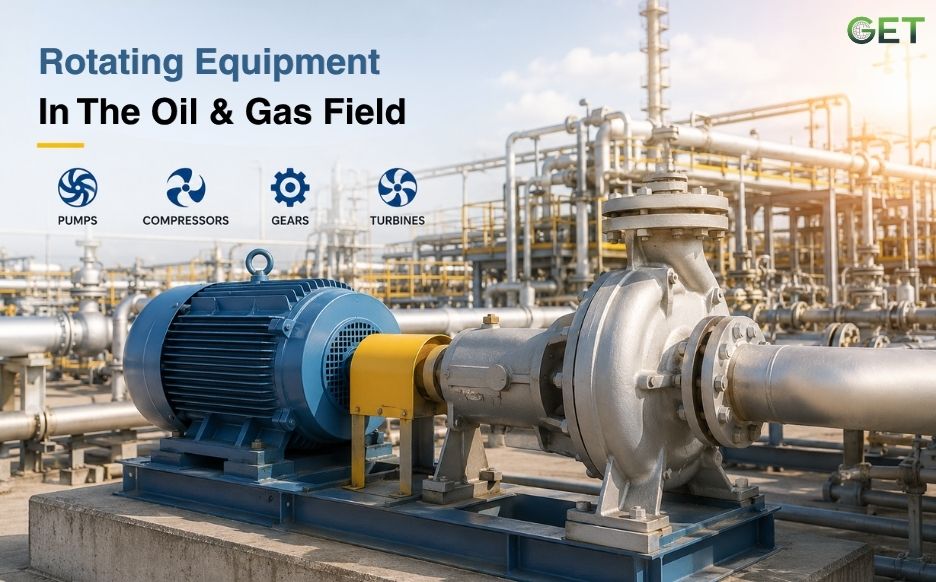
Walk onto any rig floor, production platform, or gas processing plant, and the first thing you notice isn’t the pipework – it’s the sound. That low, constant hum coming from somewhere in the facility is almost always rotating equipment doing its job. Pumps pushing fluid through miles of pipeline. Compressors […]

By Get global | August 31, 2026
Upstream oil and gas operations have always been a complex affair. From the process of exploration, to drilling, completion, production optimization, all the way up to the point of decommissioning, a typical oil company will be dealing with dozens of moving parts — and equally many service companies. Traditionally, that […]
By Get global | August 27, 2026
An offshore rig losing production can bleed staggering sums for every hour it sits idle. On the other end of the same industry, a well-run inspection or maintenance contract just keeps collecting steady, contract-locked revenue for a decade, without ever touching a barrel of crude. Same industry. Same oil underneath […]

By Get global | August 25, 2026