Every Barrel Has a Story Behind It
When crude oil reaches a refinery, a tanker, or a storage terminal, the journey that got it there is invisible. What the market sees is the barrel. What it does not see is the sequence of decisions, deployments, and operational calls that made it possible — the crew who drilled the well, the engineer who managed the reservoir, the supply chain that kept the rig running, and the training that made sure everyone on location was qualified to do their job safely.
That sequence is oilfield services. And when any part of it fails, the barrel does not make it.
This is the reality that oil and gas companies live with every day. Production efficiency is not determined at the reservoir — it is determined by the quality of every service and every person deployed in support of it. In the upstream oil and gas industry, reliable oilfield services are not a vendor preference. They are a production requirement.
It is worth being specific about what unreliable oilfield services actually cost, because the numbers rarely appear in the same sentence as the service failures that caused them.
A crew member placed above their competency level on a well control operation creates risk that has nothing to do with the formation. A supply chain that delivers the wrong specification of downhole tool causes a delay that shows up as non-productive time on a rig that costs $300,000 a day to operate. A training gap that was never addressed becomes visible when a critical process goes wrong at 3am on a night shift.
None of these failures are dramatic in isolation. But they accumulate. And in the upstream oil and gas sector, where margins are tight and production targets are fixed, accumulated operational failures translate directly into lost barrels and lost revenue.
Oil and gas companies in UAE, KSA, and across the Gulf are acutely aware of this. As national operators push production targets higher and independents compete for contract awards on increasingly thin margins, the tolerance for oilfield services that underperform has dropped to near zero.
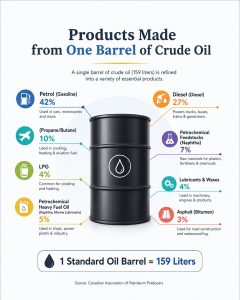
Understanding why reliable oilfield services matter requires understanding the full production chain — from the moment a well is designed to the moment crude reaches its destination.
Exploration and drilling is where it starts. The upstream sector of the oil and gas industry requires highly technical personnel — drilling engineers, directional drillers, mud engineers, wellsite geologists — whose competency directly determines whether a well is drilled safely, on time, and to target. A single crew gap at this stage can delay a well by days or weeks, with cost implications that ripple through the entire project budget.
Completions and production follow drilling. This phase requires a different set of specialists — completion engineers, production technicians, wireline operators, coil tubing crews — whose understanding of the well and the reservoir translates directly into production rates. The difference between a well that produces at its potential and one that underperforms is often the quality of the crew managing its early production life.
Maintenance and integrity keep producing assets alive. Offshore oil rigs and onshore oil fields both depend on continuous maintenance programmes managed by technically qualified crews. Upstream oil and gas equipment that is not maintained to the right standard degrades, fails, and takes production with it. The crew responsible for that maintenance needs to know what they are doing — and needs the tools and parts to do it, delivered through a supply chain that actually works.
Logistics and supply chain run underneath all of it. Procurement and Supply Chain Management in the upstream oil and gas industry is not a back-office function. It is an operational discipline that directly affects whether rigs run or sit idle. When the right equipment arrives on time to the right specification, operations proceed. When it does not, they do not. It is that direct.
At every stage of this chain, the reliability of the oilfield services supporting it determines whether the barrel gets produced or not.
Read Also- Reducing Production Downtime: Services That Help Oilfields Maintain Daily Barrel Targets
The common thread running through every stage of the reservoir-to-market journey is people. Specifically, qualified people who have been verified — not assumed — to be capable of performing at the level the operation requires.
GET Global Group’s Competency Management System is built around this principle. Every crew member in our network is assessed against a four-tier framework before deployment: Basic, Intermediate, Advanced, Expert. Technical interviews are formally documented. Competency profiles are maintained and updated continuously. When an oil and gas company in UAE or KSA needs a specialist mobilised at short notice, GET is not starting a search from scratch. We are selecting from a pipeline of pre-verified professionals.
The production efficiency case for competency-based deployment is straightforward. Qualified crew ramp up faster, make fewer errors, require less supervision, and stay in role longer. In an industry where every rotation and every delay has a measurable cost, those factors add up to real barrels.
Oil and gas technical training is the other side of this equation. Competency is not a fixed state — it is built and maintained over time. GET Learning, our upstream-specific LMS platform, gives crew members access to over 60 instructor-led courses developed by 42 industry experts. From well control and directional drilling to HSE compliance and coil tubing operations, the platform supports continuous development between deployments so that crew show up to their next rotation more capable than they left the last one.
Oilfield services do not operate in isolation. The crew on location depends on equipment that has been sourced correctly, delivered on time, and specified to match the operational requirements of the well programme they are supporting.
GET Global Group’s Supply Chain Management solution integrates technical knowledge into the procurement process. Equipment is not specified in isolation from the crew deploying it or the well programme it will support. This connection reduces the substitutions, delays, and specification mismatches that routinely disrupt upstream oil and gas operations — and that routinely cost barrels.
For oil and gas services companies operating across multiple geographies — UAE, KSA, Guyana, and beyond — this integrated approach to supply chain is not optional. The complexity of managing upstream oil and gas equipment across multiple jurisdictions, regulatory environments, and logistics chains requires a procurement function that understands the technical context, not just the commercial one.
Every barrel that makes it from reservoir to market represents a successful coordination of people, equipment, expertise, and logistics. Every barrel that does not represents a failure somewhere in that chain.
Reliable oilfield services do not guarantee perfect operations — nothing does. But they dramatically reduce the probability of the coordination failures that cost the most. In the upstream oil and gas industry, that reduction is not a soft benefit. It is measurable in production rates, NPT statistics, and end-of-year output figures.
GET Global Group exists to be the reliable part of that chain — from the crew on location to the supply chain behind them and the training that prepared both. Because in this industry, the barrel only counts when it actually gets produced.
Read Also- How Integrated Upstream Support Services Help Operators Increase Oil Production Efficiency
By Get global | September 3, 2026
Health, safety and environment in the oil and gas sector was long treated as a back-office function, running quietly alongside the core work of drilling, extraction, and processing. That is no longer the case. Extreme pressures, volatile materials, remote sites, and heavy machinery mean the risk in this industry has […]
By Get global | August 31, 2026
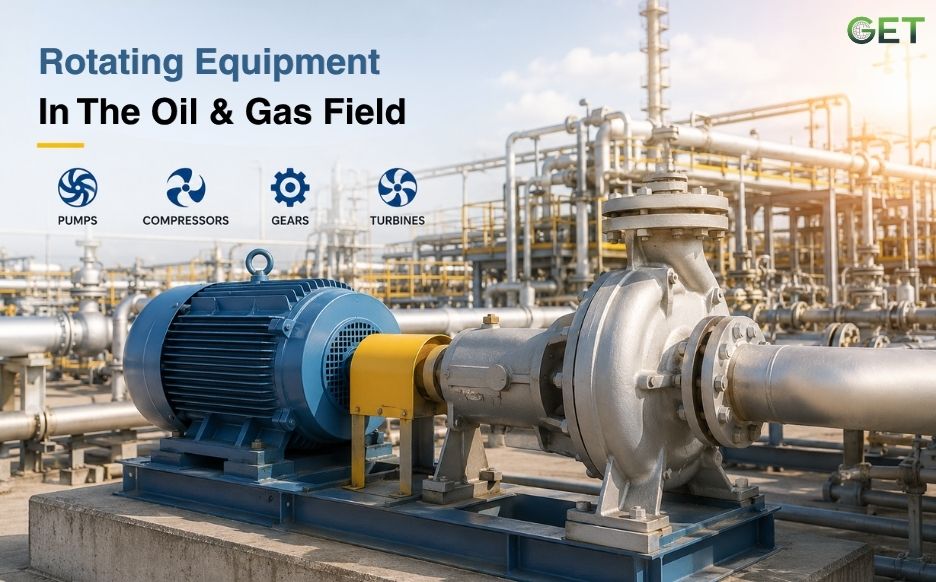
Walk onto any rig floor, production platform, or gas processing plant, and the first thing you notice isn’t the pipework – it’s the sound. That low, constant hum coming from somewhere in the facility is almost always rotating equipment doing its job. Pumps pushing fluid through miles of pipeline. Compressors […]

By Get global | August 31, 2026
Upstream oil and gas operations have always been a complex affair. From the process of exploration, to drilling, completion, production optimization, all the way up to the point of decommissioning, a typical oil company will be dealing with dozens of moving parts — and equally many service companies. Traditionally, that […]
By Get global | August 27, 2026
An offshore rig losing production can bleed staggering sums for every hour it sits idle. On the other end of the same industry, a well-run inspection or maintenance contract just keeps collecting steady, contract-locked revenue for a decade, without ever touching a barrel of crude. Same industry. Same oil underneath […]
By Get global | August 25, 2026