Starting Out in Oil and Gas — What Nobody Tells You
Breaking into the oil and gas industry is not like applying for a desk job. The sector operates on a different rhythm — long rotations, remote locations, technically demanding environments, and a culture that rewards competence above almost everything else. If you are starting your oil and gas job search with no experience and a lot of ambition, this guide is written for you.
The oil and gas sector employs millions of people across the upstream midstream and downstream oil and gas value chain — from the wellsite to the refinery to the retail pump. As a beginner, understanding where you fit, what skills matter, and how to position yourself will determine how quickly you go from being a new face to a valued professional.
One of the most common mistakes beginners make is applying for oil and gas jobs without really understanding the industry structure. The upstream midstream downstream oil and gas breakdown is the foundation of everything.
Upstream is where hydrocarbons are found and extracted — drilling, well completion, production. The upstream oil and gas industry includes everything from seismic surveys to wellbore construction to reservoir management. Companies operating in this space range from the biggest oil and gas companies in the world, such as Saudi Aramco, ExxonMobil, and TotalEnergies, to independent operators drilling in frontier basins.
Midstream covers transportation and storage — pipelines, LNG terminals, processing facilities.
Downstream handles refining, distribution, and sale of finished petroleum products.
For most beginners entering the field, the upstream sector of the oil and gas industry offers the widest range of entry points — particularly in roles supporting drilling operations, logistics, and field services. Oil and gas companies in UAE, oil and gas companies in KSA, and increasingly oil and gas companies in Guyana are all actively hiring entry-level professionals to support growing operational demands.
When gas and oil companies review CVs for entry-level positions, they are not looking for perfection. They are looking for potential — and evidence that you understand what the job actually involves.
Technical foundation matters. Even if you are applying for a Roustabout or Floorman position on an offshore oil rig, understanding basic well operations, pressure concepts, and HSE procedures gives you a significant edge over candidates who have done none of that groundwork. This is where oil and gas training becomes genuinely valuable — not just as a checkbox on your CV, but as a way of demonstrating that you take the work seriously.
HSE awareness is non-negotiable. Every upstream oil and gas company operates within a strict health, safety, and environmental framework. As a beginner, demonstrating that you understand the principles of safe operations — even at a foundational level — signals to hiring managers that you are not going to be a liability on the job.
Adaptability and resilience. Oil fields are not comfortable environments. Offshore jobs involve extended periods away from home, physically demanding work, and rapid problem-solving under pressure. Gas and oil companies want people who can handle that environment without burning out in the first rotation.
The single most effective investment a beginner can make is in structured oil and gas technical training. The gap between a candidate with no field experience and one who has completed relevant courses is significant — and increasingly, oil and gas training companies are making that training accessible online, removing the barrier of geography.
For beginners, structured training does three things. First, it gives you the language of the industry — the terminology, concepts, and frameworks that allow you to communicate competently with experienced colleagues. Second, it signals intent — hiring managers at upstream oil and gas services companies take notice when a candidate has invested their own time and money in learning. Third, it accelerates your progression once you are in the field, because the foundational knowledge is already there.
Understanding where to look is half the battle. The oil and gas job search landscape has changed significantly — roles are no longer advertised exclusively through traditional channels, and many of the best opportunities come through specialist oil and gas service providers and staffing companies with deep relationships in the industry.
UAE is one of the most active markets globally for oil and gas jobs in UAE. Abu Dhabi operates some of the largest producing fields in the world, and the ecosystem of oil and gas services companies supporting ADNOC and its affiliates is substantial. If you are based in the region or willing to relocate, oil and gas in UAE offers genuine career runway for capable beginners.
KSA is undergoing a period of significant expansion, with Saudi Aramco continuing to invest in upstream capacity and national workforce development. Localization programs are actively creating oil and gas jobs for qualified Saudi nationals, and upstream oil and gas services companies are growing their presence accordingly.
Guyana has emerged as one of the most exciting frontier basins in the world. The scale of offshore discoveries there has drawn the attention of every major gas and oil business globally, and the demand for skilled personnel — including entry-level field workers — is growing rapidly.
Most beginners focus entirely on wellsite roles when they think about oil and gas jobs. But Procurement and Supply Chain Management represents a significant and often overlooked entry point — particularly for graduates with business or logistics backgrounds.
Upstream oil and gas equipment moves through complex global supply chains, and the demand for professionals who can manage that flow — from vendor qualification to inventory management to logistics coordination — is consistent and growing. A Supply Chain Management solution that works efficiently is critical to keeping rig operations running on schedule, and upstream oil and gas companies invest heavily in people who can make that happen.
For those interested in the commercial side of the gas and oil business, roles in supply chain, procurement, contracts, and Oil and Gas Business Solutions offer genuine career progression and exposure to the full operational picture — upstream midstream and downstream oil and gas — without requiring field certifications from day one.

After years of placing professionals across oil and gas companies in UAE, KSA, Guyana, and beyond, the pattern is clear. The people who build lasting careers in the oil and gas industry share a few things in common.
They show up prepared. They invest in their own development before anyone asks them to. They treat every rotation as a learning opportunity, not just a pay check. They build relationships — with supervisors, with colleagues, with the oil and gas service provider or staffing company that placed them. And they understand that the oil and gas sector rewards patience combined with consistent performance.
As an energy service industry that spans offshore oil rig jobs, onshore oil fields, and everything in between, oil and gas is one of the few sectors where a determined beginner — with the right training and the right attitude — can reach senior technical or commercial positions within a decade.
The opportunity is there. GET Global Group exists to help you take it.
Read Also- Understanding Hybrid Energy Solutions: Key Challenges and Opportunities
By Get global | May 15, 2026
Introduction: In the ever-evolving landscape of the energy sector, a revolutionary force is steering the industry toward a more sustainable future — the integration of hybrid solutions. As the world grapples with the imperative of balancing energy demands and environmental preservation, the concept of combining traditional and renewable energy sources […]
By Get global | May 11, 2026
Introduction The energy industry is facing unprecedented challenges in the 21st century, including the need for sustainable and environmentally responsible solutions to meet growing global energy demands. As a result, successful project delivery has become vital for companies in the energy sector. Among the methodologies gaining prominence is Integrated Project […]
By Get global | May 7, 2026
By Get global | May 6, 2026
Effectively managing risks within the oil and gas industry demands a meticulous blend of foresight, innovation, and resilience. In this complex sector, risk mitigation strategies are crucial for ensuring operational stability, safeguarding financial investments, and upholding stringent health, safety, and environmental standards. Amidst the diverse array of challenges faced by […]
By Get global | May 4, 2026
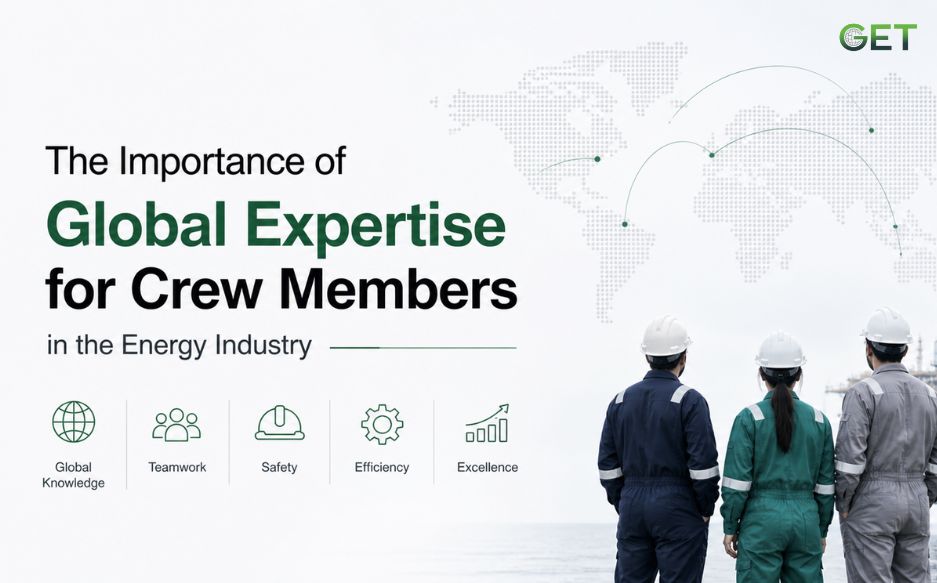
Introduction In the dynamic and ever-evolving world of the energy industry, crew members in the upstream oil and gas sector find themselves at the forefront of a complex and globalized landscape. The importance of possessing global know-how cannot be overstated, as it plays a pivotal role in ensuring the success, […]