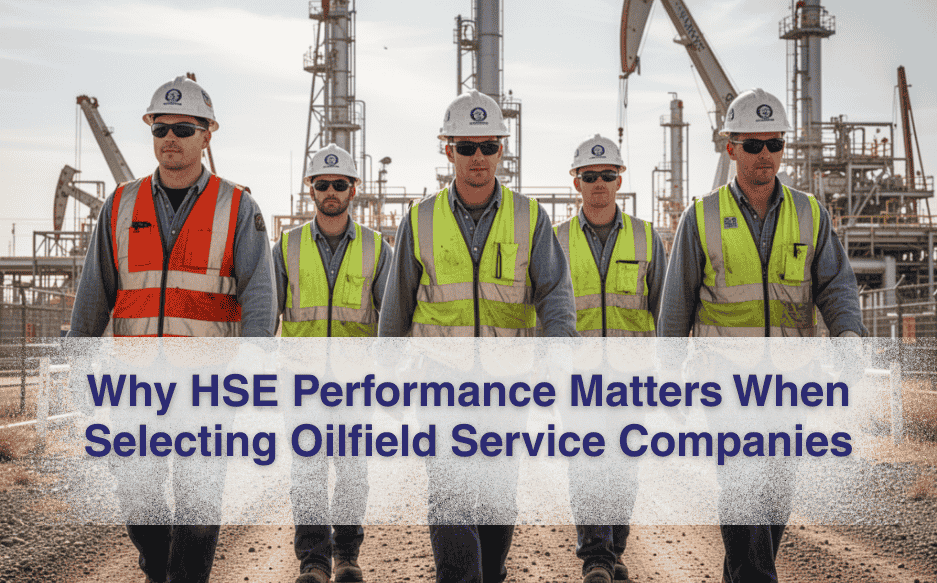
The oil and gas industry is complex and high-risk, making it essential for operators to select oilfield service partners based on more than just price or equipment availability. In the upstream sector—especially in the Middle East—Health, Safety, and Environmental (HSE) performance is now a key factor in decision‑making. Strong HSE practices are reviewed as a strategic advantage because they protect people, preserve the environment, maintain operational continuity, and support long‑term business relationships.
At GET Global Group, we understand that strong HSE performance is not just a compliance requirement; it is a strategic asset.
The passage explains why HSE should be a top priority when choosing service companies and how it directly contributes to project success.
The upstream oil and gas sector is prone to high-risk activities; it is typically the nature of the work. For instance: drilling, exploration, well intervention, production optimization, and field services – these operations expose personnel and assets to multiple safety‑critical risks. These risks include high‑pressure well‑control environments, heavy mechanical lifting, exposure to hazardous gases such as H₂S, and extreme thermal conditions common in Middle Eastern operating climates. Such circumstances demand robust process safety programs, engineered safeguards, and strict operational discipline.
Unpleasant incidents in upstream operations can lead to:
A service company’s Health and Safety track record provides direct understanding into how efficiently it manages these risks.
Strong HSE performance is an active and continuous decision. It is the long-term result of constructed systems, systematic leadership, personnel training, and continuous advancement procedures.
When evaluating oilfield service companies, operators should look for:
A company that invests in HSE demonstrates strong organizational maturity. At GET Global Group, we consistently see that disciplined safety practices lead to higher service quality, more effective job planning, and improved execution.
Simply put, companies that excel in safety tend to excel in operations.
In the upstream oil and gas industry, people are the most valuable asset and capital. Field personnel routinely operate in remote, high‑hazard environments and endure extended duty cycles under challenging climatic and logistical conditions. Selecting a service provider with a proven safety culture ensures that workers return home safely.
A strong HSE culture includes:
In the Middle East upstream market, where projects often involve multinational workforces, effective safety communication and training are essential. Companies that invest in multilingual training programs and culturally aware safety leadership reduce risk significantly.
At GET Global Group, we believe that protecting people is not just a regulatory obligation—it is a moral responsibility and a business imperative.
The Middle East remains a cornerstone of global energy supply, and environmental responsibility in the region is receiving heightened attention from regulators, investors, and international stakeholders.
There is a plethora of issues that can cause long-term environmental damages and financial instability and liability such as: oil spills, lack of proper waste disposal, and emissions mismanagement.
Service companies must demonstrate conservation risk mitigation resources such as:
Environmental lapses have the potential to delay projects, trigger compliance inquiries, and jeopardize partnerships with national oil companies (NOCs). Partnering with a service provider that upholds rigorous environmental standards ensures protection of natural resources while preserving project timelines and stakeholder trust.
Safety incidents are not only a physical threat but also a financial burden. Even if we go beyond the immediate medical costs of employees that occur during such an event or damage caused to our equipment; the long-term effect of these incidents can shut down operations for days or weeks.
In upstream oil and gas sector, downtime directly translates to lost production and revenue. The cost of prevention is always lower than the cost of recovery.
Strong HSE performance contributes to:
Service companies with vigorous health and safety systems plan jobs more thoroughly. They regularly conduct risk assessments and implement control measures before execution. This proactive approach minimizes unexpected failures and operational delays. They realize that a strong HSE performance is directly related to operational efficiency and profitability.
Historically speaking, the technical performance and costs dominated contractor selection. But today things have changed, HSE performance is a key performance indicator and differentiator.
Clients now look for the following answers:
If the companies are unable and uncertain about the answers and if they cannot provide clear, data-driven answers, they lose big deals and opportunities.
At GET Global Group, our operational performance is related to our HSE growth. Our worth ethics and approach at GET Global Group integrates risk assessment, workforce safety and engagement, constant monitoring, and senior management and leadership accountability.
When selecting oilfield service companies in the oil and gas industry—especially within the upstream sector in the Middle East—HSE performance must be a top priority.
Strong HSE practices:
In an industry where risk is inherent, excellence in HSE management is a key factor in choosing reliable partners.
At GET Global Group, we stand by a simple principle: safe operations are successful operations. By prioritizing Health, Safety, and Environmental performance, we help our clients achieve operational excellence while protecting what matters most—people, assets, and the environment.
The GET Global Group Commitment
We at the GET Global Group believe that HSE is not just a department or a functional entity—it is our culture! We have our operations running across Middle East, South Asia and North Africa and we duly make sure that upstream oil and gas sector is built on the ground works of safety, environmental stewardship, and prepared environmental excellence.
We commit to provide:
We at GET Global Group believe that superior HSE performance drives superior project deliverables.
Read Also- Guide to Choose an Upstream Oilfield Services Company in 2026
By Get global | March 18, 2026
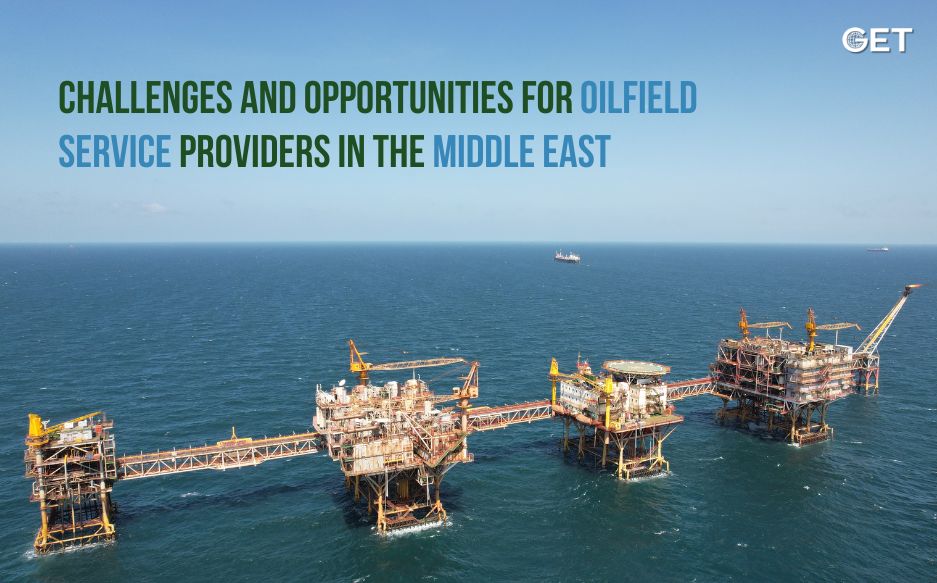
The Middle East has always been the heartbeat of the global energy industry. It holds some of the world’s largest oil and gas reserves. And for decades, it has attracted investment from every corner of the globe. But the landscape is changing. Fast. Today, oilfield service providers operating in this […]
By Get global | March 16, 2026

By Get global | March 11, 2026
The Middle East has always been one of the key regions for the oil and gas industry with some of the largest hydrocarbon reserves in the world. Upstream exploration and production have been a major contributor to economic growth and energy development for many Middle Eastern countries. For instance, cities […]
By Get global | March 10, 2026
The Middle East operates as the core of the oil and gas industry since most energy industry developments throughout the world converge at this particular region. The region provides career opportunities which offer exceptional salary packages and thrilling work experiences throughout its Saudi Arabian deserts and Abu Dhabi urban centers […]
By Get global | March 6, 2026