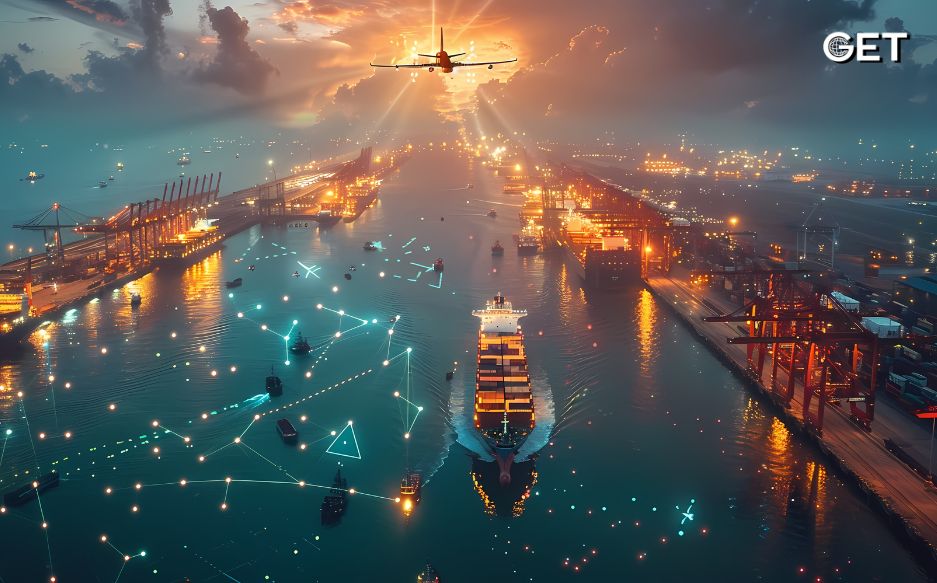
In upstream oil and gas, time is rarely lost in one dramatic moment. It slips away quietly. A vessel waits longer than planned. A shipment clears a day late. A piece of equipment arrives just after it was needed. Ports sit at the center of these small delays, and over time, those delays add up.
For decades, ports operated on experience, manual coordination, and a fair amount of improvisation. That approach worked when supply chains were simpler. Today, upstream operations are more interconnected, more capital-intensive, and far less forgiving. This is where smart ports technology has started to make a visible difference.
Rather than changing everything overnight, ports are gradually becoming more digital, more connected, and more predictable. For upstream operators, that shift is closely tied to efficiency.
Upstream efficiency is often framed around rigs, wells, and production metrics. Port operations rarely feature in strategic conversations unless something goes wrong. Yet ports influence how smoothly upstream plans translate into execution.
When port activity is slow or uncertain, offshore schedules suffer. Vessels miss windows. Crews wait. Equipment sits idle. None of this shows up as a single failure, but it steadily increases cost and risk.
Port digitalization addresses a simple but persistent problem. Too many decisions have traditionally been made with incomplete or outdated information. Digital systems change that by creating a clearer operational picture, one that upstream teams can actually use.
Smart ports technology is not about adding complexity. In many cases, it removes it. The focus is on replacing fragmented processes with shared visibility.
At a practical level, this often means knowing where a vessel is without chasing updates, understanding cargo status without manual checks, and planning berth usage based on real conditions rather than assumptions.
For upstream operations, these improvements reduce the need for contingency buffers. Plans become tighter, not because teams take more risk, but because they trust the information in front of them.
Digital innovation in oil and gas has historically focused on exploration, reservoir analysis, and production optimization. Logistics and ports were slower to change, partly because of legacy infrastructure and the number of stakeholders involved.
That is now shifting. Digital platforms are being used to connect port authorities, terminal operators, shipping agents, and upstream companies. Information that once moved through phone calls and emails is becoming accessible in near real time.
This matters because upstream efficiency depends on timing. When plans change offshore, ports need to respond quickly. Digital tools make that possible without adding layers of coordination.
Automation in oil and gas ports does not always look dramatic. In many cases, it shows up in small, targeted improvements. Automated gate systems reduce congestion. Digital yard management improves space utilization. Equipment monitoring helps prevent unplanned downtime.
These are not the headline changes, but they help in making the daily operations more uniform. Uniformity is good in the upstream logistic where variability is usually the most significant inefficiency cause.
Automation also supports safety, which remains a constant concern at busy ports handling heavy and hazardous cargo.
Improved planning is one of the lesser advantages of port digitalization. As ports continue to gather operational information over time, they start to realize their self-limiting factors.
Patterns emerge. There are bottlenecks at specific times of the day at a particular berth. The effects of weather are quantifiable. Malfunctions of equipment no longer occur as accidents.
Predictive insight enables ports to plan in advance instead of responding. To the upstream operators, this minimizes changes that occur at the last minute, which distort offshore schedules. A reduced number of surprises results in more consistent implementation, which is commonly the actual gauge of upstream productivity.
Offshore supply chains are unforgiving. A missed delivery can stall work, even if everything else is ready. Smart ports technology improves coordination between port activity and offshore demand.
Vessel turnaround times shorten. Backhauls are planned with more intention. Inventory levels align more closely with what offshore teams actually need.
In the long run, these enhancements cut down on wastage of time by the vessels and crews. It is not always visible when an individual project is seen, but when numerous projects are taken into consideration, the effects are important.
Read Also- Digital Transformation in Oil and Gas: What Top Companies Do Differently in 2025
Ports operate under constant regulatory and safety pressure. Digital systems help manage this reality more effectively. Access controls, digital permits, and automated monitoring reduce reliance on manual oversight.
For upstream companies, this lowers operational risk. Fewer incidents at port mean fewer disruptions downstream. Compliance becomes easier to demonstrate, especially across regions with different regulatory requirements.
Many ports have invested in technology without seeing meaningful results. The reason is often a lack of integration. Isolated systems create more work rather than less.
Smart ports technology delivers value when it connects with upstream planning tools and logistics platforms. When data flows across systems, decisions improve naturally. Teams stop reconciling numbers and start acting on them.
This alignment is what turns digital innovation into measurable upstream efficiency.
Smart ports are not a future concept. They are a practical response to real operational pressure. As upstream oil and gas projects continue to operate across tighter timelines and higher expectations, ports are being asked to perform differently.
Port digitalization and automation in oil and gas are becoming foundational capabilities rather than optional upgrades. The goal is not to build perfect systems, but to reduce friction where it matters most.
Ports may sit at the edge of upstream operations, but their influence is constant. Small improvements in visibility, coordination, and timing compound over time.
Smart ports technology gives upstream teams something they value deeply: predictability. In an industry where delays are costly and margins are tight, that predictability is one of the most effective drivers of upstream efficiency.
Read Also- Top 5 Reasons to Choose a Career in the Oil and Gas Industry
By Get global | May 7, 2026
By Get global | May 6, 2026
Effectively managing risks within the oil and gas industry demands a meticulous blend of foresight, innovation, and resilience. In this complex sector, risk mitigation strategies are crucial for ensuring operational stability, safeguarding financial investments, and upholding stringent health, safety, and environmental standards. Amidst the diverse array of challenges faced by […]
By Get global | May 4, 2026
Introduction In the dynamic and ever-evolving world of the energy industry, crew members in the upstream oil and gas sector find themselves at the forefront of a complex and globalized landscape. The importance of possessing global know-how cannot be overstated, as it plays a pivotal role in ensuring the success, […]
By Get global | April 30, 2026
The oil and gas industry is going through one of its biggest transformations in decades. Between the energy transition, digital disruption, and stricter environmental regulations, the skills that got workers hired five years ago may not be enough to keep them competitive today. Whether you’re a seasoned upstream professional or […]
By Get global | April 27, 2026
Ask anyone who’s worked in oil and gas procurement long enough, and they’ll tell you the same thing: the moment you think you’ve got costs under control, something shifts. A tanker gets rerouted. A sanctions list gets updated overnight. Steel prices jump 15% because of a policy announcement three continents […]