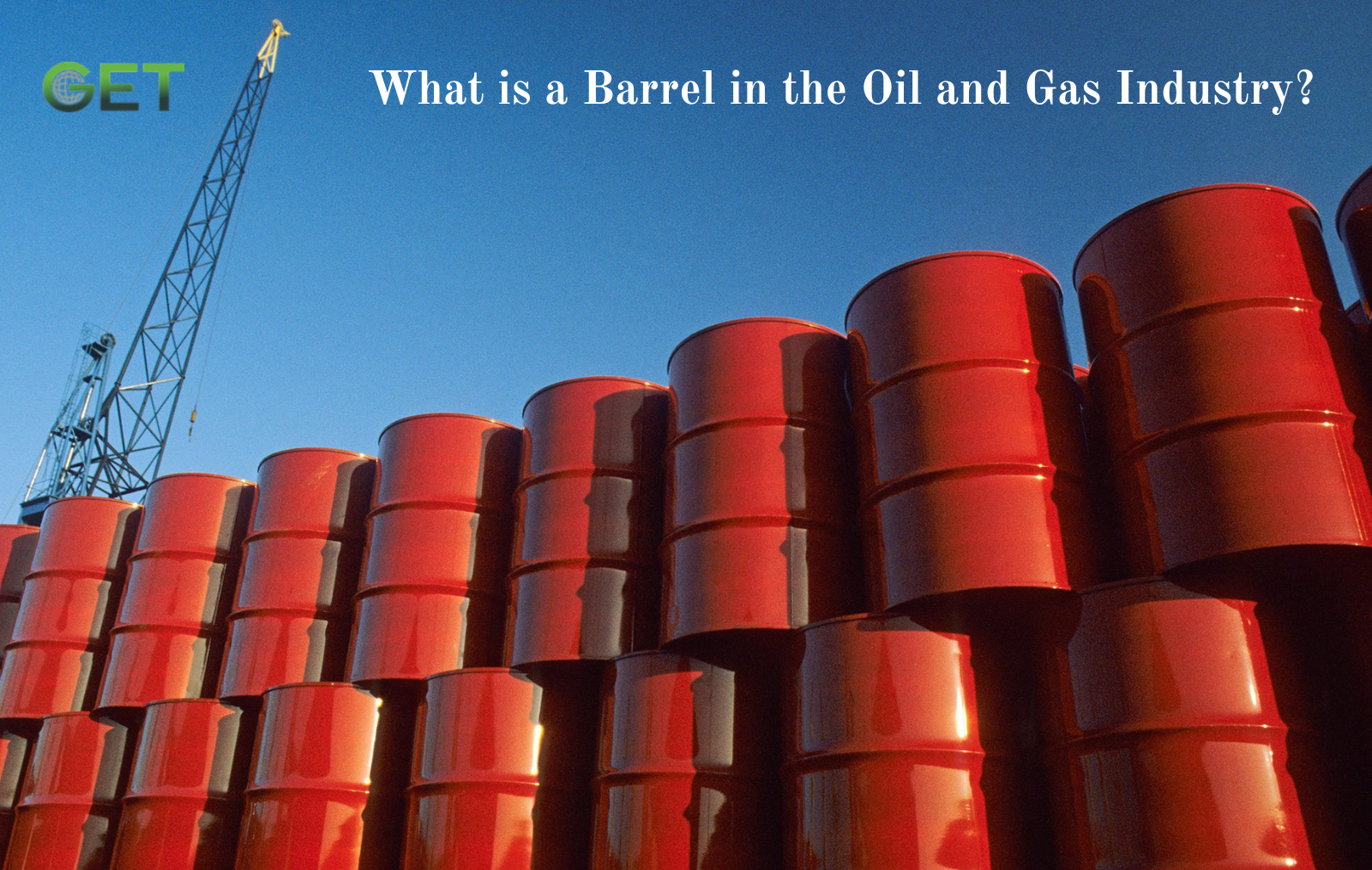
A barrel in the oil and gas industry is a standard unit of measurement used to measure the volume of crude oil and other petroleum products. One barrel equals 42 US gallons, which is about 159 litres.
It is important to know that today, a barrel is not a physical wooden container. It is simply a number — a way to count and measure oil. When companies say they produce “one million barrels per day,” they mean they pump out one million times 42 gallons of oil every day.
This unit is used all over the world for buying, selling, and reporting oil volumes. Whether you are talking about crude oil from Saudi Arabia or Texas, the measurement is always in barrels.
The history of the oil barrel is quite interesting. When oil was first discovered in Pennsylvania, USA, in 1859 by Edwin Drake, the early oil workers needed a container to carry the oil. They used old wooden barrels — the same kind used for storing whiskey and fish.
Back then, these barrels came in different sizes. To avoid confusion, the oil industry decided to pick one standard size. In 1872, oil producers agreed that one barrel would hold 42 US gallons. This became the official standard, and the whole world eventually followed it.
Today, no one uses real wooden barrels to store oil. But the number “42 gallons” stuck around as the standard unit for measuring oil volume. It has been used this way for over 150 years.
One of the most useful things to understand about a barrel in the oil and gas industry is what you can actually get from it. A single barrel of crude oil is sent to a refinery, where it is broken down into many useful products.
Because refined products are lighter than raw crude oil, a single 42-gallon barrel can produce around 44–45 gallons of finished petroleum products. This is known as refinery gain.
The price of a barrel of oil changes every day. It goes up and down based on several key factors:
Supply and Demand
When countries produce more oil than people need, prices go down. When demand is high, but supply is low, prices go up. This is the most basic rule of oil pricing.
OPEC Decisions
OPEC (Organisation of the Petroleum Exporting Countries) is a group of major oil-producing nations like Saudi Arabia, the UAE, and Iraq. They meet regularly to decide how much oil to produce. If they reduce production, oil prices rise. If they increase production, prices fall.
Global Events
Wars, natural disasters, political tensions, and economic crises can all change oil prices very quickly. For example, during the COVID-19 pandemic in 2020, oil demand dropped sharply, and prices fell to record lows.
The term “barrel” is used in a few different ways depending on the situation:
Barrel of Oil Equivalent (BOE)
This is used to compare oil and natural gas. Since the industry also deals in gas, the BOE helps express both in the same unit. One BOE equals about 6,000 cubic feet of natural gas based on energy value.
Stock Tank Barrel (STB)
This measures oil at normal surface conditions — at room temperature and standard air pressure. This is the unit used in most buying and selling transactions.
Barrels Per Day (BPD)
This tells us how much oil a well, company, or country produces in a single day. For example, Saudi Arabia produces around 10–12 million barrels per day. This is one of the most commonly used terms in the oil news.
A barrel in the oil and gas industry is more than just a number. It is the standard unit that drives global energy trade, sets oil prices, and affects the economy of every country in the world. From the 42-gallon wooden barrels of 1859 Pennsylvania to the trillions of dollars traded on global markets today, this simple unit has shaped modern life in ways most people never think about.
Whether you watch the news, invest in energy stocks, or simply drive a car — understanding what a barrel of oil means gives you a clearer picture of how the world’s energy system works. The next time you hear “oil prices rose to $90 per barrel,” you will know exactly what that means — and why it matters to everyone.
Read Also- Christmas Tree vs Wellhead: What Oilfield Teams Should Actually Know
By Get global | September 14, 2026
Ten years back, most HSE policies stopped at the company gate. Whatever happened past that point, subcontractors, transport, equipment vendors, was technically someone else’s problem, at least on paper. Not anymore. And the reason is blunt: trace a serious incident back far enough, and often it started somewhere in the supply chain, not […]

By Get global | September 14, 2026
Health, safety and environment in the oil and gas sector was long treated as a back-office function, running quietly alongside the core work of drilling, extraction, and processing. That is no longer the case. Extreme pressures, volatile materials, remote sites, and heavy machinery mean the risk in this industry has […]

By Get global | September 14, 2026
By Get global | September 9, 2026
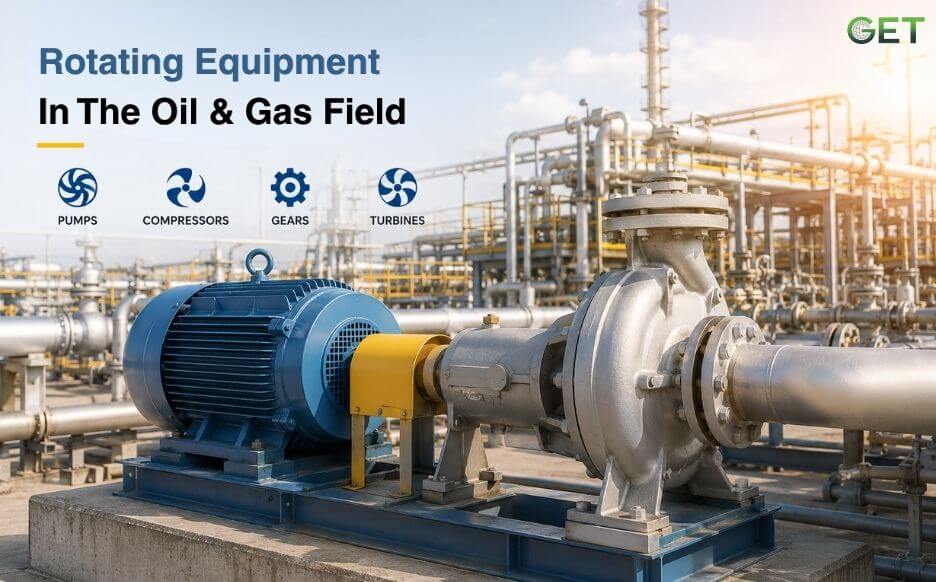
Walk onto any rig floor, production platform, or gas processing plant, and the first thing you notice isn’t the pipework – it’s the sound. That low, constant hum coming from somewhere in the facility is almost always rotating equipment doing its job. Pumps pushing fluid through miles of pipeline. Compressors […]

By Get global | September 9, 2026