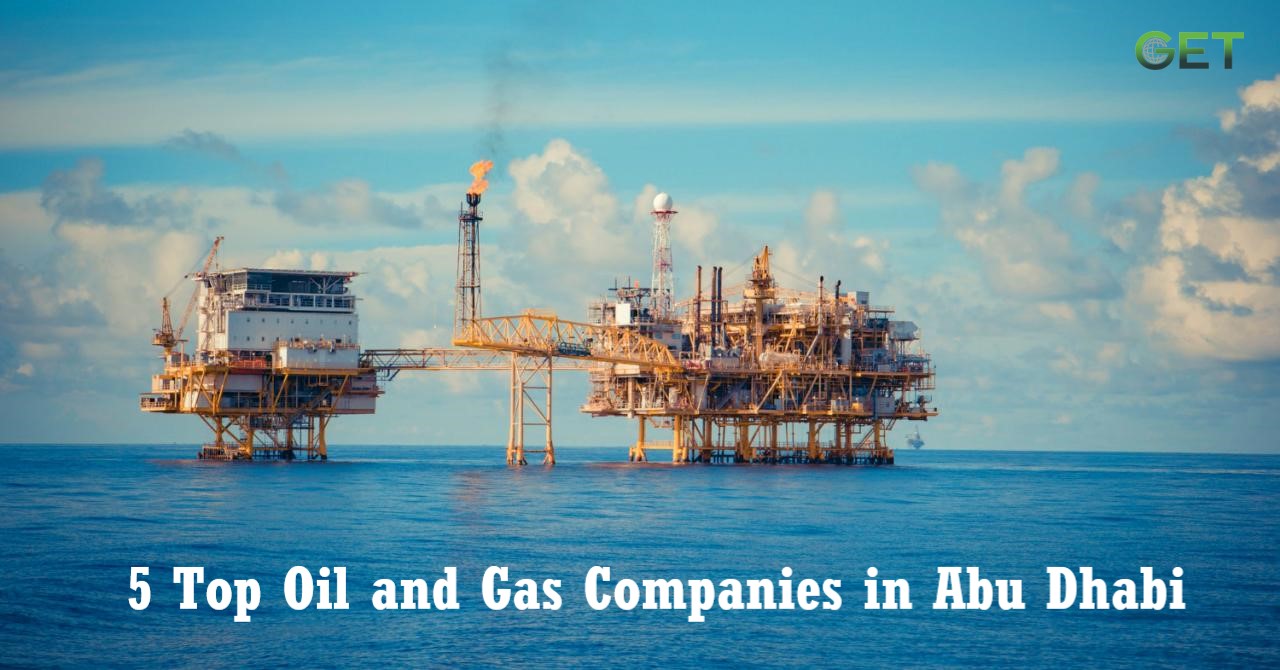
Abu Dhabi doesn’t just have oil and gas companies, it has kind of a whole ecosystem built around one. Roughly 96% of the UAE’s proven oil reserves sit in Abu Dhabi , and the emirate’s energy sector is set up less like a competitive marketplace and more like a net of interlinked entities, with most of them tracing back to a single state-owned parent. That structure matters a bit more than usual right now. In April 2026, the UAE said it would exit OPEC , and also the broader OPEC+ arrangement , effective 1 May 2026 , ending nearly six decades of membership. Officials framed it as a policy decision meant to give Abu Dhabi more flexibility to expand oil output without the pressure of a shared quota, and it came after years of friction over the UAE pushing for a higher output ceiling to match capacity built through a roughly $150 billion investment program. Whatever the politics , the actual outcome is that ADNOC and its related group companies can now pursue production growth on their own calendar rather than one negotiated alongside other producers. So for anyone doing business, job hunting, or investing in 2026, it becomes even more important to understand who is who across Abu Dhabi’s energy space. If you’re trying to figure out who truly runs Abu Dhabi’s oil and gas industry whether for a job search, a business partnership, or a tender — here are the five companies that matter most, what each one does in practice, and where you can check the details yourself.
Go through the list of these 5 top oil and gas companies in Abu Dhabi:
The state-owned parent that anchors nearly every other name on this list.
Why it makes the list: ADNOC is kinda the reason Abu Dhabi energy side looks the way it does, like without it things would be more uneven. The company operates through the whole hydrocarbon value chain, from upstream exploration and production all the way to refining , petrochemicals, and even global trading. Almost every other business on this list ADNOC Drilling, ADNOC L&S, ADNOC Gas, ADNOC Offshore, plus dozens of joint ventures with international majors is basically part of it, or they’re working alongside it. In addition, the group keeps carving out and listing more parts of itself on the Abu Dhabi Securities Exchange. ADNOC Distribution, ADNOC Drilling, ADNOC Gas, and ADNOC L&S are all separately listed, publicly traded entities, and they still stay majority-owned by the parent. So, getting a handle on ADNOC’s setup is pretty much the same as understanding the entire sector, more or less.
Official source: ADNOC official website
The largest drilling company in the Middle East by rig fleet, and ADNOC’s dedicated drilling arm.
Why it makes the list: ADNOC Drilling, which operates one of the largest rig fleets in the region, is a fully integrated provider of drilling rig hire and related services to ADNOC’s upstream companies under long-term contractual agreements. The 2021 IPO was the largest in Abu Dhabi Securities Exchange history at that time and the company has been growing its fleet ever since to meet ADNOC’s faster production targets. This includes a strategic partnership with Baker Hughes, which acquired initially 5% in 2018 and was instrumental to ADNOC Drilling’s transformation into a fully integrated drilling services company covering the entire well-construction value chain instead of rig rental only. When it comes to drilling, well operations or oilfield services this is one of the largest single employers and contract awarders within the region.
Official source: ADNOC Drilling official website
A diversified energy and utilities group with both oil and gas and power/water operations.
Why it makes the list: Unlike a hydrocarbon producer such as ADNOC, TAQA is more of an energy and utilities group, with oil-and-gas operations plus power generation and water desalination in several markets including the U.K., North America, and the Gulf. It came into being through Abu Dhabi’s 1998 efforts to privatise its water and electricity industry, then uniting with the Abu Dhabi Power Corporation in 2020, creating a single publically traded entity for all emirate utility assets. Ask Your Query TAQA owns nearly 50% of Masdar, a renewable energy firm in the UAE, so it benches itself into the clean-energy corner of the transition as well. TAQA is one of a handful of Abu Dhabi forms with real world, multi-sector presence for the experts whom need to inspect oil and gas as well-a individual from an increasingly extensive energy-based framework up through October 2023.
Official source: TAQA official website
Abu Dhabi’s international upstream exploration and production company, focused outside the UAE’s borders.
Why it makes the list: Mubadala Energy (formerly Mubadala Petroleum) is Abu Dhabi’s international upstream investment vehicle and contrasts with ADNOC’s focused, primarily domestic focus, with exploration and production assets across the Middle East, North Africa, Southeast Asia and beyond. It is ever more gas and LNG-heavy: in just 2026 to date it has acquired a stake in Egypt’s Nargis offshore exploration block from Eni; signed a gas-supply framework with Indonesia’s PLN Energi Primer and achieved an FDP positive result for the Commonwealth LNG export facility in Louisiana, supported by $9.75 billion of project finance If you are monitoring where Abu Dhabi deploys its sovereign wealth on global energy assets rather than just focusing on domestic production, look at this company.
Official source: Mubadala Energy official website
The maritime and logistics backbone that moves ADNOC’s oil, gas, and products around the world.
Why it makes the list: Getting oil and gas out of the ground is only half the business — someone has to move it. ADNOC L&S runs the tanker fleet, marine logistics, and integrated transport operations that connect Abu Dhabi’s production to global markets, with an office presence in 19 cities worldwide. It’s easy to overlook logistics when talking about oil and gas majors, but ADNOC L&S is one of the largest energy maritime services companies in the region and a significant employer in shipping, chartering, and logistics roles.
Official source: ADNOC L&S official website
It’s worth being clear about the relationship between these companies rather than treating them as five separate competitors:
ADNOC the parent, and the anchor — almost everything on this list either rolls up to it, or is subsidiary of it, or partners with it.
. ● TAQA and Mubadala Energy are entirely outside the ADNOC structure — both owned through separate Abu Dhabi government investment vehicles, giving the emirate three parallel global energy entry channels: national production (ADNOC), diversified utilities (TAQA) and international upstream investment (Mubadala Energy). In fact, you can also look at these five companies strategically in terms of what they are actually optimising for – which is a key reason why Abu Dhabi runs three separate energy vehicles:
By far the largest is ADNOC (Abu Dhabi National Oil Company) which spans the whole hydrocarbon value chain from exploration to petrochemicals and trading. All other big Abu Dhabi energy companies are the subsidiaries or joint-venture partners of ADNOC.
No. They have different ownership structures: ADNOC is a state-owned national oil company, while TAQA is a publicly listed power and water entity whose board is controlled by Abu Dhabi government entities. They’re not so much competitors as entities with different types of missions within Abu Dhabi’s larger energy ecosystem.
Yes. BP, TotalEnergies, ExxonMobil and Eni have minority interests in a number of ADNOC’s joint ventures and concessions including onshore and offshore production assets. They function like partners, part of greater ADNOC-led structures, rather than as free-standing operators in the emirate.
With ADNOC and its listed subsidiaries, especially ADNOC Drilling and ADNOC L&S, being one of the single biggest employers in Abu Dhabi’s oil and gas sector including drilling crews, marine & logistics staff or engineers or HSE professionals. TAQA and Mubadala Energy also hire heavily, but their roles are more specialised upstream, in utilities and other corporate functions due to their relatively small, and international tentacles.
The UAE ended its nearly six-decade OPEC membership effective 1 May 2026, which removed it from the group’s coordinated production quotas. For ADNOC, that means more freedom to pursue its 5 million barrels-per-day production target on its own timeline rather than one constrained by an OPEC+ quota, which has direct knock-on effects for drilling activity, and therefore contract volumes, at ADNOC Drilling as well.
No. They’re separately listed, publicly traded companies on the Abu Dhabi Securities Exchange, each with its own management, financial reporting, and minority shareholders. ADNOC remains the majority owner of each, which is why they’re often described as ADNOC Group companies rather than simply divisions of ADNOC.
Yes, though typically through joint ventures and minority equity stakes rather than fully independent foreign-owned operations. International majors hold interests in ADNOC’s onshore and offshore concessions, and ADNOC’s listed subsidiaries — including ADNOC Drilling, ADNOC Gas, and ADNOC L&S — are open to public and institutional investors through the Abu Dhabi Securities Exchange.
ADNOC concentrates almost entirely on maximising value from Abu Dhabi’s own reserves and infrastructure. Mubadala Energy does the opposite: it deploys Abu Dhabi’s sovereign capital into exploration and production assets in other countries, from Southeast Asia to North Africa to North America, as a way of diversifying the emirate’s energy income beyond its own borders.
Abu Dhabi’s oil and gas sector isn’t a crowded marketplace of independent rivals — it’s a tightly connected structure built around ADNOC, with TAQA and Mubadala Energy operating as separate but complementary arms of the same broader government strategy. Whether you’re job hunting, building a supplier relationship, or just trying to understand who’s who in the region, these five companies are the starting point for almost any conversation about Abu Dhabi’s energy industry.
GET Global Group works alongside operators and service providers across Abu Dhabi’s oil and gas sector on staffing, workforce planning, and client-facing documentation. If you’re trying to map out where your business or your career fits into this landscape, that’s worth a conversation.
Also Read: The Future of Onshore Oil and Gas Outsourcing in Abu Dhabi
By Get global | October 19, 2026

By Get global | October 16, 2026

By Get global | October 12, 2026
By Get global | October 12, 2026
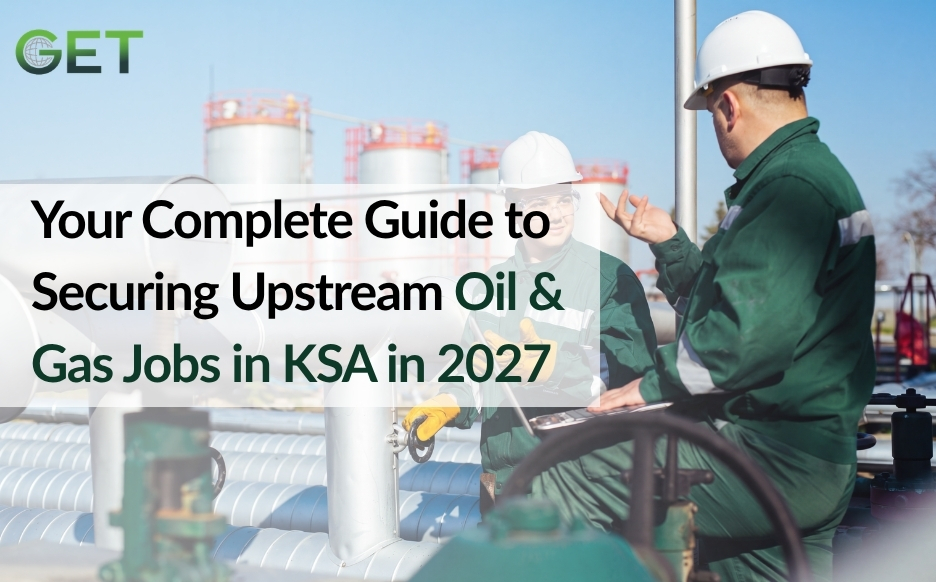
Saudi Arabia is traditionally considered a key country where people work in the oil and gas sector. As there is quite a lot of drilling, well intervention and production processes in this country, many engineers, technicians and specialists from the field try to find suitable positions there. However, not all […]

By Get global | October 9, 2026
Ask any person working night shifts in rigs and compressor stations what holds the industry back, and you will seldom hear anything about geology. Disconnected information, delayed decision-making, and machinery breaking down at the wrong moment – all these factors are more common causes of productivity losses in the industry. […]